Carnival backs LNG until zero-emission fuels mature
Global cruise operator Carnival Corporation has identified LNG as its preferred fuel for its long-term fleet strategy, citing the lack of commercially available zero-emission alternatives.
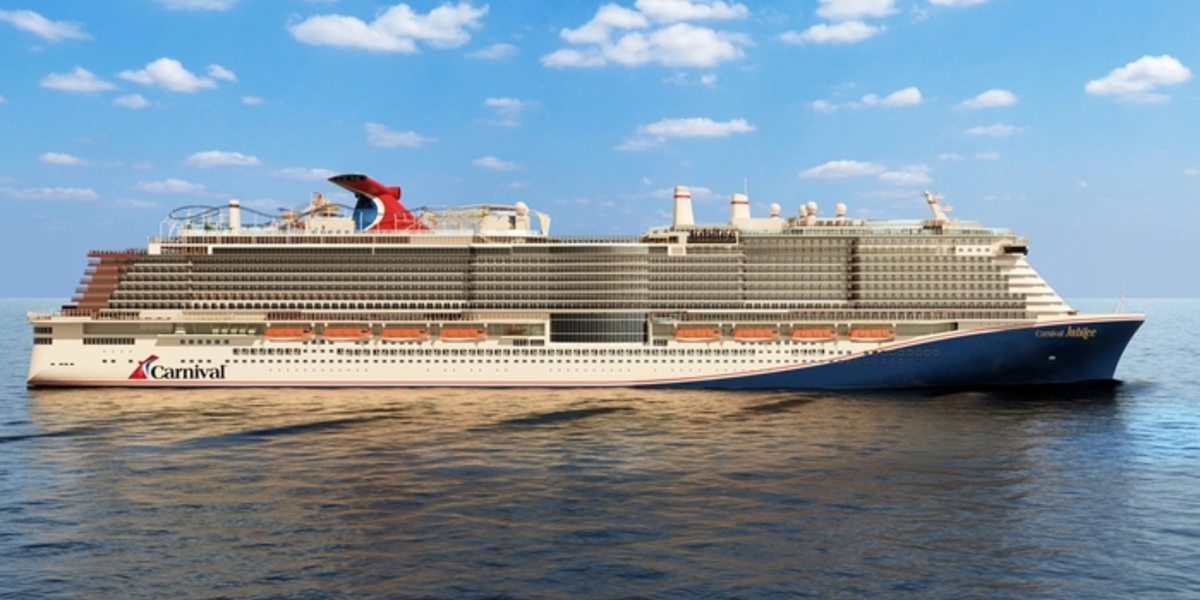 IMAGE: Carnival Cruise Line's LNG-powered cruise ship, Carnival Jubilee. Carnival Cruise Line
Carnival currently operates 11 LNG-capable vessels and has another seven on order for delivery by 2033.
LNG is currently the most viable and readily available option for reducing a vessel’s GHG intensity compared with conventional fuels, given the absence of “market-ready” zero-emission alternatives, the cruise operator said in its 2025 sustainability report.
Dual-fuel LNG-capable vessels also provide the flexibility to operate on different fuels, it added.
These vessels have larger fuel tanks and sufficient space to accommodate new propulsion systems “if alternative fuel technologies evolve,” Carnival said.
“Given the long-life expectancy of a cruise ship, this flexibility positions us to adapt to changing fuel markets over time,” it added.
It acknowledged that methane slip can increase the GHG intensity of LNG-capable vessels. However, newer generations of marine dual-fuel engines have shown “significantly lower methane slip” than their predecessors, reflecting improvements in engine performance, it said.
Carnival has reduced the GHG intensity of its overall fleet by 20% from a 2019 baseline and is targeting a 25% reduction by 2029. However, the company has not disclosed its 2019 baseline figure.
The company has identified bio- and e-methane, biofuels and hydrogen as potential future fuel pathways. It is also assessing whether some of its existing vessels could be retrofitted to run on methanol, although it has not provided a timeline.
However, ammonia has been ruled out because its toxicity makes it an “unrealistic” option for cruise ships.
Red flags for transition
Carnival is not the only shipowner to have flagged potential hurdles to shipping’s green fuel transition.
Last month, Hawaii-based shipping firm Matson also identified LNG as its preferred long-term fleet fuel, citing the limited availability and higher cost of low- and zero-emission alternatives, as well as insufficient bunkering infrastructure.
“We believe that other fuels such as ammonia, methanol and nuclear propulsion technologies are still in the very early stages for use by ocean-going containerships and not ready to be deployed at commercial scale,” Matson said.
Safe Bulkers’ chief executive Polys Hajioannou argued that the main challenge is not developing low- and zero-emission fuels and technologies, but deploying them at scale.
The IMO's net-zero 2050 ambition offers a long-term direction of travel, but "limited economic incentives, uneven regulatory developments, and a lack of clarity regarding future fuel pathways" continue to cloud investment decisions. Consequently, high costs, limited fuel availability and insufficient supporting infrastructure are holding back wider adoption, he said.
By Konica Bhatt
Please get in touch with comments or additional info to news@engine.online


