Core Power pushes for seven-year fast-track on nuclear-powered shipping
Nuclear tech firm Core Power has suggested light-water reactors, follow-on vessel orders and early route selection to accelerate the use of nuclear technology in US shipping.
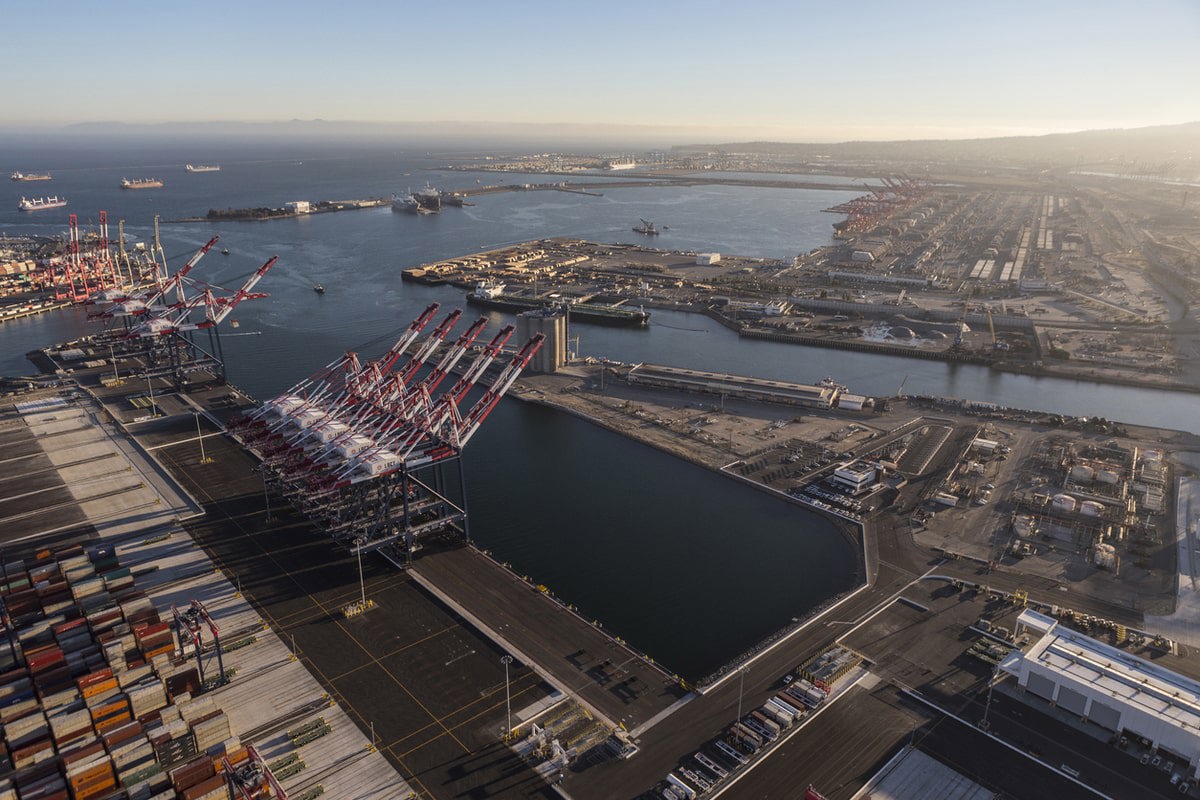 IMAGE: Aerial view of the ports of Long Beach and Los Angeles in southern California, US. Getty Images
The proposal formed part of CORE Power's response to a Request for Information (RFI) issued by the US Maritime Administration (MARAD) in May. The RFI sought industry input on developing a commercially viable small modular reactor (SMR) concept for use in US-flagged commercial vessels.
MARAD's request set out two possible pathways: a ten-year route that would resolve governance issues first, and a seven-year accelerated option.
CORE Power backed the faster route in its 38-page submission, arguing that governance, engineering and commercial planning should progress in parallel.
“It should not come from postponing liability, emergency planning, fuel, workforce or decommissioning questions,” the submission said. “The accelerated route would build on well-understood technologies, existing supply-chain capability and mature U.S. nuclear and maritime institutions,” it added.
The proposal recommended establishing “Project Pathfinder” as a dedicated federal programme with a clear delivery schedule and coordination mechanism.
It called for the first commercial service, operating route and ports to be selected within the first year, alongside a defined owner and operator model.
Rather than focusing on a single demonstration vessel, the initial contract should include options for at least two follow-on ships. This would help create an orderbook, standardise designs and reduce costs by allowing lessons from the first vessel's safety case, regulatory process and operation to be applied to future ships.
Light-water reactor technology was identified as the most credible near-term option for the first vessel, based on “performance, licensing, insurability, maintainability and delivery evidence”, while molten-salt and other advanced reactor designs would continue development on a longer timeline.
A light-water reactor uses ordinary water as both a coolant and neutron moderator. It is the most widely used reactor technology globally and has decades of commercial operating experience, according to the International Atomic Energy Agency (IAEA).
In the US, light-water reactors benefit from a more established licensing pathway under the Nuclear Regulatory Commission (NRC), while regulatory frameworks for non-light-water reactor designs are still being developed and refined, according to the US Department of Energy.
The proposal recommended developing a dedicated US shipyard capable of integrating, maintaining, refuelling and eventually decommissioning nuclear-powered commercial vessels.
It urged the US government to resolve liability and insurance arrangements before construction began by engaging insurers early in the design process and providing targeted federal support only where commercial cover was unavailable.
Other recommendations include starting training for crews, shipyard workers, inspectors and emergency responders in the programme's first year.
“The program should be judged by safe ship availability, cargo moved, schedule reliability, maintenance performance, port acceptance and the cost and time required to order the next ship. Reactor output and a successful first voyage are necessary, but they are not sufficient,” it said.
By Konica Bhatt
Please get in touch with comments or additional info to news@engine.online


