East of Suez Fuel Availability Outlook 13 Oct
VLSFO and HSFO availability tight in Singapore
VLSFO supply improves in Fujairah
Bunker demand drops in Jeddah
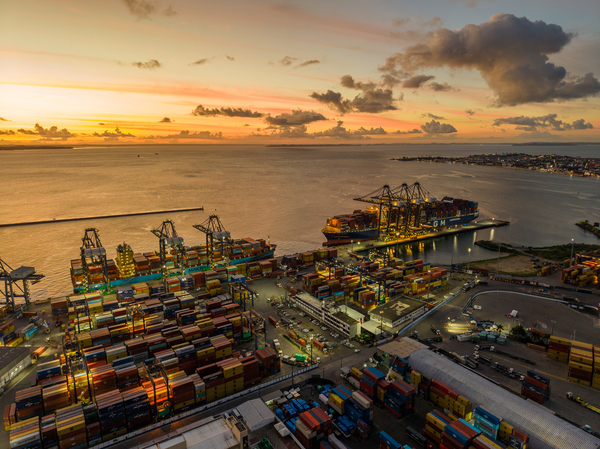
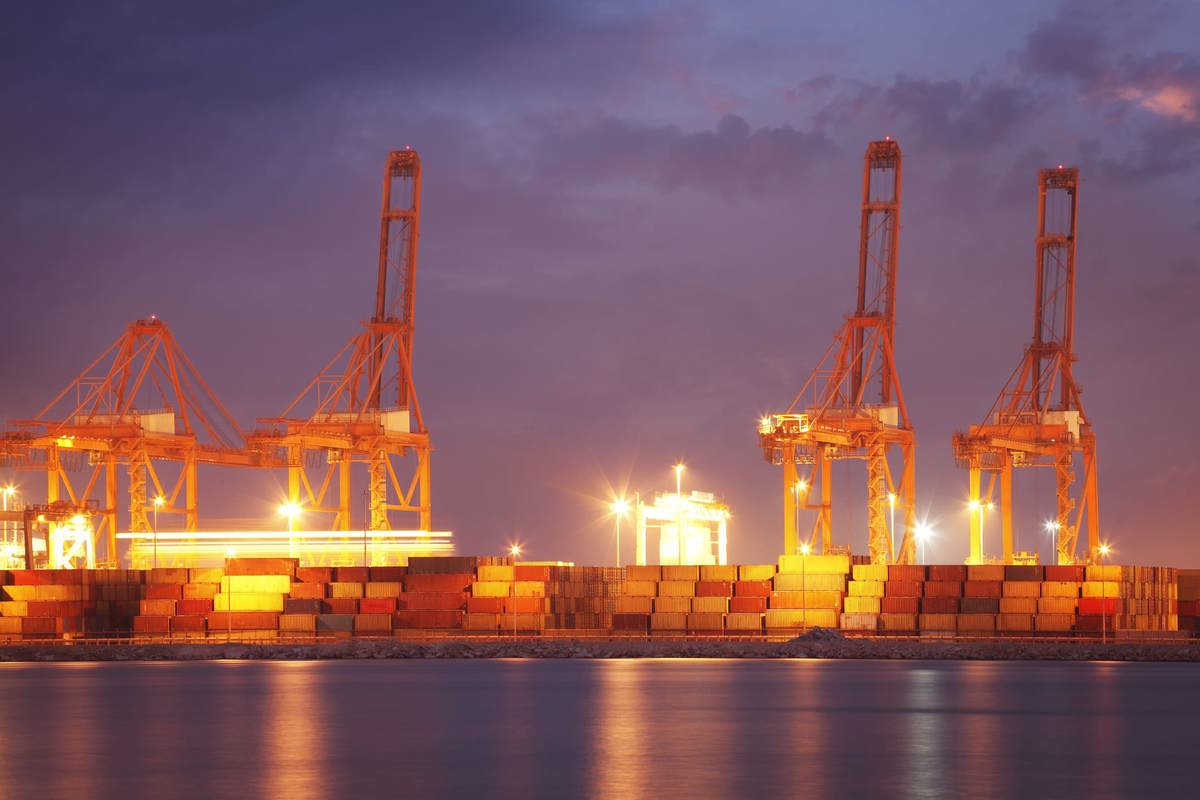 IMAGE: Port of Salalah in Oman during the twilight hours. Getty Images
Singapore and Malaysia
Singapore’s bunker market remains tight despite average demand, with VLSFO lead times extending to 11–18 days from 10–15 days a week earlier. Along with most suppliers continuing to hold low inventories, delays in cargo arrivals amid the ongoing Middle East conflict have further tightened availability, according to a Singapore-based source.
HSFO availability has also tightened, with recommended lead times increasing to 11–17 days from 10–15 days week-on-week. LSMGO remains relatively more readily available, although lead times have edged up to 6–9 days from 5–7 days previously.
At Port Klang, Malaysia, bunker supply remains constrained across multiple grades. Prompt VLSFO availability is particularly tight, while LSMGO supplies remain limited and HSFO availability continues to face pressure.
East Asia
Zhoushan’s bunker market remains tight despite subdued demand, with several suppliers reporting low inventories amid weak imports, a source said. Recommended lead times for VLSFO and LSMGO have eased to around 11 days, from 12 days a week earlier. HSFO lead times have also shortened to 11 days, from approximately 15 days previously.
Supply conditions remain mixed across other Chinese ports. Dalian and Qingdao have sufficient VLSFO and LSMGO stocks, although HSFO availability remains tight in Qingdao. Tianjin is facing shortages across all three major fuel grades, while VLSFO and HSFO supplies are limited in Shanghai. LSMGO availability in Shanghai remains relatively stable.
Supply constraints also persist in southern China, where suppliers in Fuzhou, Xiamen, Yangpu and Guangzhou are reporting shortages of VLSFO and LSMGO.
Hong Kong’s bunker market remains stable, with suppliers recommending lead times of around seven days for the major fuel grades.
In Taiwan, VLSFO and LSMGO deliveries remain available within two days at Keelung, Hualien and Taichung, largely unchanged from the previous week.
State-owned bunker supplier CPC Corporation announced reduced bunkering capacity at Kaohsiung Port from 12–17 October, as its bunker barge Bao Shan No. 2 is temporarily out of service for unexpected equipment maintenance. Suppliers are recommending lead times of around three days for VLSFO and LSMGO at the port.
Bunker fuel availability has tightened across South Korea despite demand remaining around average levels.
At southern ports, including Busan, Ulsan, Masan, Onsan, Yeosu and Kwangyang, lead times for all major grades have increased to around 7–10 days from 4–6 days a week earlier. A similar tightening has occurred at western ports, including Incheon, Daesan, Dangjin, Pyeongtaek and Taean, where lead times for VLSFO, LSMGO and HSFO have also risen to 7–10 days from 4–6 days previously.
Adverse weather could further disrupt bunker operations in the coming days. Busan and Ulsan may face disruptions on 13–15 and 18–19 October. Operations at Yeosu could be affected on 13–14, 18 and 20–22 October, while Daesan may experience disruptions on 13–14, 17–18 and 20–22 October.
Prolonged refinery maintenance and the prioritisation of domestic power generation continue to constrain Japan’s bonded bunker fuel allocations. Available supply capacity is fully committed to term nominations, leaving spot HSFO and VLSFO offers virtually unavailable. Occasional spot volumes emerge only when term cargoes are cancelled, according to a Japan-based trader.
The suspension of operations at one refinery has been resolved, with VLSFO supplies expected to resume gradually. However, official details remain limited. Despite reports that shipments could restart around 20 October, spot offers for the month remain almost entirely absent.
Refineries have yet to announce clear supply policies for November onwards, the trader said.
VLSFO and HSFO remain available at several Japanese ports, including Tokyo, Chiba, Kawasaki, Nagoya, Yokkaichi, Osaka, Kobe, Mizushima, Tokuyama and Oita. However, supplies of both grades are severely constrained in October, with VLSFO stocks nearly depleted. Kashima is also experiencing tight availability of VLSFO and HSFO.
Indonesia remains an exception to the tighter supply conditions across much of East Asia, with bunker fuel availability generally healthy. Suppliers in Jakarta, Surabaya, Balikpapan and Cigading are typically recommending VLSFO lead times of just 2–3 days.
Oceania
Bunker fuel supply remains stable in Western Australia, with VLSFO readily available at Kwinana and Fremantle. Suppliers at both ports are recommending lead times of around seven days. Each port has a single supplier, and all bunker deliveries are carried out by barge.
Supply conditions vary along Australia’s east coast. Port Kembla has normal VLSFO availability, with deliveries possible by truck or pipeline. Sydney has sufficient VLSFO and LSMGO stocks, although HSFO availability is tighter, with suppliers generally requiring around seven days’ notice.
Brisbane and Gladstone have ample VLSFO and LSMGO supplies, with lead times of approximately one week. In contrast, VLSFO availability has tightened in Melbourne and Geelong, where one supplier has reported that stocks are nearly depleted. The supplier is awaiting replenishment cargoes, with supply constraints expected to persist until 5 November. HSFO availability has also tightened further in Melbourne and Brisbane.
The approaching cyclone season could pose additional risks to bunker operations across Australia. Running from November to April, the season could disrupt fuel availability at ports nationwide, a source said.
New Zealand’s bunker market remains broadly stable. VLSFO is readily available at Tauranga and Auckland, where suppliers are quoting lead times of around four days. At Marsden Point, vessels can receive both VLSFO and LSMGO directly through the pipeline.
Adverse weather remains the main operational risk, particularly in Wellington and ports across the South Island, where disruptions to marine operations can delay bunker deliveries.
South Asia
Weather-related disruptions are forecast at India’s Visakhapatnam port on 13–14 October, potentially delaying bunker operations.
In Sri Lanka, bunker supply has tightened across all major fuel grades at Colombo and Hambantota. At least one supplier is currently quoting lead times of around 11 days for bunker deliveries.
Middle East
“The situation is still unstable [in the Middle East], with increasing security risks, vessel attacks and separate incidents affecting commercial shipping,” a Middle East-based trader said.
VLSFO availability in Fujairah has improved, despite continued disruptions to vessel traffic through the Strait of Hormuz amid US-Iran tensions, a regional source said. However, supplies of LSMGO and HSFO remain limited.
In Saudi Arabia's Jeddah, bunker demand has “dropped a bit” although VLSFO and LSMGO availability remains stable.
LSMGO supplies are stable at key Omani ports, including Salalah, Muscat, Duqm and Sohar. One supplier is recommending lead times of 1–2 days for standard stems, broadly unchanged from the previous week.
At Qatar’s Ras Laffan, supplies of both VLSFO and LSMGO remain restricted.
Further west, bunker inventories at Egypt’s Port Suez have fallen to critically low levels across all three conventional fuel grades. Adverse weather is expected to disrupt bunkering at Port Said on 15 October. Djibouti is also facing limited availability of the major fuel grades.
By Tuhin Roy
Please get in touch with comments or additional info to news@engine.online