East of Suez Fuel Availability Outlook 14 July
VLSFO availability tight in Singapore
Super typhoon Bavi-induced bad weather keeps bunkering halted in Zhoushan
Bunker supply tight in several Japanese ports
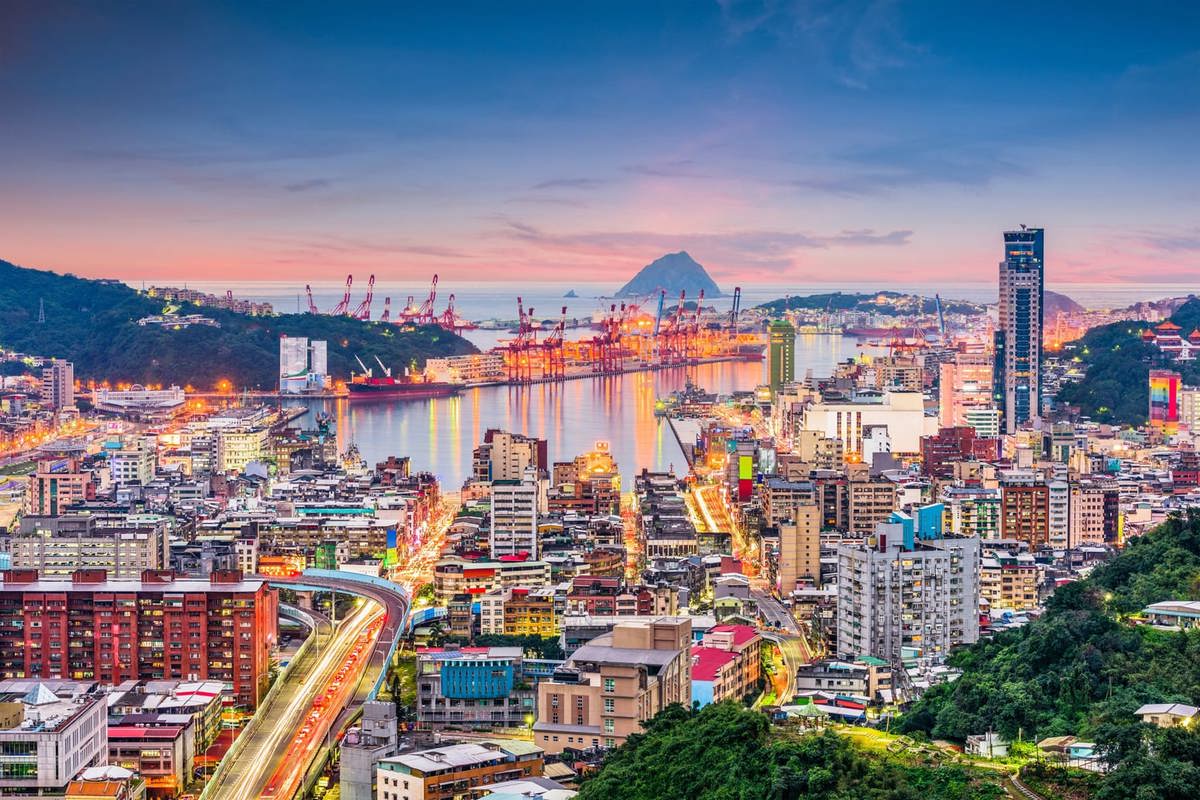 IMAGE: Keelung city's skyline and port at dusk. Getty Images
Singapore and Malaysia
VLSFO availability in Singapore remains tight, with several suppliers facing low stock levels. Recommended lead times have widened from 13–17 days last week, to 15–18 days now.
By contrast, HSFO availability has improved slightly, with lead times narrowing to 10–12 days, from 11–19 days a week ago. LSMGO supply has also eased, as recommended lead times have shortened to 6–9 days, down from 8–10 days last week.
The port's residual fuel oil inventories have averaged 10% higher so far this month than across June, Enterprise Singapore's latest data shows. Fuel oil stocks have climbed above 19 million bbls amid a 105% surge in net fuel oil imports in July so far. Imports have increased by 1.92 million bbls, while exports have fallen by 206,000 bbls.
Singapore's middle distillate inventories have also risen by 12% so far this month, reaching 8.91 million bbls.
In Malaysia's Port Klang, bunker fuel availability remains mixed. VLSFO supply is generally adequate, particularly for smaller prompt stems. However, LSMGO availability remains constrained, while HSFO continues to face supply pressure, leaving both grades relatively tight.
East Asia
Bunker availability in Zhoushan has improved amid weaker demand. Recommended lead times for VLSFO have shortened to around eight days, down from 10–15 days last week. Lead times for both LSMGO and HSFO have also eased to about five days, compared with 7–10 days previously.
However, bunkering operations at Zhoushan's outer and inner anchorages have been suspended since last Tuesday, as Super Typhoon Bavi continues to affect the region with adverse weather, according to a source. Operations are expected to resume on 15 July, once conditions improve.
Bunker fuel availability across northern China remains mixed. Suppliers in Dalian and Qingdao have ample stocks of VLSFO and LSMGO, although HSFO availability in Qingdao remains limited. In Tianjin, all major bunker grades continue to face supply constraints, while VLSFO and HSFO remain tight in Shanghai. LSMGO supply in Shanghai, however, is relatively stable.
Supply constraints also persist across several southern Chinese ports. Both VLSFO and LSMGO remain tight in Fuzhou. Xiamen has sufficient VLSFO availability but tighter LSMGO supply, while both grades remain constrained in Yangpu and Guangzhou.
Hong Kong's bunker market remains steady, with recommended lead times for all major bunker grades holding at around seven days, broadly unchanged from recent weeks.
In Taiwan, bunkering has resumed at the ports of Keelung, Hualien, Taichung, Kaohsiung and Suao after temporary suspensions over the weekend caused by Super Typhoon Bavi, a Taiwan-based source said.
Recommended lead times for both VLSFO and LSMGO remain around two days in Hualien and Taichung, and about three days in Keelung and Kaohsiung, broadly unchanged from the previous week.
Across South Korea's southern ports—including Busan, Ulsan, Masan, Onsan, Yeosu and Kwangyang—recommended lead times for VLSFO and LSMGO have widened to 4–12 days, from 4–6 days last week. HSFO now also requires 4–12 days, compared with being supplied on an enquiry basis a week earlier.
In the country's western ports, including Incheon, Daesan, Dangjin, Pyeongtaek and Taean, recommended lead times for VLSFO and LSMGO have narrowed to 4–12 days from 9–14 days last week. HSFO also requires 4–12 days, whereas it was available on an enquiry basis previously.
In Japan, bunker demand has strengthened as expected, with inquiries increasing amid more competitive regional pricing. VLSFO availability remains extremely tight, while LSMGO supply has tightened sharply and July capacity is limited, according to a Japan-based trader.
The trader urged buyers to secure spot requirements as early as possible, citing a severe supply squeeze, limited July allocations, and expectations that Japanese refineries will prioritise domestic energy demand.
At major Japanese ports, including Tokyo, Chiba, Kawasaki, Kashima, Nagoya, Yokkaichi, Osaka, Kobe, Mizushima and Oita, VLSFO and LSMGO remain in short supply, with only a limited number of suppliers able to offer the grades. HSFO is comparatively more available, with recommended lead times of around 7–10 days.
By contrast, Indonesia's bunker market remains well supplied. VLSFO availability is stable across Jakarta, Surabaya, Balikpapan and Cigading, where suppliers are generally quoting lead times of around 2–3 days.
Oceania
VLSFO availability remains steady in Western Australia, with suppliers in Kwinana and Fremantle typically recommending lead times of around seven days. Bunkering at both ports continue to be serviced by a single supplier, with all deliveries conducted by barge.
Supply conditions are more varied along Australia's east coast. In New South Wales, VLSFO can be delivered by truck or pipeline in Port Kembla, while suppliers in Sydney have adequate stocks of both VLSFO and LSMGO. HSFO remains relatively tighter in Sydney, with suppliers generally requiring around seven days of advance notice.
In Queensland, VLSFO and LSMGO remain readily available in Brisbane and Gladstone, where recommended lead times are also around seven days.
Further south, suppliers continue to hold healthy VLSFO inventories in Melbourne and Geelong. However, bunker operations at both ports rely on a single barge, keeping lead times at approximately one week. HSFO availability has tightened further in both Melbourne and Brisbane.
Meanwhile, one supplier is offering all major bunker grades in Brisbane, Sydney and Melbourne with lead times of around five days. In Dampier, bunker deliveries continue to be carried out through truck-assisted pipeline operations, making advance planning and berth confirmation particularly important, according to a market source.
Across the Tasman Sea, bunker fuel availability in New Zealand remains broadly stable. VLSFO is readily available in Tauranga and Auckland, with suppliers recommending lead times of about four days. At Marsden Point, both VLSFO and LSMGO can be supplied directly to vessels through pipeline infrastructure.
Weather continues to pose operational challenges across New Zealand. Bunker deliveries remain especially vulnerable to disruption in Wellington and ports across the South Island, where adverse weather conditions can periodically interrupt supply operations.
South Asia
The monsoon is expected to disrupt bunker operations at several Indian ports over the coming days, with weather-related delays likely to affect delivery schedules. Bunkering is forecast to face disruptions at Kandla and Sikka between 14–18 July, while rough sea conditions could hamper operations in Mumbai, Cochin and Visakhapatnam over the same period.
In Sri Lanka, bunker market conditions remain stable, with adequate stocks of all major bunker fuel grades in Colombo and Hambantota. However, at least one supplier has increased its recommended lead times to around six days, up from about three days previously.
Weather conditions could also intermittently disrupt bunker operations in Colombo and Trincomalee between 14–18 July, potentially causing delays to bunker deliveries.
Middle East
Despite escalating US-Iran hostilities in the Strait of Hormuz, bunker fuel availability has improved in Fujairah, with VLSFO and LSMGO supply easing as several suppliers are now able to accommodate prompt delivery requests. HSFO availability, however, has tightened and is largely being offered on a firm enquiry basis.
Similar supply conditions are being reported in the neighbouring UAE bunker hub of Khor Fakkan.
Elsewhere in the UAE, port operations at Jebel Ali, Hamriyah, Dibba and Sharjah continue without disruption, according to Inchcape Shipping. Ports in Ras Al Khaimah are also operating normally.
In Kuwait, all ports remain fully operational. However, although inbound and outbound vessel movements at Shuaiba Port continue to be suspended for safety reasons, port access, as well as cargo operations alongside berthed vessels and other port activities are continuing as normal, the shipping agency said.
No official operational advisories have been issued for Saudi Arabian ports. In Jeddah, VLSFO and LSMGO availability remains relatively stable. However, adverse weather could disrupt bunker operations in Jeddah between 16–18 July and in Yanbu between 14–16 July.
Qatar's Ministry of Transport has temporarily suspended sailing and maritime activities for private and recreational vessels—including leisure craft, fishing boats and jet skis—until further notice. According to port control, commercial vessel traffic and port operations remain unaffected, Inchcape Shipping said. However, VLSFO and LSMGO availability remains constrained at Ras Laffan.
In Oman, one supplier is recommending lead times of just 2–3 days at the major ports of Duqm, Muscat, Sohar and Salalah. High wave activity forecast in Salalah between 14–18 July could, however, temporarily disrupt bunkering operations, according to a source.
In Egypt, port operations continue as normal. At Port Suez, HSFO inventories remain tight, while VLSFO stocks are close to depletion.
Further south, both VLSFO and LSMGO remain difficult to secure in Djibouti.
The Iraqi High Maritime Authority has issued a circular requiring all vessels operating in its territorial waters to keep their AIS switched on at all times, the shipping agency said.
Meanwhile, port and bunker operations across Jordan, Cyprus, Pakistan and Lebanon continue to function normally, according to Inchcape Shipping.
By Tuhin Roy
Please get in touch with comments or additional info to news@engine.online