East of Suez Fuel Availability Outlook 2 Dec
VLSFO and LSMGO availability good in Port Klang
Bunker supply tight in Sri Lankan ports
LSMGO supply good across Omani ports
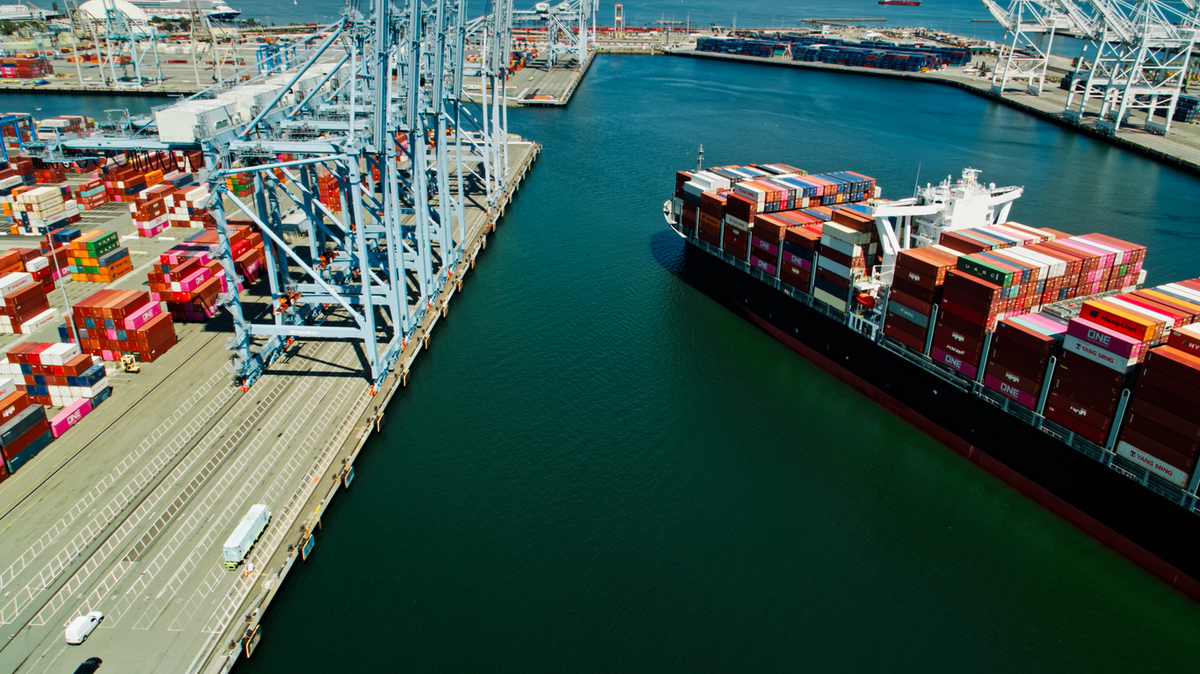
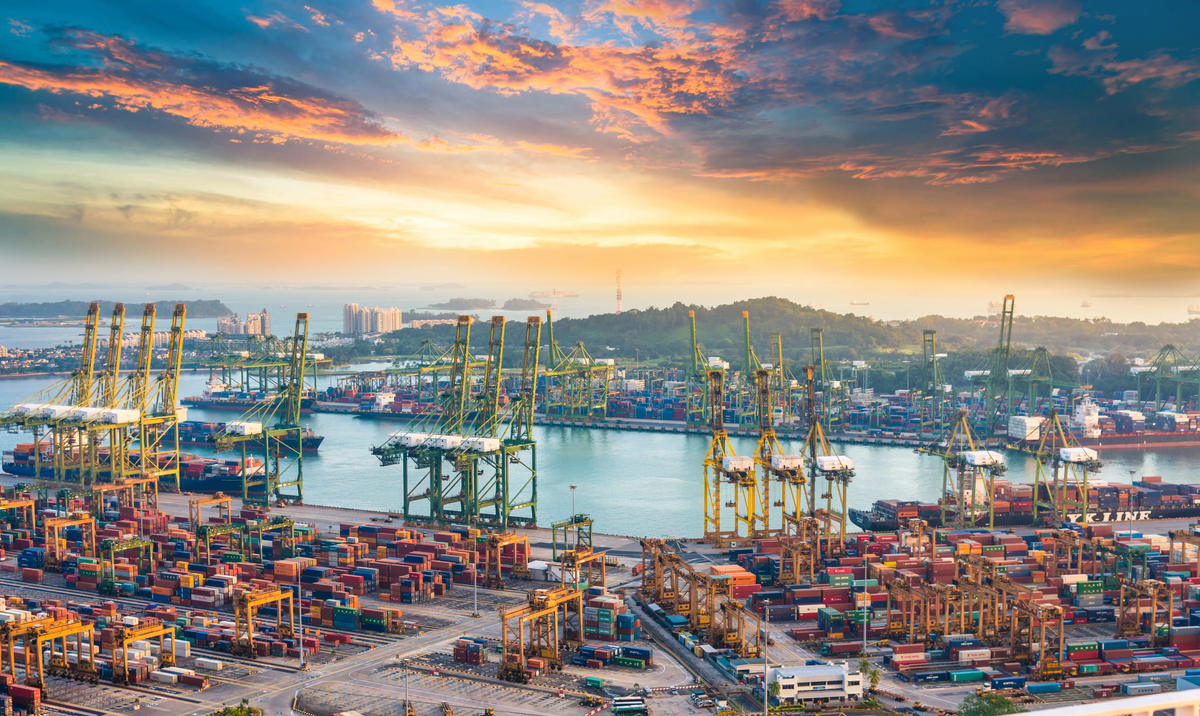 IMAGE: Container ship with working crane bridge in shipyard in Singapore. Getty Images
Singapore and Malaysia
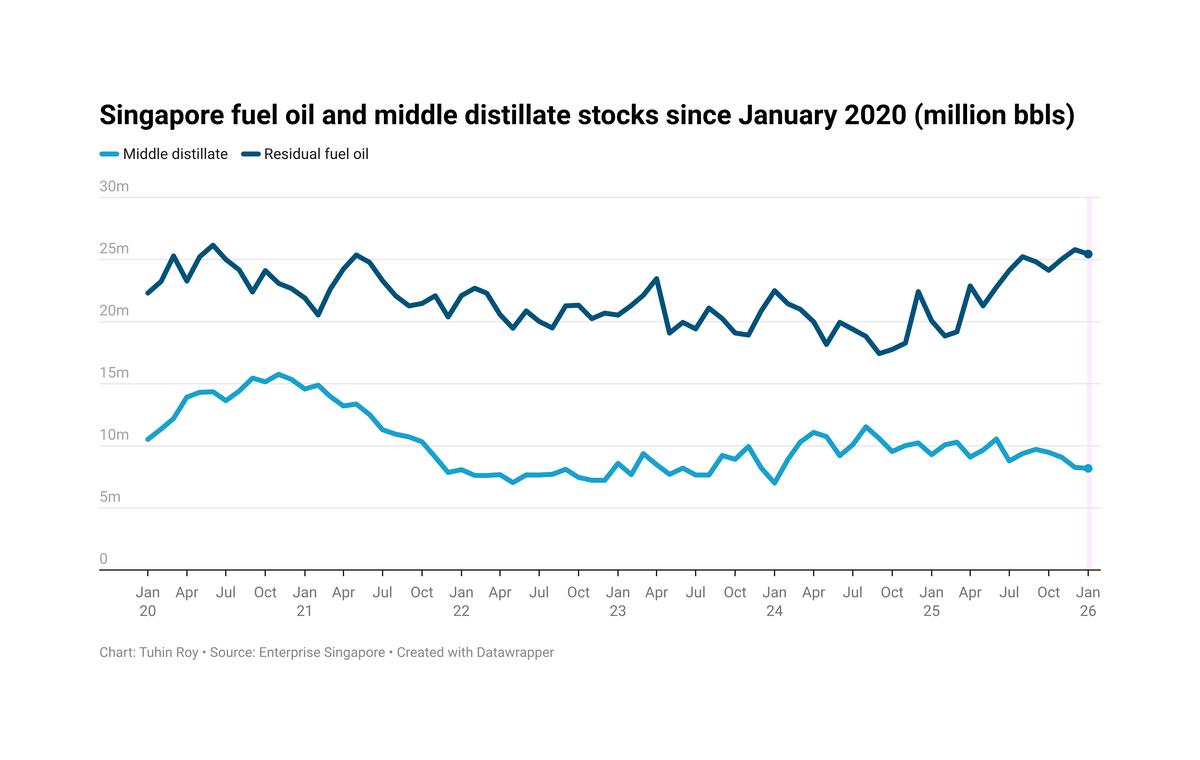
VLSFO lead times in Singapore remain uneven, ranging from roughly four days to as long as 11 days, almost unchanged from last week’s 5–11 days. HSFO now requires 3–9 days of notice, slightly shorter than last week’s 6–9 days.
Singapore’s LSMGO price has dropped by more than $50/mt in the past day, hitting its lowest level since late October. The grade had held firm since the end of October as sanctions and outages linked to Russia tightened global gasoil supply, Indian exports weakened, and local bunker demand stayed strong.
As December began, that support eased: markets unwound some geopolitical risk premium on expectations of a possible Ukraine–Russia ceasefire, Chinese diesel exports are poised to increase, and gasoil cracks and futures retreated after running ahead of fundamentals, according to sources.
LSMGO availability in Singapore is healthy, with lead times of 3–7 days, compared with 2–8 days last week.
In Malaysia’s Port Klang, VLSFO and LSMGO remain easy to secure — particularly for smaller prompt stems — while HSFO continues to face tight supply.
East Asia
Demand in Zhoushan remains subdued, and suppliers are recommending 4–7 days of lead time for all grades, slightly shorter than the roughly seven days advised last week.
Fuel availability across northern China continues to vary. Dalian and Qingdao have adequate VLSFO and LSMGO, though HSFO remains tight in Qingdao. Tianjin is short on all grades. Shanghai still faces limited VLSFO and HSFO supply, while LSMGO availability is stable.
Further south, Fuzhou is short of both VLSFO and LSMGO. Xiamen has sufficient VLSFO but restricted LSMGO. Delivery options for both fuels remain constrained in Yangpu and Guangzhou.
In Hong Kong, lead times hold at around seven days for all grades, in line with recent weeks. Meanwhile, Taiwan’s ports — Keelung, Taichung, Hualien, and Kaohsiung — can generally deliver VLSFO and LSMGO within two days, almost unchanged from last week.
Bunker demand in South Korea is steady for now but is expected to soften later this week. Availability has tightened across all grades, with most suppliers now advising 5–9 days of lead time — a marked shift from the two-day prompt availability seen last week, a source said.
Weather-related disruptions are also expected in the coming week: Busan and Ulsan could be affected from 3–7 December, Yeosu from 2–8 December, and Daesan from 2–9 December, according to a trader.
In Japan, prompt VLSFO remains tight at major ports such as Tokyo, Chiba, Yokohama and Kawasaki. The fire at Idemitsu Kosan’s Yokkaichi refinery on 21 November has impacted production and left inventories critically low. As a result, supply in Osaka, Kobe and Mizushima is expected to remain strained through the end of December, a source noted.
LSMGO supply is generally stable, but securing prompt stems in Mizushima is challenging. LSMGO also remains tight in Nagoya and Yokkaichi.
B24-VLSFO is available only on request in Tokyo, Chiba, Kawasaki and Yokohama. HSFO remains tight across most ports, and Nagoya, Yokkaichi and Tokuyama are short of all grades.
Oceania
In Western Australia, VLSFO and LSMGO remain easy to secure at Kwinana and Fremantle, with most suppliers working on roughly seven-day lead times. Deliveries are mainly by barge from a single supplier, though LSMGO can also be moved by truck. Strong afternoon winds continue to disrupt schedules from time to time.
In New South Wales, Port Kembla can supply VLSFO via both truck and pipeline, with pipeline deliveries starting at about 70 mt and smaller volumes handled by truck. Sydney has one operating barge and can also deliver by truck and, at select berths, by pipeline. Scheduling there often shifts around naval and cruise vessel movements. VLSFO and LSMGO stocks remain solid, while HSFO is tight. Suppliers typically ask for around seven days’ notice. Seasonal cruise traffic from December to February in Sydney, Cairns and Darwin could add some pressure.
Brisbane and Gladstone in Queensland continue to offer VLSFO and LSMGO with seven-day lead times. HSFO is available only on request in Brisbane, and Gladstone still experiences occasional weather delays. Access issues persist at Brisbane’s AAT terminal. Two barges now operate in Brisbane under different suppliers, both offering VLSFO and LSMGO, with HSFO supplied on enquiry.
In Victoria, Melbourne and Geelong hold healthy stocks of VLSFO and LSMGO. HSFO is tight for prompt supply, though Melbourne currently has adequate volume. Both ports rely on a single barge, and Bass Strait weather can cause delays. Seven-day lead times remain the norm, while LSMGO can be trucked to smaller ports like Portland and Port Welshpool within 2–3 days.
Overall, Australia’s bunker supply is steady, with seven-day notice still the standard. Deliveries within 3–4 days are often possible thanks to robust stock levels. Even in ports with pipeline options, including Darwin and Dampier, suppliers continue using trucks to support supply.
In New Zealand, availability remains stable. VLSFO is widely accessible at Tauranga and Auckland, with pipeline links at certain Tauranga berths. Marsden Point can deliver both VLSFO and LSMGO via pipeline to cargo vessels.
Northern Australia’s cyclone season, which runs from November to April, is expected to bring intermittent disruptions, with 9–11 cyclones forecast this season, a source said.
South Asia
Bunkering at the Port of Colombo resumed yesterday after Cyclone Ditwah forced terminal closures on Friday.
“Port operations have resumed, and supplies have started. We have been informed that considerable damage has occurred, and teams are now working to clear delays,” a port operations executive told ENGINE yesterday.
Although the cyclone has moved away from Colombo, internal flooding persists, a trader noted.
Supply has tightened sharply in both Colombo and Hambantota, with one supplier now advising roughly nine days of lead time — a stark jump from last week’s prompt 1–2 days.
The cyclone has since weakened into a depression and is bringing heavy rain and flooding to Tamil Nadu’s coastline.
Indian ports of Chennai, Ennore and Kattupalli report no disruption to berthing or unberthing, but cargo operations are partially affected following hours of continuous rain, according to GAC Hot Port News.
Middle East
Prompt bunker supply in Fujairah remains tight across all grades, with several suppliers struggling with tight delivery schedules. Most continue to advise 5–7 days of lead time, though some can still arrange urgent stems at a premium, a source said. Conditions are much the same in nearby Khor Fakkan.
In Iraq’s Basrah, VLSFO and LSMGO remain easy to source, while HSFO is still limited. Saudi Arabia’s Jeddah has seen better availability of VLSFO and LSMGO, but port congestion continues to slow down deliveries.
Egypt’s Port Suez is facing the opposite dynamic, with VLSFO, LSMGO and HSFO nearly depleted. Qatar’s Ras Laffan is also tight on VLSFO and LSMGO. Djibouti is under significant pressure as well, with VLSFO and HSFO almost exhausted and LSMGO close to running out.
Oman’s ports — Sohar, Salalah, Muscat and Duqm — remain steady, offering reliable LSMGO supply with prompt delivery dates.
By Tuhin Roy
Please get in touch with comments or additional info to news@engine.online