East of Suez Fuel Availability Outlook 29 Sep
Bunker demand low in Singapore
Availability tight in Zhoushan
Availability good across several Sri Lankan ports
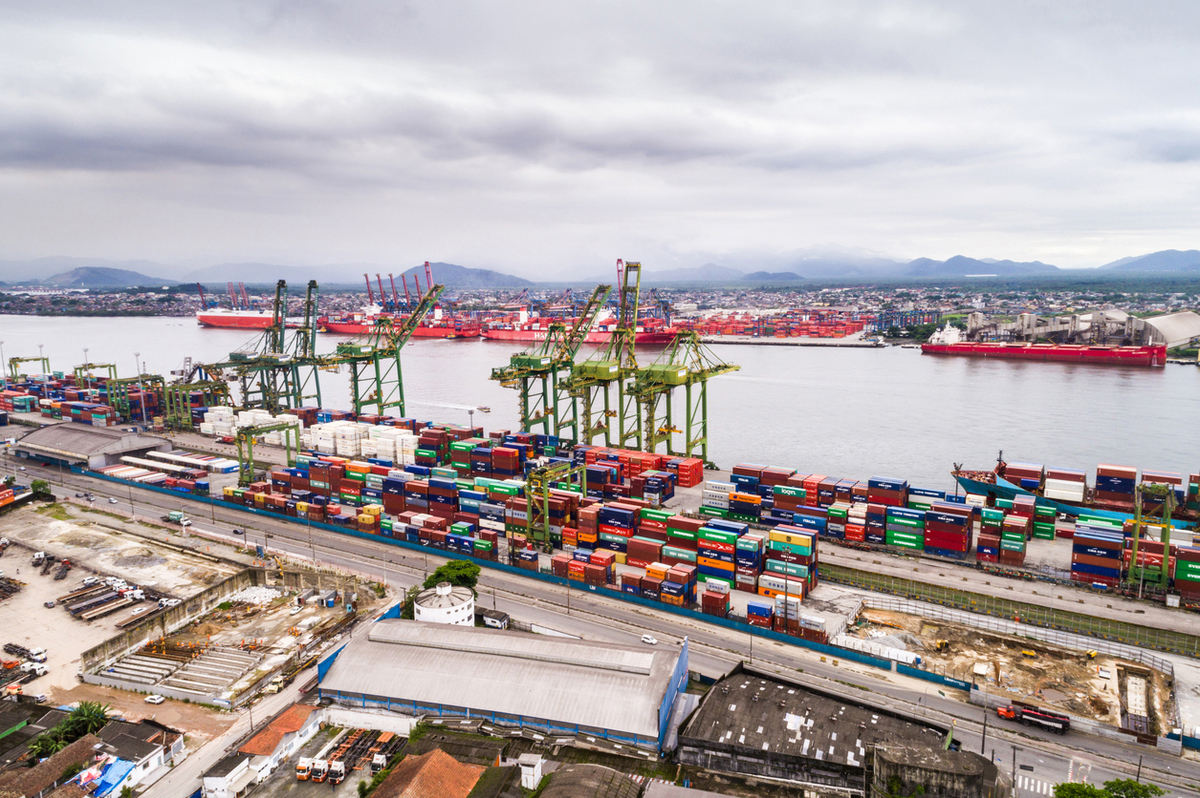
 IMAGE: Cargo ships docked at Tauranga Harbour Port with Mount Maunganui in the background. Getty Images
Singapore and Malaysia
Singapore’s bunker market continues to face supply tightness despite “below average demand,” with recommended lead times for VLSFO now around 10-15 days, down from 13-17 days a week earlier. Most suppliers are maintaining low stock levels, while delays in cargo arrivals linked to the conflict in the Middle East have placed additional pressure on availability, according to a Singapore-based source.
HSFO availability has also tightened, with advised lead times increasing to around 10-15 days, compared with 9-12 days last week. Meanwhile, LSMGO supply remains relatively healthy, with lead times of around five days, improving from 5-7 days previously.
At Malaysia’s Port Klang, bunker supply remains constrained across several grades. Prompt VLSFO availability is particularly tight, while LSMGO supply remains limited and HSFO availability continues to face pressure.
East Asia
Bunker availability remains tight in Zhoushan, where several suppliers are running low on stocks and delayed replenishment cargoes are further restricting supply. Lead times for VLSFO and HSFO have increased to around 14 days, from 10 days and seven days, respectively. LSMGO lead times have also lengthened to about 10 days, from seven days.
Supply conditions remain uneven across other Chinese ports. Dalian and Qingdao have adequate VLSFO and LSMGO stocks, although HSFO availability remains tight in Qingdao. Tianjin is experiencing shortages across all three major grades, while Shanghai has limited VLSFO and HSFO availability but relatively stable LSMGO supply.
Tightness is also evident in southern China. Suppliers in Fuzhou and Xiamen are short of VLSFO and LSMGO, while availability of both grades remains constrained in Yangpu and Guangzhou.
Bunkering activity is expected to slow at several Chinese ports during the National Day Golden Week holiday from 1-7 October, according to a China-based source. Deliveries against existing orders are expected to continue as normal during the holiday, but 28 September was the final day at most ports to place stem orders for delivery during the holiday period.
Hong Kong’s bunker market remains broadly unchanged, with suppliers continuing to quote lead times of around seven days for the major grades.
In Taiwan, VLSFO and LSMGO can be delivered within two days in Keelung and Hualien, while lead times in Taichung and Kaohsiung stand at around 2-3 days.
South Korea is also seeing longer lead times. At southern ports, including Busan, Ulsan, Masan, Onsan, Yeosu and Kwangyang, lead times for all major grades have settled at around 5-11 days, compared with around nine days a week earlier. Western ports, including Incheon, Daesan, Dangjin, Pyeongtaek and Taean, are showing a similar trend, with VLSFO, LSMGO and HSFO lead times also at around 5-11 days, versus about nine days previously.
Weather-related disruptions could add further pressure to supply in the coming days. Bunkering operations at Busan and Ulsan could be affected on 6 October because of bad weather. Yeosu may face disruptions from 29-20 September, while Daesan could see interruptions between 20 September-2 October and again on 5-6 October.
In Japan, a major refinery’s operational issues have been resolved and fresh offers were expected to resume last week. However, actual inquiries failed to generate any quotes, particularly for early October loading and especially for VLSFO, according to a Japan-based trader.
Refineries across Japan are still finalising and adjusting their October loading schedules. As a result, suppliers are temporarily holding back on communications and new offers until their internal cargo allocations are firmly confirmed.
“The spot market remains extremely tight and volatile, and avail is subject to enquiry basis,” the trader added.
Availability of VLSFO, LSMGO and HSFO has tightened at several Japanese ports, including Tokyo, Chiba, Kawasaki, Nagoya, Yokkaichi, Osaka, Kobe, Mizushima, Tokuyama and Oita. Supplies of all three grades are virtually unavailable this month, while October and later stems remain subject to inquiry. Kashima continues to experience tight availability of VLSFO and HSFO.
Indonesia, however, continues to have healthy bunker fuel availability. Suppliers in Jakarta, Surabaya, Balikpapan and Cigading are generally recommending VLSFO lead times of just 2-3 days.
Oceania
Bunker fuel supply in Western Australia remains stable, with VLSFO readily available at Kwinana and Fremantle. Suppliers at both ports are quoting lead times of around seven days. Each port is served by a single supplier, with all bunker deliveries carried out by barge.
Supply conditions are more mixed along Australia’s east coast. At Port Kembla, VLSFO availability is normal, with deliveries possible by truck or pipeline. Sydney has adequate supplies of both VLSFO and LSMGO, although HSFO availability is comparatively tighter, with suppliers generally requiring around seven days’ notice.
Further north, Brisbane and Gladstone have ample VLSFO and LSMGO availability, with lead times of roughly one week. Melbourne and Geelong also have comfortable VLSFO stocks, although both ports rely on a single bunker barge, keeping lead times at around seven days. HSFO availability has tightened further in both, Melbourne and Brisbane.
Separately, one supplier is offering VLSFO, LSMGO and HSFO at Brisbane, Sydney and Melbourne, with shorter lead times of approximately five days.
In Western Australia, pipeline bunkering at Dampier Cargo Wharf (DCW) has resumed after being suspended in late July, according to a source. However, the cyclone season, which begins in a month, running from November through April, could affect bunker fuel availability across Australian ports, the source added.
Across the Tasman Sea, New Zealand’s bunker market remains broadly stable. VLSFO is readily available at Tauranga and Auckland, with suppliers quoting lead times of around four days. At Marsden Point, vessels can receive both VLSFO and LSMGO directly via pipeline.
Weather remains the main operational risk in New Zealand. Wellington and ports across the South Island are particularly vulnerable to bunker delivery delays when adverse conditions disrupt marine operations.
South Asia
Bunker supply remains broadly stable at major Indian ports, with suppliers recommending lead times of around 3–4 days for VLSFO, HSFO and LSMGO at Mumbai, Cochin, Paradip, Visakhapatnam, Kakinada, Haldia, Chennai, Tuticorin and New Mangalore, largely unchanged from the previous week, an India-based source said.
In Sri Lanka, the bunker market is also broadly stable, with all major grades available at Colombo and Hambantota. One supplier is recommending lead times of around six days for all grades.
However, intermittent weather-related disruptions are expected at Colombo from 29 September-2 October, which could delay bunker deliveries during the period.
Middle East
“Current [bunker supply] situation in the Middle East is still quite tight, particularly around Fujairah, where bunker availability remains constrained and prices are volatile due to the regional situation,” a Middle East-based trader said.
Bunker supply in Fujairah remains severely restricted as US-Iran tensions continue to disrupt vessel traffic through the Strait of Hormuz, according to a regional source. Availability of all major grades is extremely limited, while fuel oil arrivals have fallen sharply amid heightened uncertainty across the region. Replenishment cargoes could arrive at the port in the first week of October, another source said.
Similar supply pressure is being reported at nearby Khor Fakkan, where availability of all grades remains tight.
In Saudi Arabia, VLSFO and LSMGO availability at Jeddah remains steady. However, adverse weather could intermittently disrupt bunkering operations at Jeddah and Yanbu between 29 September and 3 October.
At Qatar’s Ras Laffan, supplies of both VLSFO and LSMGO remain restricted.
In Oman, “operations are running well, but the ports are currently quite busy, which may affect delivery lead times,” an Oman-based trader said.
LSMGO availability remains stable at key Omani ports, including Salalah, Muscat, Duqm and Sohar, with suppliers recommending lead times of around 1-2 days. Rough weather conditions are forecast at Salalah from 29 September-2 October, potentially disrupting bunkering operations.
In Egypt, bunker inventories at Port Suez have fallen to critically low levels across all three conventional fuel grades. Further south, Djibouti is also facing limited availability of the major fuel grades.
By Tuhin Roy
Please get in touch with comments or additional info to news@engine.online