East of Suez Market Update 14 Apr
Prices in East of Suez ports have moved down, and supply of all grades is subject to firm enquiry in Fujairah.
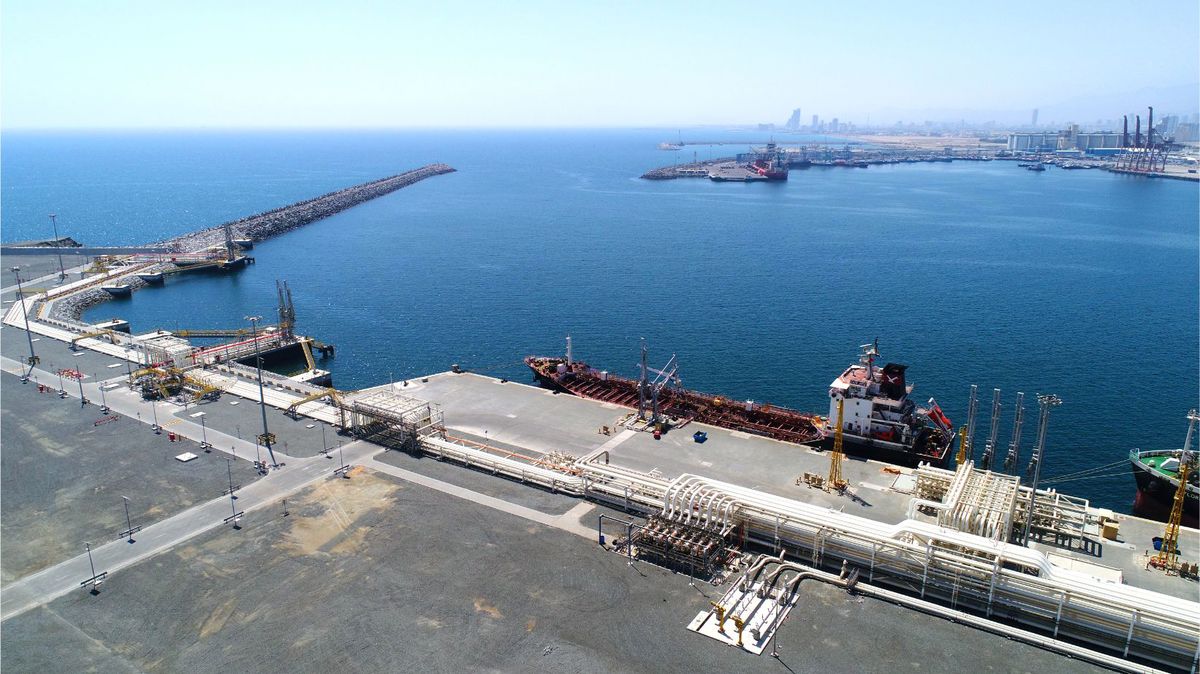
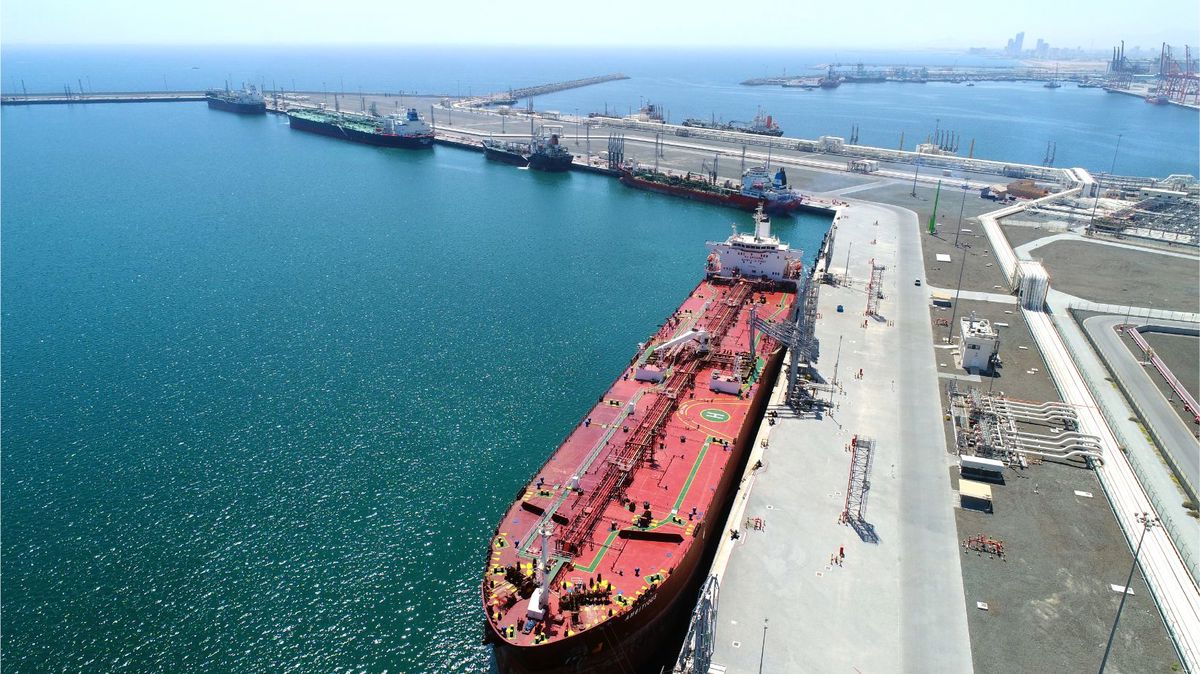 IMAGE: Vessel docked at berth in Fujairah, UAE. Port of Fujairah
Changes on the day to 17.00 SGT (09.00 GMT) today:
- VLSFO prices down in Fujairah ($74/mt), Singapore ($51/mt) and Zhoushan ($39/mt)
- LSMGO prices down in Zhoushan ($246/mt), Singapore ($151/mt) and Fujairah ($96/mt)
- HSFO prices down in Fujairah ($64/mt), Zhoushan ($51/mt) and Singapore ($50/mt)
- B30-VLSFO prices down in Singapore ($15/mt)
VLSFO benchmarks across the three major Asian bunker ports have fallen sharply over the past day, with Fujairah recording the steepest drop. Consequently, Fujairah’s VLSFO premium over Singapore has narrowed to near parity, while its slight premium over Zhoushan has reversed into a $26/mt discount.
“Things are starting to improve slightly [in the Middle East] following recent news after the temporary ceasefire in the Middle East, oil flows have partially resumed and market pressure has eased,” a Middle East-based trader said.
Bunkering activity at the Port of Fujairah remains uninterrupted despite the ongoing regional tensions, although supply remains tight.
Last month, authorities in Fujairah and Khor Fakkan Port issued navigational warnings after reports of intermittent GPS spoofing and signal jamming offshore. Such disruptions can lead to inaccurate positioning, erratic vessel movements and misleading navigation data, prompting mariners to treat the area as high risk, according to Inchcape Shipping.
Even so, most terminals and anchorages continue to function without disruption.
“Avails [are] ok as off now, all offers are subject to firm inquiry,” another trader said.
Bunkering operations are progressing, but some suppliers are only loading barges based on actual demand rather than fully. Demand in Fujairah remains subdued, the trader added.
Elsewhere in the UAE, operations at Jebel Ali Port, Hamriyah Port and Sharjah Port continue as normal. Petroleum terminals in Abu Dhabi, including Ruwais Port, are also operating without interruption.
Ship-to-ship (STS) operations at Dubai anchorage have now resumed with tug assistance, with each operation being assessed individually, the shipping agency said.
“However, the situation is still fragile, as the recent conflict and disruptions in the Strait of Hormuz had previously tightened supply and pushed prices up sharply, so the market remains sensitive to any new developments,” the Middle East-based trader warned.
Brent
The front-month ICE Brent contract has declined by $4.55/bbl on the day, to trade at $98.21/bbl at 17.00 SGT (09.00 GMT) today.
Upward pressure:
Brent’s price has remained well supported by supply disruption concerns in the Middle East after the US military announced enforcing a blockade in the Strait of Hormuz.
US President Donald Trump said that Washington will block every vessel coming in and out of Iranian ports – multiplying concerns about crude oil flows through the region.
A US blockade, which came into force yesterday, can curtail about 3 to 4 million b/d of regional crude oil supply, according to ANZ Bank’s senior commodity strategist Daniel Hynes.
Iran has already issued fresh threats to target vessels and ports in response to the US blockade, Al Jazeera reported.
“The US naval action could test the fragile ceasefire and raise the prospect of a re-escalation of the Middle East conflict,” Hynes said.
Downward pressure:
Brent’s price rally lost steam after Trump said Iran “wants to make a deal.” The comments came during a last-minute press conference at the White House yesterday, The Guardian reported.
“This suggests financial markets continue to look through the conflict to possible barrels being back on the market,” Hynes said.
However, Trump said during the press brief that Washington will not agree to a peace deal unless Tehran gives up its nuclear ambitions completely.
Diplomatic efforts to restart a dialogue between the US and Iran are continuing, with Pakistan reportedly offering to host the next round of talks in Islamabad, Al Jazeera reported.
“Oil is trading on the likelihood of de-escalation rather than outright supply disruption,” SPI Asset Management managing partner Stephen Innes said.
By Tuhin Roy and Aparupa Mazumder
Please get in touch with comments or additional info to news@engine.online