East of Suez Market Update 8 Sep
LSMGO and HSFO prices in East of Suez ports have moved higher, while availability of all grades is tight in Singapore.
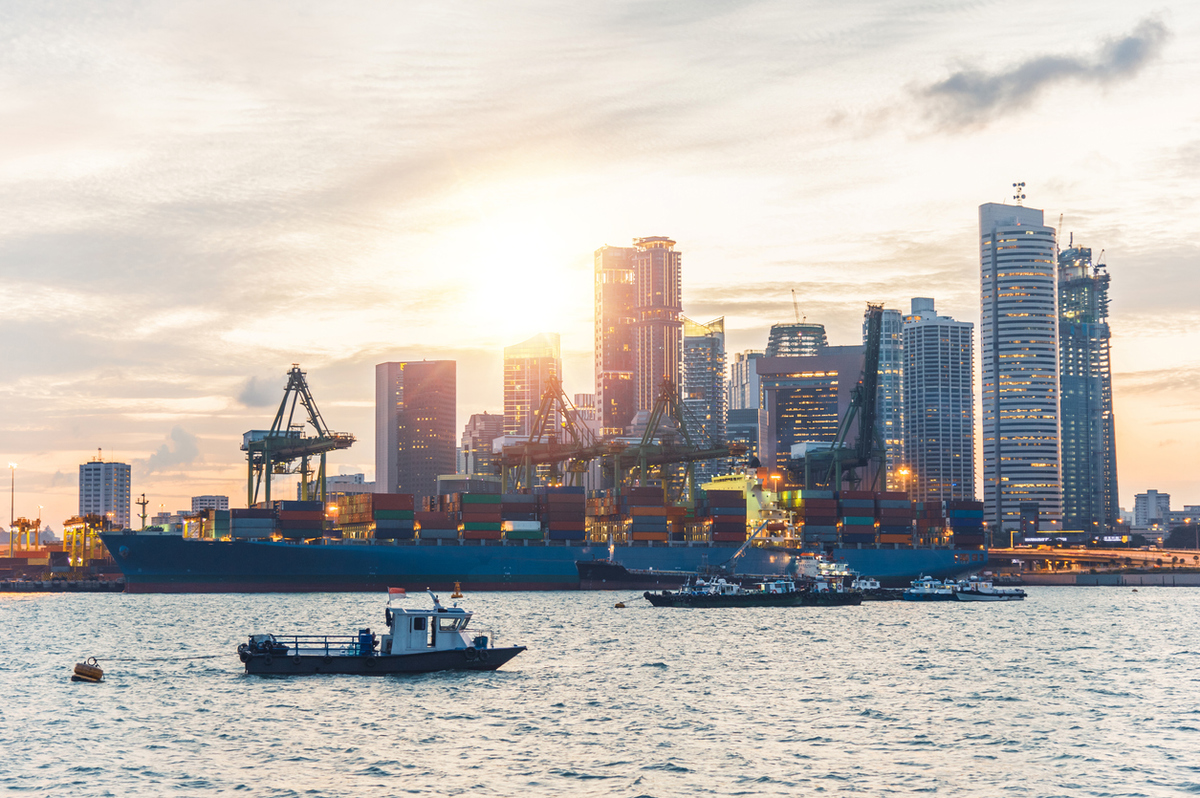 IMAGE: Container and cargo ships with a crane in Singapore. Getty Images
Changes on the day to 17.00 SGT (09.00 GMT) today:
- VLSFO prices up in Zhoushan ($27/mt), unchanged in Singapore, and down in Fujairah ($4/mt)
- LSMGO prices up in Zhoushan ($35/mt), Singapore ($14/mt) and Fujairah ($12/mt)
- HSFO prices up in Fujairah ($13mt), Zhoushan ($7/mt) and Singapore ($5/mt)
- B30-VLSFO price down in Singapore ($28/mt)
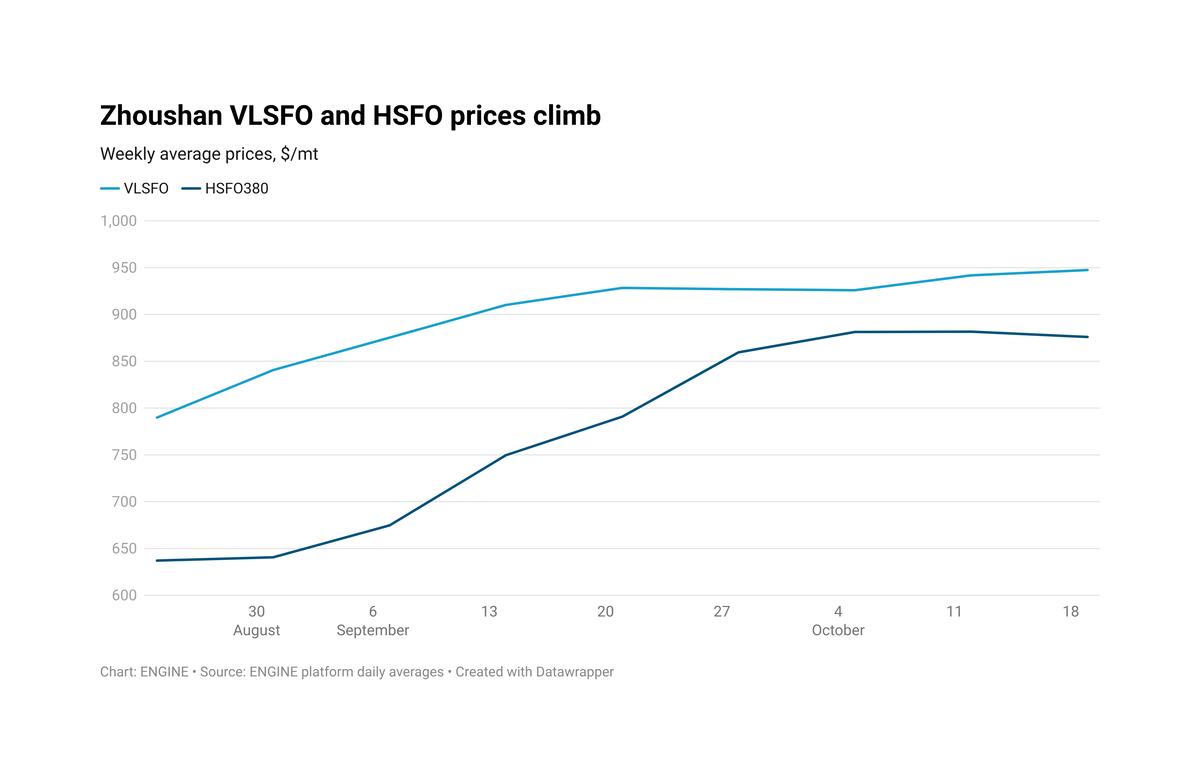
VLSFO benchmarks across Asia’s three major bunker hubs have moved in different directions over the past day. Singapore’s VLSFO is at a $16/mt discount to Zhoushan and almost at the same level as Fujairah.
Despite subdued demand, bunker supply in Singapore remains constrained. Recommended lead times for VLSFO are 12-15 days, compared with 9-16 days a week earlier. A source attributed the tight availability to reduced supply and a shortage of blending components.
HSFO supply is also tight, with advised lead times of 10-12 days, compared with 8-16 days previously. LSMGO lead times are around 7-10 days.
At Malaysia’s Port Klang, bunker supply remains constrained. Prompt VLSFO availability is tight, while LSMGO remains limited and HSFO continues to face supply pressure.
Brent
The front-month ICE Brent contract has gained by $2.68/bbl on the day, to trade at $99.24/bbl at 17.00 SGT (09.00 GMT) today.
Upward pressure:
Brent crude is trading close to triple-digit territory after Iran said it would have complete control over the Strait of Hormuz, Bloomberg reported.
Tehran is preparing a final agreement with Oman to establish a new shipping corridor through the strait and retain complete control over it.
“The recent escalation of the Middle East conflict has increased the likelihood of a prolonged standoff, punctuated by calibrated military action by the US and Iran,” ANZ Bank’s senior commodity strategist Daniel Hynes said.
Meanwhile, Washington has rejected Tehran's assertion of authority over the Strait of Hormuz, maintaining that the vital waterway remains a transit corridor under international law.
The latest escalation “could see Persian Gulf supply remain constrained through the rest of 2026. We don’t expect a full return to pre-war throughput until late Q1 [first quarter] or early Q2 [second quarter of] 2027,” Hynes added.
Downward pressure:
While there is no major downward pressure on Brent’s price today, market analysts will continue to monitor volumes of oil flowing through the Strait of Hormuz.
Last week, US secretary of energy Chris Wright said 17 million bbls of crude passed through the waterway on 31 August, the highest in recent months, Reuters reported.
“If Strait of Hormuz flows continue uninterrupted despite the latest escalation, the upward pressure on prices may begin to fade,” two analysts from ING Bank noted.
By Tuhin Roy and Aparupa Mazumder
Please get in touch with comments or additional info to news@engine.online