Europe & Africa Market Update 16 Oct
Bunker prices in European and African ports have mostly gained, and fuel availability remains tight in South African ports.
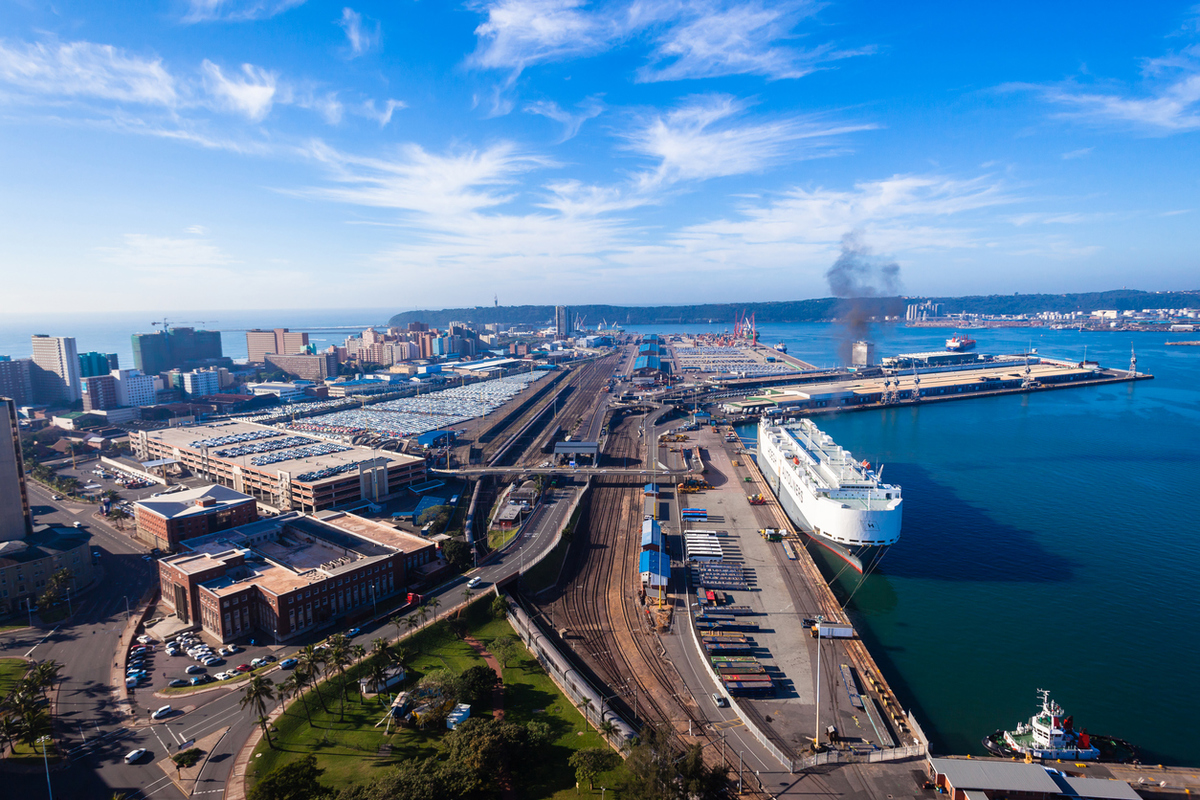 IMAGE: Aerial view of Durban port landscape. Getty Images
Changes on the day to 09.00 GMT today:
- VLSFO prices up in Gibraltar ($10/mt) and Rotterdam ($8/mt), and down in Durban ($55/mt)
- LSMGO prices up in Durban ($33/mt), Gibraltar ($8/mt) and Rotterdam ($3/mt)
- HSFO prices up in Rotterdam ($7/mt), Durban ($6/mt) and Gibraltar ($3/mt)
Durban’s VLSFO price has dropped by $55/mt over the past day, despite Brent's gains, possibly weighed down by a lower-priced, 150-500 mt stem, fixed at $1,185/mt.
Durban’s VLSFO price is well above prices in Cape Town and Port Louis. The grade's premium over Cape Town's VLSFO has widened by $48/mt, after the latter's price fell sharply by $103/mt in a single session.
Durban's VLSFO premium over Port Louis’ has narrowed by $68/mt in the last day.
Availability of VLSFO and HSFO remains tight in Durban and Cape Town, with both grades requiring lead times of at least 10-15 days, a trader told ENGINE.
Winds of around 25 knots are forecast in Durban on Saturday. Winds are forecast to strengthen on Monday, reaching gusts of up to 40 knots and waves of up to 5 metres. This may cause some bunkering disruptions at the port.
Brent
The front-month ICE Brent contract has gained by $1.14/bbl on the day, to trade at $105.24/bbl at 09.00 GMT.
Upward pressure:
Brent crude’s price has felt some upward pressure after the US Energy Information Administration (EIA) reported a sharp draw in US commercial crude oil stocks.
Commercial US crude oil inventories decreased by around 8.6 million bbls to 415.6 million bbls in the week ending 9 October, according to data from the EIA.
The EIA data marks “the largest weekly decline since February,” two analysts from ING Bank said. A draw in US crude stocks typically indicates stronger demand for oil and can support Brent’s price.
Uncertainty in the Middle East and concerns over oil flows through the Strait of Hormuz have led the global oil market to price in a “significant risk premium”, according to ING Bank’s analysts.
The analysts added that some kind of agreement between the US and Iran would be needed for that premium to be fully removed.
Downward pressure:
Brent’s gains have been capped after members of the International Energy Agency (IEA) agreed to accelerate the release of oil from emergency stockpiles.
IEA members have collectively released about 330 million bbls of crude oil and petroleum products from strategic reserves so far.
The release accounts for the bulk of the 400 million-bbl stock draw pledged by the 32-member countries earlier this year.
By Nachiket Tekawade and Aparupa Mazumder
Please get in touch with comments or additional info to news@engine.online