Europe & Africa Market Update 2 Feb
Fuel prices across European and African ports have declined, while rough weather continues in the Gibraltar Strait.
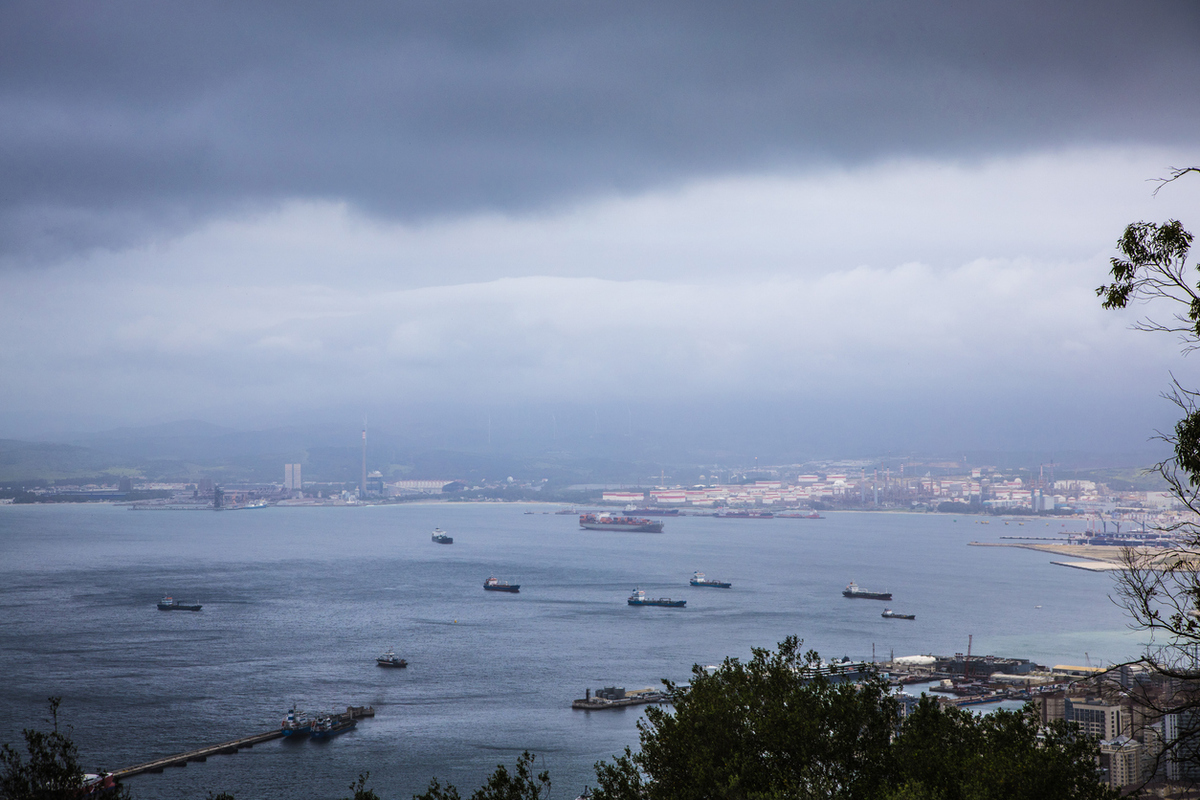 IMAGE: Aerial view of Gibraltar Harbour, with dark storm clouds in the background. Getty Images
Changes on the day, from Friday, to 09.00 GMT today:
- VLSFO prices down in Durban ($44/mt), Gibraltar ($31/mt) and Rotterdam ($28/mt)
- LSMGO prices down in Gibraltar ($50/mt) and Rotterdam ($45/mt)
- HSFO prices down in Durban, Gibraltar ($29/mt) and Rotterdam ($26/mt)
- B30-VLSFO prices down in Gibraltar ($66/mt) and Rotterdam ($41/mt)
Bunker fuel prices in the three major ports have seen steep declines over the weekend, tracking the slump in Brent price.
The price of LSMGO in Ceuta has declined by $75/mt, and its premium over Gibraltar has narrowed to $28/mt, from $53/mt on Friday.
After briefly resuming over the weekend, inbound traffic has again been suspended at Gibraltar due to a strong wind warning from Gibraltar Port Authority, according to port agent MH Bland. Rough westerly winds of above 30 knots are expected until 7 February.
From a high of around 40 vessels awaiting bunkers, congestion has come down today at the Mediterranean port, with around 12 vessels currently waiting, MH Bland said.
Operations in neighbouring Algeciras have resumed, but some suppliers are running anywhere between 6 hours to a day behind schedule, the port agent added.
In Ceuta, all operations at anchorage have been suspended due to rough weather, while ex-pipe supplies can be carried out with the pilot’s approval, according to MH Bland.
Prompt supplies remain tight and buyers are recommended longer lead times of around 8-10 days for all fuel grades, a trader said.
Brent
The front-month ICE Brent contract has plunged by $4.24/bbl on the day from Friday, to trade at $65.84/bbl at 09.00 GMT.
Upward pressure:
Brent has retained some ground after official drilling figures showed steadiness in US oil rigs. The total number of oil rigs remained unchanged over the week at 411, according to Baker Hughes.
The US oil rig count is seen as an indicator of future oil production. It reflects how much oil drilling activity is happening, or expected to happen, in the shale sector.
In a tight market, any signal of reduced future supply can put upward pressure on Brent’s price.
Downward pressure:
Brent crude’s price has plunged by nearly $5/bbl at the start of this week, following reports that negotiations between Washington and Tehran have progressed.
US President Donald Trump said Iran is “seriously talking” with Washington, Reuters reported.
“The distinct shift in his [Trump’s] messaging has eased concerns of supply disruptions,” remarked ANZ Bank’s senior commodity strategist Daniel Hynes.
The news has eased geopolitical tensions with the OPEC member that could cut supply from the market, analysts said.
“The selloff follows reports of fresh US-Iran negotiations, raising the possibility of a deal and easing geopolitical risk premium,” two analysts from ING Bank said.
By Nachiket Tekawade and Aparupa Mazumder
Please get in touch with comments or additional info to news@engine.online