Europe & Africa Market Update 31 Aug
Bunker prices in European and African ports have moved in mixed patterns, while fuel availability is tight for prompt supplies in Durban.
Changes on the day from Friday to 09.00 GMT today:
- VLSFO prices up in Durban ($35/mt), Rotterdam ($12/mt) and Gibraltar ($4/mt)
- LSMGO prices up in Gibraltar ($28/mt), Durban ($26/mt) and Rotterdam ($17/mt)
- HSFO prices down in Gibraltar ($12/mt), Rotterdam and Durban ($5/mt)
- B30-VLSFO prices up in Rotterdam ($24/mt) and Gibraltar ($12/mt)
HSFO prices have dropped in Europe and Africa's three major bunkering hubs, while VLSFO prices have seen gains.
The Hi5 spread in Rotterdam and Gibraltar have increased by $16-17/mt over the weekend, to $130/mt and $119/mt, respectively.
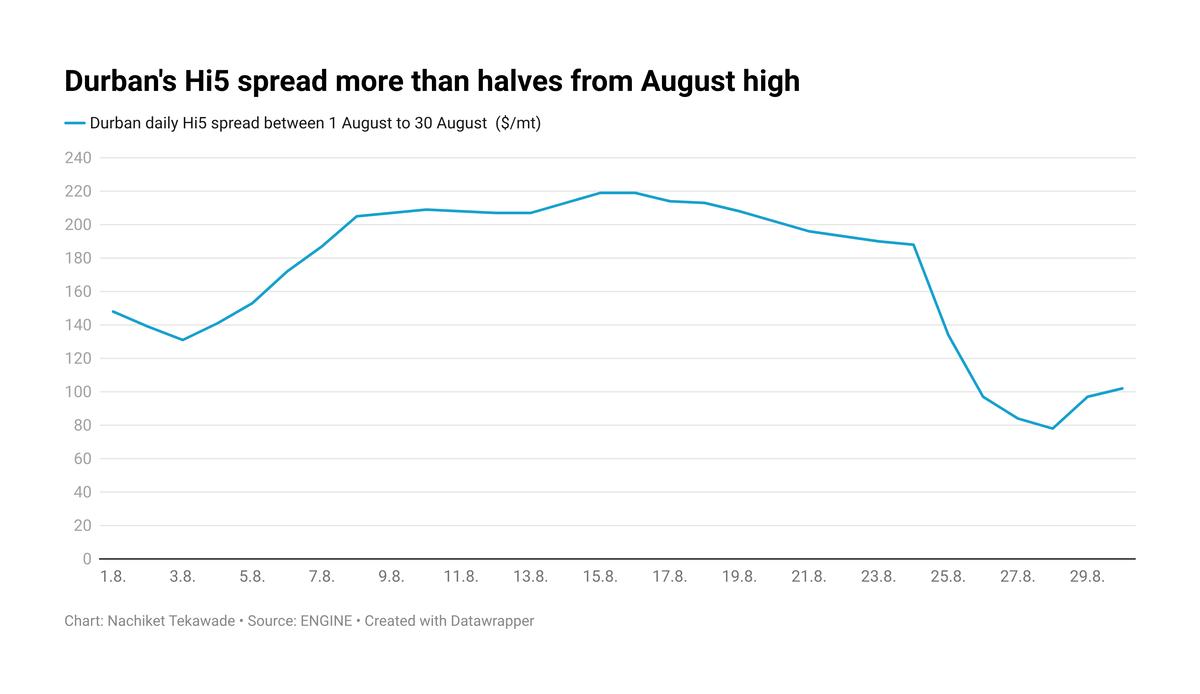
In Durban, the Hi5 spread has widened by $40/mt over the weekend, to $107/mt, as a result of a sharp increase in the port’s VLSFO price, compared to a small dip in the port’s HSFO price.
Despite the spread widening over the weekend, the past month has seen Durban’s Hi5 spread widen from $148/mt on 1 August, to as high as $219/mt in mid-August, before halving to current levels.
Prompt fuel supplies are tight in the South African port, with buyers advised a lead time of 5-7 days, a trader said. At least four vessels are expected to call in Durban for bunkering between 2-15 September, according to Transnet National Port Authority.
Brent
The front-month ICE Brent contract has gained by $1.70/bbl on the day from Friday, to trade at $91.24/bbl at 09.00 GMT.
Upward pressure:
Brent crude’s price has opened the week ahead of the $90/bbl mark as Washington and Tehran target each other in a fresh round of airstrikes.
The US army has struck Iranian missile launchers on Iran’s Larak Island, amid threats that Iran was to launch mines into the Strait of Hormuz, Reuters reported.
Meanwhile, Tehran has retaliated by attacking US bases in Jordan and US military assets in the UAE, Al Jazeera reported.
This flare-up marks the first active fire exchange between Washington and Tehran since late July.
Oil prices gained after “the US carried out targeted strikes against Iran, drawing retaliatory strikes and reinforcing concerns about a prolonged stalemate in the Persian Gulf,” two analysts from ING Bank noted.
Downward pressure:
While there are no major downward pressures acting on Brent’s price today, the market will keep an eye out for any development in the formalisation of the Iran-Oman temporary navigational corridor through the Strait of Hormuz.
The development will support the restoration of some commercial navigation through the waterway that once carried one-fifth of global seaborne oil flows, market analysts said.
By Nachiket Tekawade and Aparupa Mazumder
Please get in touch with comments or additional info to news@engine.online