Europe & Africa Market Update 31 July
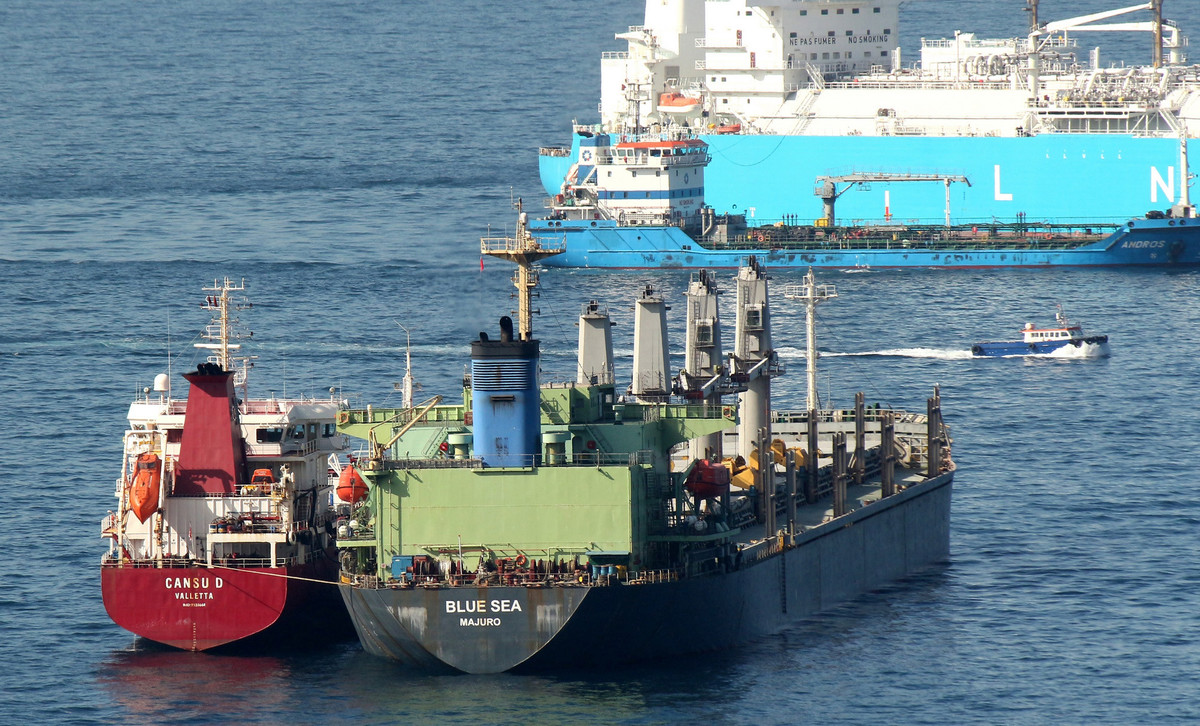
Bunker benchmarks have mostly dropped, and prompt fuel availability is tight off Malta.

Changes on the day to 09.00 GMT today:
- VLSFO prices down in Durban ($47/mt), Gibraltar ($36/mt) and Rotterdam ($31/mt)
- LSMGO prices down in Durban ($100/mt), Gibraltar ($56/mt) and Rotterdam ($54/mt)
- HSFO prices down in Gibraltar ($37/mt), Durban ($33/mt) and Rotterdam ($29/mt)
- B30-VLSFO prices down in Gibraltar ($47/mt) and Rotterdam ($33/mt)
The price of LSMGO off Malta has dropped $72/mt, compared to a $56/mt fall in Gibraltar. Four lower-priced 50-150 mt stems, fixed between $1,339-1,377/mt, may have put additional downward pressure on the benchmark.
The port’s VLSFO price has also declined $64/mt, again more steeply than in Gibraltar. A large stem of more than 1,500 mt, fixed at a low price of $752/mt, has possibly weighed on the price.
Meanwhile, the port’s ULSFO price has increased $9/mt in the past day, probably supported by a 150-500 mt stem fixed at $1,206/mt.
Both ULSFO and LSMGO prices at the offshore anchorage have increased by 38-41% in the past month, compared to an 18% increase in VLSFO’s price.
The Mediterranean Emissions Control Area (MedECA) sulphur limit of 0.1% increases demand for low sulphur bunker fuel grades like LSMGO and ULSFO.
Additionally, bunker supplier Peninsula said that Asia-bound Red Sea oil tankers, rerouting through the Suez Canal and the Mediterranean Sea, could increase demand for MedECA compliant fuel.
VLSFO supply is tight off Malta, with buyers advised booking around a week ahead, a trader said. LSMGO and ULSFO is also tight for prompt supplies, the trader added.
Brent
The front-month ICE Brent contract has declined by $3.38/bbl on the day, to trade at $88.28/bbl at 09.00 GMT.
Upward pressure:
Brent crude’s price is poised to end this month almost 20% higher than June, as the crisis in the Middle East continues to escalate.
Echoing Iran’s playbook in the Strait of Hormuz, Yemen’s Houthi militants are planning to impose a toll fee on commercial vessels attempting to transit the Bab al-Mandeb Strait into the Red Sea.
“Tanker traffic through the Bab al-Mandeb Strait has slowed, given the risk of attack from the Houthis in Yemen,” two analysts from ING Bank noted.
Bab al-Mandeb is another vital oil chokepoint, like the Strait of Hormuz, carrying about 7% of global seaborne oil flows.
Fresh attacks in the region threaten to deepen the global energy crisis, as traffic through the Strait of Hormuz is already facing severe disruption.
Downward pressure:
The drop in Brent’s price comes despite little improvement in tensions between the US and Iran.
According to market analysts, the weakness in oil prices can be attributed to the slightly improved vessel traffic through the Strait of Hormuz.
“Though [vessels transiting through the strait] still in single digits, there are also reports that the shuttling of oil across the strait has resumed,” ING Bank’s analysts remarked.
‘Shuttling of oil’ refers to tankers making short-distance trips to move crude oil across or out of the Persian Gulf, often to transfer it to larger vessels or bypass disrupted areas.
“This will not be detected by tracking data, given that transponders will be turned off,” ING Bank’s analysts said.
Moreover, US energy secretary Chris Wright claimed in an interview with Bloomberg that 13 million b/d of oil left the Persian Gulf over the past week
Considering Wright's claim - with roughly half moving through the strait and the remainder diverted through bypass pipelines - ING Bank’s analysts noted that this volume still translates to roughly 65% of pre-war levels.
By Nachiket Tekawade and Aparupa Mazumder
Please get in touch with comments or additional info to news@engine.online