Europe & Africa Market Update 8 June
Bunker prices across European and African ports have mostly increased, and prompt supplies remain tight in the Gibraltar Strait.
Changes on the day from Friday to 09.00 GMT today:
- VLSFO prices up in Durban ($100/mt), Rotterdam ($42/mt) and Gibraltar ($35/mt)
- LSMGO prices up in Rotterdam ($64/mt) and Gibraltar ($23/mt), and down in Durban ($284/mt)
- HSFO prices up in Rotterdam ($33/mt) and Gibraltar ($25/mt), and down in Durban ($16/mt)
- B30-VLSFO up in Gibraltar ($40/mt) and Rotterdam ($28/mt)
Gibraltar's LSMGO price recorded lesser gains than in Rotterdam. A 50-150 mt stem fixed in the Mediterranean port at a low price of $1,135/mt has put some downward pressure and limited the benchmark’s price increase.
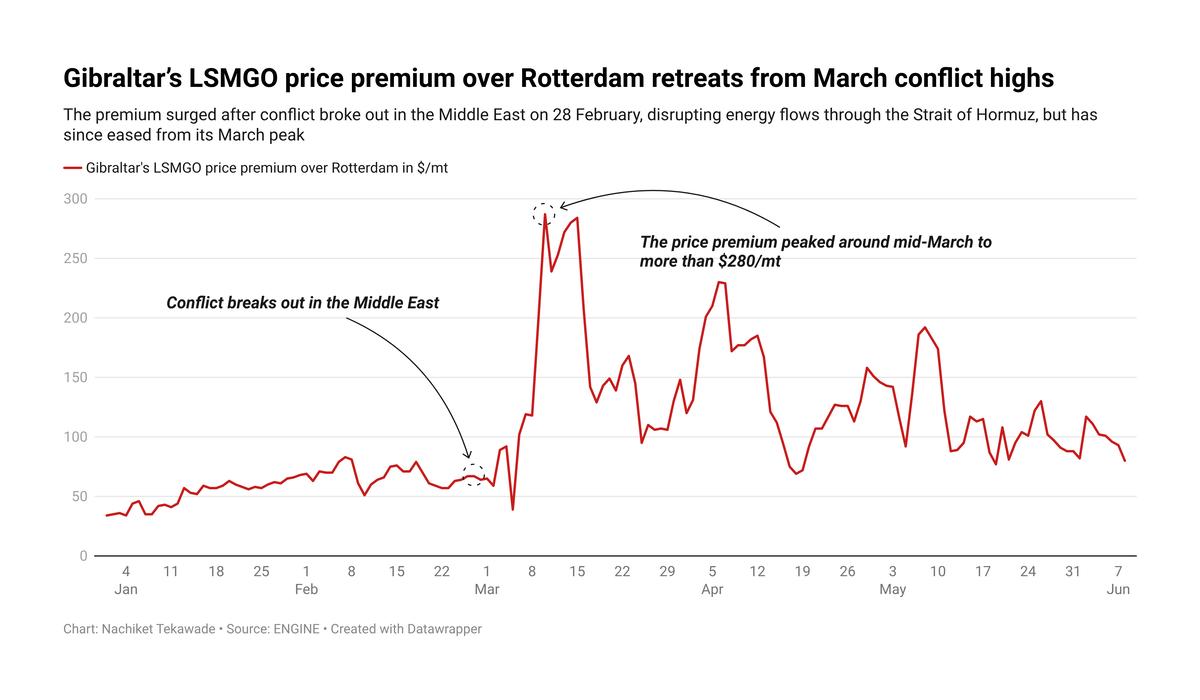
Gibraltar’s LSMGO price premium over Rotterdam has narrowed by around $41/mt since Friday.
The LSMGO price premium held by Gibraltar over Rotterdam surged after the conflict broke out in the Middle East and reached a peak of $287/mt on 10 March. It has since eased gradually, despite periodical spikes, to around $64/mt today. The price premium is now almost at the same level seen on 28 March, the day the conflict broke out in the Middle East.
Fuel availability remains tight in the Gibraltar Strait ports for LSMGO, HSFO and VLSFO, with buyers advised to book with a lead time of around 7-10 days to get good coverage from the region’s suppliers, a trader told ENGINE.
Ships calling in the Port of Gibraltar are facing congestion, with around 17 vessels currently awaiting bunkers in the port mainly due to lack of space, port agent MH Bland said.
The port agent also added that most suppliers in Gibraltar are running around 12-24 hours delayed on deliveries, while suppliers in neighbouring Algeciras are running anywhere between 4-24 hours late on supplies.
Rough winds of more than 25 knots and waves of around 2 metres high are forecast in the area around 11-12 June, which could disrupt bunkering operations there.
Brent
The front-month ICE Brent contract has gained by $2.36/bbl on the day from Friday, to trade at $97.36/bbl at 09.00 GMT.
Upward pressure:
Brent crude’s price has opened the week on a higher note after Israel and Iran engaged in hostilities over the weekend.
On Sunday, Israel struck a Hezbollah-controlled command centre in Beirut, Lebanon, its defense forces said. The attack came after the Lebanon-based militant group targeted northern Israel with missiles.
Hours later, Iran and Israel exchanged fire, with the Israel Defense Forces (IDF) striking military sites in western and central Iran.
The attacks have reignited disruption concerns as market analysts flagged its impact on the ongoing peace negotiations between the US and Iran.
“Every military response forces [oil] traders to widen the range of possible outcomes,” SPI Asset Management managing partner Stephen Innes noted.
Downward pressure:
Brent crude’s price has felt some downward pressure after Baker Hughes reported a rise in US crude oil rig activity.
The total number of rigs drilling for crude oil in the US increased by two to 431 units last week.
The US oil rig count is seen as an indicator of future oil production. It reflects how much oil drilling activity is happening or expected to happen in the shale sector.
By Nachiket Tekawade and Aparupa Mazumder
Please get in touch with comments or additional info to news@engine.online