Explained: Dutch shift to ERE tickets
Since 1 January, the Netherlands has shifted from regulating the share of renewable energy in transport fuels to directly regulating the greenhouse gas (GHG) intensity of fuels supplied.
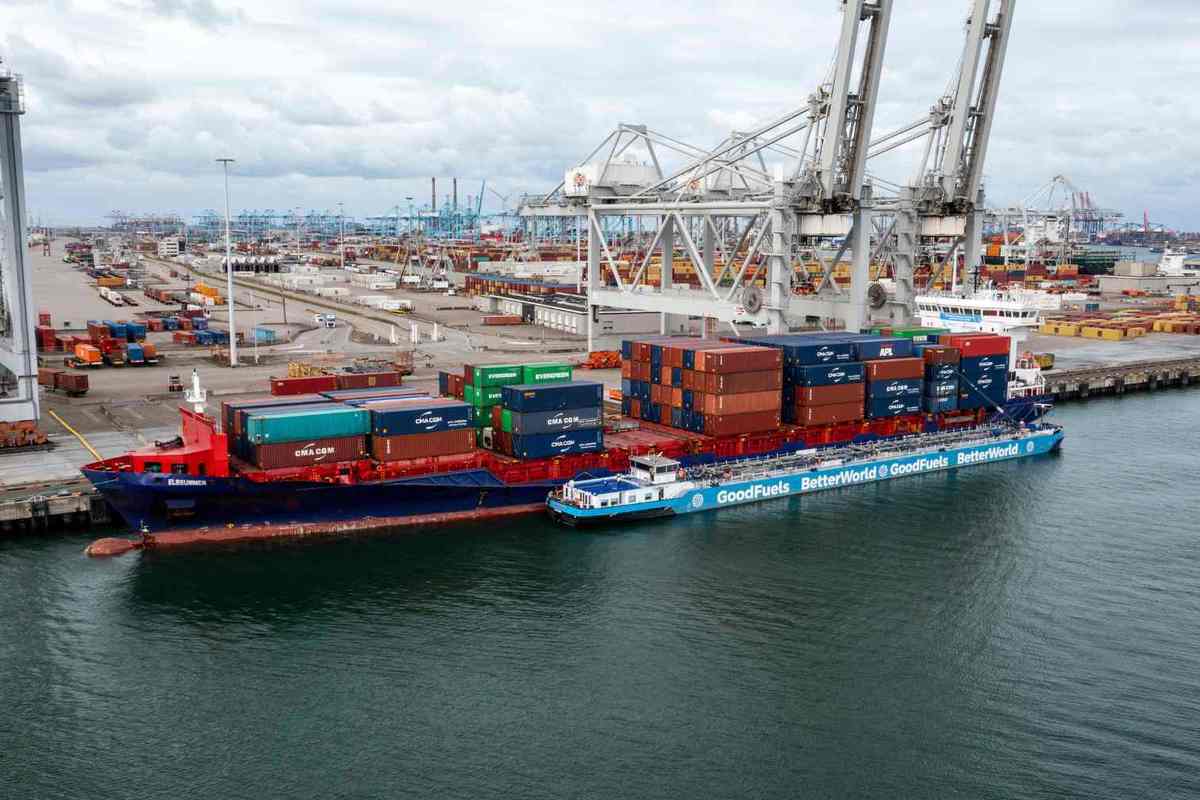 IMAGE: A biofuel bunkering operation. FincoEnergies
The ERE system is part of the Netherlands’ implementation of the European Union’s third Renewable Energy Directive (RED III) into its national law.
The new system introduces Emissiereductie-eenheden (ERE), or emission reduction units, replacing the earlier Hernieuwbare Brandstofeenheden (HBE), which translates to renewable fuel units.
From energy to GHG savings
Under the HBE system, Dutch bunker suppliers could generate tradeable HBE credits based on the renewable energy they sold to shipping companies. Under the ERE system, the focus shifts to how much a fuel’s GHG emission intensity is reduced by.
In practical terms, this means the two systems reward renewable energy supply differently.
Under HBE, a supplier could meet its obligation by increasing its renewable fuel volumes, regardless of the depth of emissions reduction achieved.
Under ERE, fuels are assessed based on their GHG savings throughout their supply chains. Fuels that deliver higher verified emission intensity savings generally contribute more towards compliance than those with lower savings. Conversely, fuels with limited or no verified GHG intensity reductions provide little or no compliance benefit.
This shift moves the emphasis from how many gigajoules of renewable fuel is supplied to how effective that fuel is at reducing emissions, changing how suppliers evaluate fuel choices from a compliance perspective.
Key compliance differences
Previously, bunker suppliers could generate HBEs by selling renewable fuels themselves, or purchase HBEs from others. These HBEs then had to be surrendered to the Dutch Emissions Authority (NEa) and be backed up with Proof of Sustainability (PoS) documents.
Under the HBE system, bunker fuel suppliers serving seagoing vessels were not directly obligated. They could voluntarily generate HBEs by supplying renewable marine fuels, which they could then sell to obligated fuel suppliers in other transport sectors, such as road transport.
This mechanism helped subsidise renewable marine fuels, including biofuel blends, at Dutch ports by allowing bunker suppliers to generate tradeable HBEs for a value which they could then extend as rebates to bunker buyers.
In the new ERE system, bunker fuel suppliers are now explicitly and directly in scope. Their compliance is tracked through Zeevaart-Emissiereductie-eenheden (ZRE), the shipping-specific obligation in the ERE framework.
Supplying conventional fossil bunker fuels like HSFO, VLSFO and LSMGO increases a bunker supplier’s compliance obligation because these fuels add energy to the denominator of the obligation, and they don’t create usable ZREs to offset it.
This obligation can be reduced either by supplying bunker fuels with verified GHG intensity savings, such as certified B30 biofuel blends or pure B100, which generate ZREs. Suppliers can also purchase ZREs from other market participants to cover their shortfall.
In short, HBEs used to create an incentive to sell renewable bunker fuels. In the ERE system, fossil bunker fuels are a cost unless offset with ZRE-eligible renewable fuel sales.
Capped cross-sector transfers
A key structural change with the ERE system is its limitations on cross-sector arbitrage.
HBEs could previously be generated from advanced biofuel bunker fuel sales and be sold or transferred to companies in other transport sectors like road transport to meet their obligations, and the other way around.
In the ERE system, emission reductions generated from bunker fuel supply are tied to the maritime sector and are tracked through ZREs. Of the 2.9% ZRE reduction obligation for this year, bunker suppliers can use EREs from another sector to cover up to 0.9 percentage points of their obligation.
As a result, emission reductions achieved in shipping must largely be used to offset shipping’s own GHG footprint. The compliance costs and incentives created by the ERE system therefore mostly remain within the maritime sector, rather than helping pay for the decarbonisation of another sector like road transport, or vice versa.
From a bunker pricing perspective, this removes an external source of compliance value that previously flowed into the maritime fuel sector, while bunker suppliers now face direct compliance obligations.
What counts and what doesn’t
Under the Netherlands’ implementation of RED III, biofuels classified under Annex IX Part B - such as used cooking oil (UCO)-based biodiesel - cannot be used by bunker suppliers to reduce their ZRE compliance obligations.
Because UCO falls outside the scope of ZRE A eligibility, it generates a compliance liability and potentially increases the number of ZREs that must be surrendered.
Meanwhile, advanced biofuels listed in RED III Annex IX Part A remain eligible for generating advanced emission reduction units for bunker suppliers (ZRE As). These include palm oil mill effluent (POME)-based biofuels and other advanced waste- and residue-based fuels like cashew nut shell liquid (CNSL).
New Year price jump
ZRE A tickets were priced around €150/mtCO2e at the beginning of the year, which translated to $514/mtFuel for B100 made from advanced feedstocks like POME.
This $514/mt was about $111/mt less than the HBE A ticket value for the same biofuel at the time, and put heavy upward pressure on Rotterdam's B100 bunker price, pushing it $136/mt higher than a week earlier.
The ZRE A price crept up through the week and ended around €165/mtCO2e ($562/mtB100). The higher it goes, the more bunker suppliers should theoretically be able to knock off their B100 prices.
By Nachiket Tekawade
Please get in touch with comments or additional info to news@engine.online