Industry and green groups urge EU to set shore power targets beyond 2030
The coalition also wants battery charging rules and priority grid access for ports, as shore power can help replace fuel burned in auxiliary engines at berth.

The Clean Port Coalition, an alliance of industry and environmental groups, has asked the European Commission to set shore power targets for ports beyond 2030 when it reviews the Alternative Fuels Infrastructure Regulation (AFIR). The coalition made the request in a letter to officials in the Commission's transport and energy departments.
The coalition includes the Norwegian Shipowners' Association, Danish Shipping, the European Onshore Power Supply Association, the Maritime Battery Forum, NABU and BirdLife Malta.
It asks for a predictable timeline to bring shore power to all vessels calling at EU ports, starting with the ship types easiest to deliver. The coalition also wants battery charging requirements for the growing fleet of battery-electric vessels, plus streamlined, prioritised grid access and more energy storage at ports. The letter does not say what the post-2030 targets should be.
The letter welcomed the Commission's ports strategy and electrification action plan, published earlier this year, but said strategies alone cannot clear bottlenecks such as grid connection delays, uneven energy taxes and a lack of financing structures. It said high and unstable fossil fuel prices in recent months show why Europe must end its dependence on fossil fuels.
Ships on shore power switch off auxiliary engines that burn bunker fuel at berth. AFIR requires major ports on the EU's trans-European transport network to offer shore power to container and passenger ships above 5,000 GT from 2030, and to connect at least 90% of annual port calls. Marseille Fos met that requirement in April, four years early, and Kiel did so in September 2025, five years early. FuelEU Maritime separately requires the same ships to use shore power or an equivalent zero-emission technology at EU ports from January 2030.
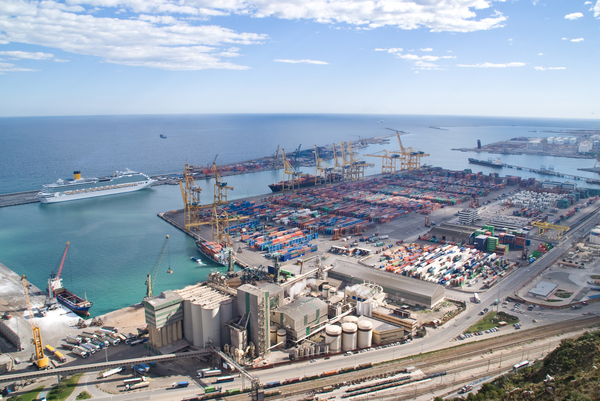
Grid capacity is a constraint. Spain's Port of Valencia has tendered a €19 million ($21 million) substation, backed by Commission funding, to double its electricity supply and support shore power. It expects the build to take about 20 months. Worldwide, only 40 ports where cruise ships call have a shore power connection, representing less than 3% of ports currently visited by cruise ships, Cruise Lines International Association said in September.
Cost is another hurdle. Shore power provider Connect4Shore lists tariffs of €0.28/kWh ($0.31/kWh) at Antwerp excluding VAT, €0.38/kWh ($0.43/kWh) at Rotterdam including VAT and €0.42/kWh ($0.47/kWh) at Hamburg including VAT. In the UK, Portsmouth International Port director Mike Sellers warned in October that electricity costs can make plugging in dearer than burning conventional fuel onboard.
By Tuhin Roy
Please get in touch with comments or additional info to news@engine.online