HyOrc targets bunkering with waste-to-methanol technology
HyOrc is betting on its modular waste-to-methanol technology that processes municipal waste into low-carbon methanol for bunkering.
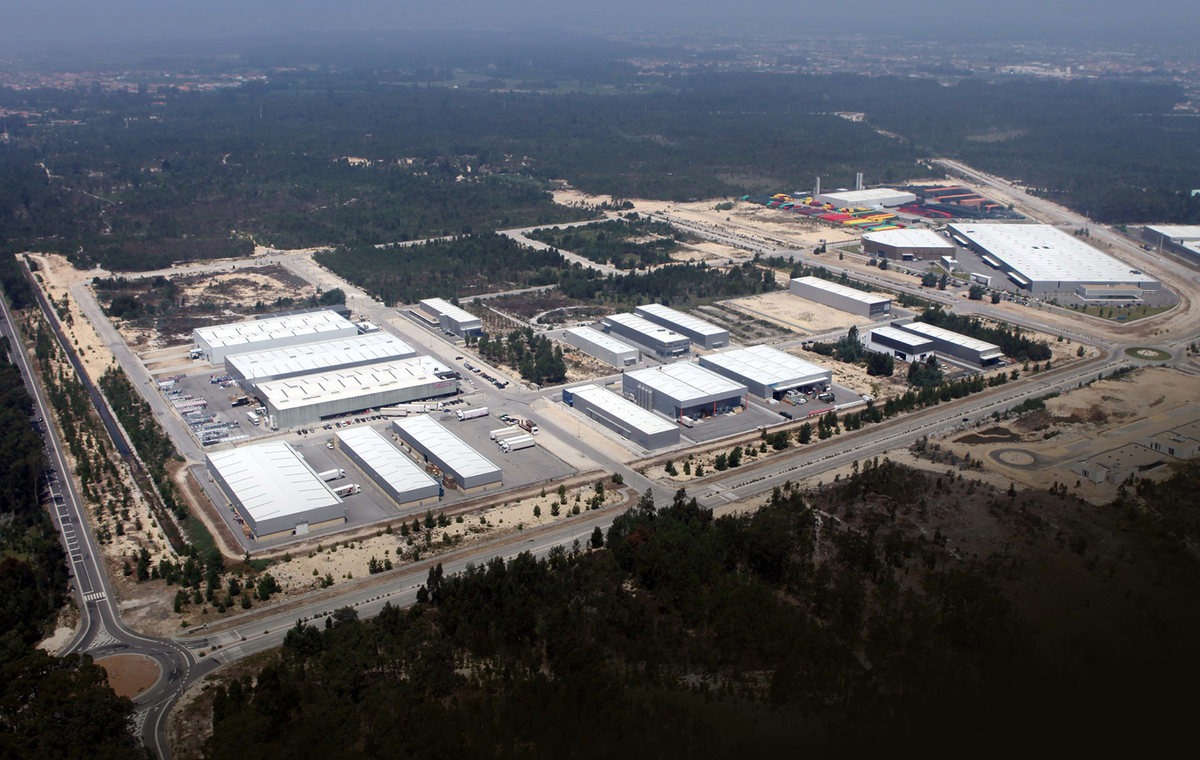 IMAGE: HyOrc's proposed biomethanol production site in Porto.
The company’s chief executive, Reginald Fubara, explains to ENGINE the process of converting municipal waste to green methanol used by the company, its current production capacity and plans to scale up to supply at various ports.
At the core of the technology, refuse-derived fuel (RDF) is fed into a high-temperature reactor (around 950–1,150°C), where it reacts with controlled oxygen and steam, to produce synthesis gas.
That gas is then conditioned to reduce tar, cleaned through separation and filtration systems to remove impurities, and compressed before being converted into methanol.
As a proof of concept, HyOrc has commissioned a 1 mt/day RDF-to-methanol pilot at its facility which is located in the Indian state of Tamil Nadu, producing roughly 300 litres/day of methanol.
Building on this, the company plans to install a larger 35 mt/day RDF processing unit in Porto, Portugal, where it is expected to produce around 8 mt/day of green methanol, Fubara said.
The company will deploy small-scale modular plants near ports or industrial sites rather than relying on large, centralised plants.
Fubara said HyOrc could expand the capacity of its Porto facility to around 80 mt/day (about 30,000 mt/year) of green methanol by the end of 2027, subject to financing and a final investment decision. To scale production, it would instal additional modules.
HyOrc has signed a 10-year offtake agreement with an undisclosed European renewable fuels producer in December last year, ENGINE previously reported.
Marine bunkering is a primary target market for HyOrc, alongside industrial offtakers, according to Fubara.
Initial supply is expected to target early-adopter vessels and pilot projects rather than full-fleet demand, Fubara said.
HyOrc expects bunker deliveries to initially take place in ports near its production plants, such as Porto. Supply can then be expanded to other European ports like Las Palmas, Algeciras, Immingham and Bremen.
The company will seek to ISCC EU-certify the methanol to align with EU's Renewable Energy Directive (RED III) sustainability and lifecycle emissions criteria. That would, in turn, make it qualify as a waste-based renewable fuel towards the FuelEU Maritime regulation.
HyOrc expects the RDF-based green methanol produced in Porto to have a preliminary well-to-wake GHG intensity of around 25–50 gCO2e/MJ. This is based on internal modelling and could change through a formal lifecycle assessment and third-party verification of a Proof of Sustainability (PoS) documents, the company said.
For comparison, published reference values for fossil methanol are typically around 100 gCO2e/MJ on a well-to-wake basis for natural gas-based production, with coal-based pathways materially higher. If confirmed, this would imply a potential emissions reduction of roughly 50–75% versus conventional fossil methanol.
That also offers significant GHG reductions when compared to heavy fuel oil whose GHG intensity is at 91.74 gCO2e/MJ, but not as much as what can be offered by biodiesel whose GHG intensity is 16.38 gCO2e/MJ.
As regulations like FuelEU Maritime and EU ETS spur demand for low-emission fuels, access to certified, low-GHG methanol could become increasingly valuable at European bunkering locations.
Modular systems can allow production capacity to be deployed incrementally at or near port locations, reducing logistics costs and scaling supply in line with demand, HyOrc argues.
By Nachiket Tekawade
Please get in touch with comments or additional info to news@engine.online