LNG leads shrinking alternative fuel vessel orderbook in June - DNV
Alternative fuel vessel contracting slowed sharply in June, with 15 new orders placed compared with 36 in May. LNG remained the dominant fuel choice, accounting for 10 of the newbuild orders, according to DNV Senior Consultant Kristian Hammer.
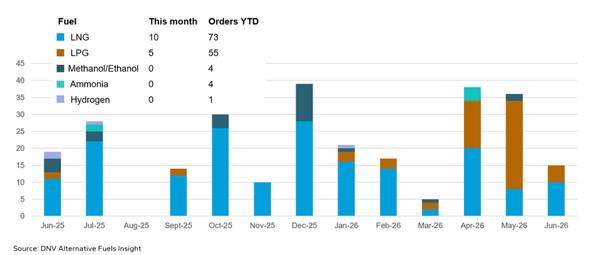 IMAGE: LinkedIn of DNV senior consultant Kristian Hammer
LNG-capable vessel orders rose by two from May to 10 in June, according to DNV's Alternative Fuels Insight (AFI) database. The global LNG-capable fleet now comprises 914 vessels in operation, with a further 654 on order for delivery through 2030.
The LNG bunkering segment also continued to expand, with two LNG bunker vessels ordered in June. This lifted orders in the segment to seven so far this year. Overall, the LNG bunker fleet now consists of 67 vessels in operation and 47 vessels on order.
By contrast, LPG-capable vessel orders declined sharply to five in June from 26 in May. The LPG-capable fleet currently comprises 172 vessels in operation, while 147 additional vessels are scheduled for delivery through 2030.
During the first half of 2026, a total of 134 alternative fuel-capable vessels were ordered, compared with 155 in the corresponding period of 2025. LNG continued to dominate with 73 orders, led by the container segment (42 vessels) and car carriers (21 vessels). Meanwhile, LPG-capable vessels recorded strong activity, accounting for 55 orders during the period.
Vessel deliveries also gathered pace in the first half of the year. So far in 2026, 61 LNG-capable vessels and 38 methanol-capable vessels have entered service.
The delivery of the world’s first oceangoing ammonia dual-fuel vessel to Belgian gas transportation firm Exmar in June marked another milestone in the adoption of emerging marine fuels. Following the delivery, the global fleet of ammonia-capable vessels increased to four in operation, with a further 43 on order.
By Tuhin Roy
Please get in touch with comments or additional info to news@engine.online