MEPC 84: Ambition vs realism clash deepens net-zero divide
IMO member states opened discussions on the fate of the Net-Zero Framework (NZF) that was approved at MEPC 83 in April 2025, with positions hardening on both sides and no clear road to consensus emerging so far.
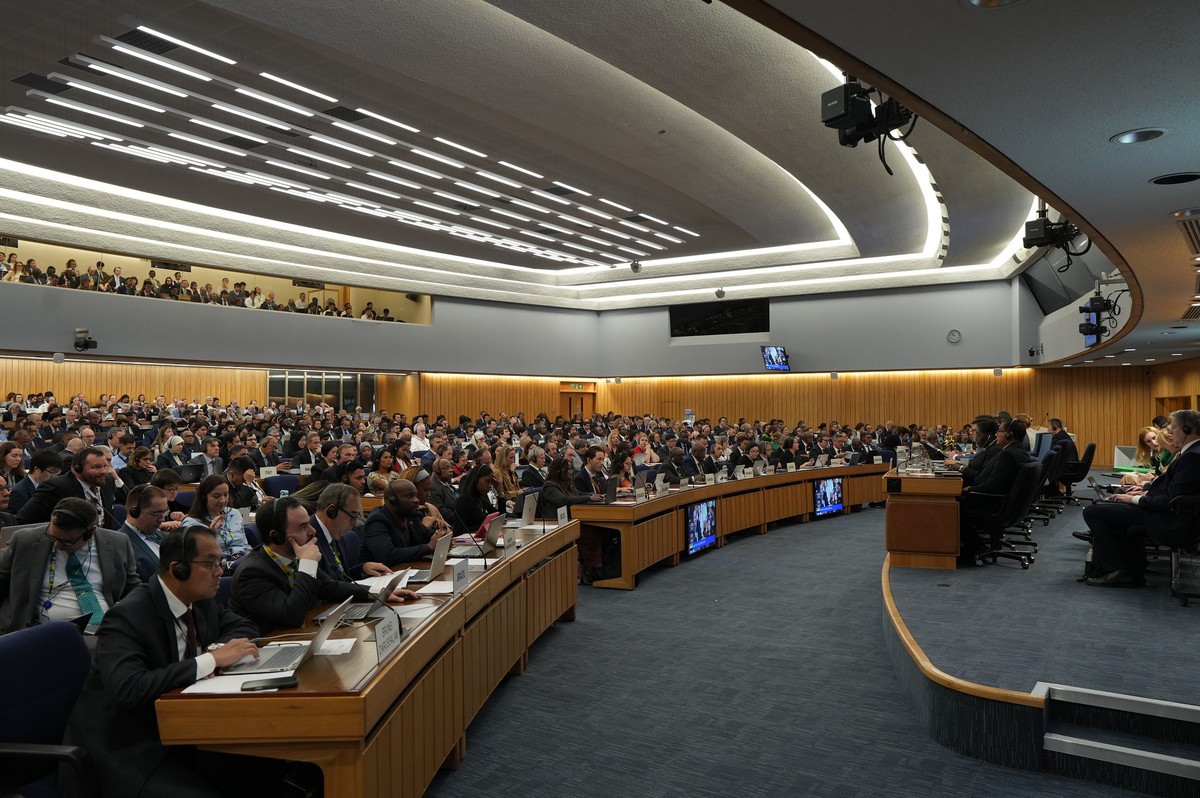 IMAGE: IMO member states at this week's MEPC 84 in London. IMO
The debate has exposed a fundamental divide, not only between supporters and opponents of the framework, but also within the opposition itself.
Ambition
Supporters of the framework called for its current version to be adopted when the IMO's Marine Environment Protection Committee (MEPC) reconvenes for a second extraordinary session (ES.2) later this year. The supporters include the EU bloc, Canada, Australia, Chile, Cyprus, South Africa, Brazil and Mexico.
These member states also proposed more global dialogue aimed at adopting the framework without substantive revisions, while using guidelines to refine implementation rather than reopening the core text. Colombia joined calls for broader consultations.
The UK backed proposals from Mexico and Brazil and said they were constructive, while it described an Argentina-led proposal as one that could entrench fossil fuel dependence.
Compromise
Norway, Tanzania and Singapore pointed to Japan’s proposal as a useful basis for compromise, arguing that any globally acceptable framework must also be practical.
In its submission to MEPC 84, Japan proposed easing greenhouse gas fuel intensity (GFI) reduction targets from 2030 and removing mandatory payments to the IMO’s Net-Zero Fund.
Realism
Most opponents argued that low- and zero-emission fuels are not “realistic” solutions for cutting shipping emissions because of high costs and uncertain fuel supply and availability.
Calls for a full overhaul of the current NZF draft were backed by the US, Saudi Arabia, Argentina, Liberia, Panama, Türkiye, Russia and the Bahamas.
The Bahamas said it does not support the current version of the framework.
The US, the loudest critic of the NZF, pledged to be an “honest broker” in discussions on any framework that does not include a carbon tax or follow footsteps of a regional carbon pricing regime, in an apparent jab at shipping’s inclusion in the EU Emissions Trading System (EU ETS).
Washington said it is prepared to engage with other member states and comment on proposals as they emerge, softening its earlier stance of outright rejection.
The US also repeated its call for explicit acceptance procedures for any amendment to MARPOL Annex VI, a position backed by Russia.
The IMO has historically relied on tacit acceptance. Only the 108 countries that have ratified MARPOL Annex VI are eligible to vote on the amendments, and a two-thirds majority of those present and voting must support the amendments for adoption.
Explicit acceptance works differently. It requires at least two-thirds of member states, representing at least half of world gross tonnage, to formally ratify the amendments through their domestic processes before the framework can enter into force.
By Konica Bhatt
Please get in touch with comments or additional info to news@engine.online