MEPC 84: IMO expected to consider adoption of North-East Atlantic ECA
The IMO’s Marine Environment Protection Committee (MEPC) at its 84th session is expected to consider the adoption of a proposal to designate the North-East Atlantic as an Emission Control Area (ECA).
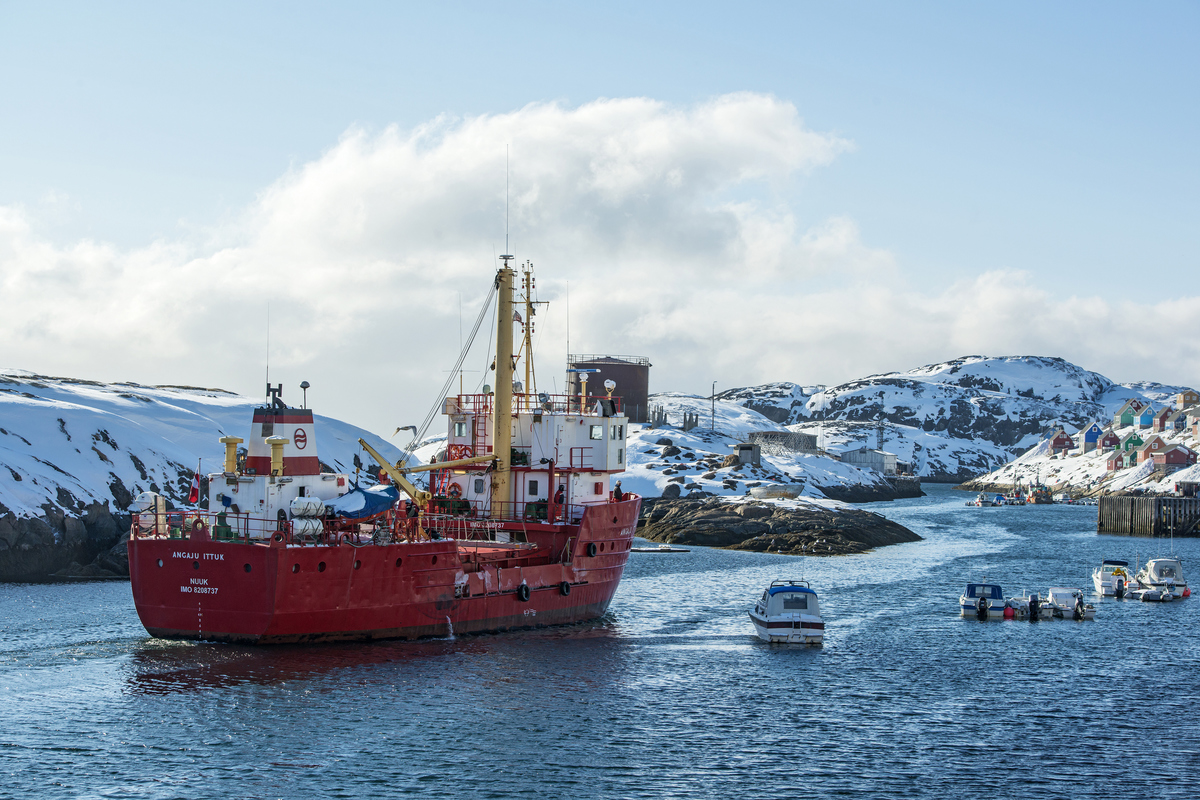 IMAGE: Freight vessel Angaju Ittuk approaching Kangaamiut in Western Greenland. Getty Images
The ECA measures aim to curb emissions of nitrogen oxides (NOx), sulphur oxides (SOx) and particulate matter (PM), helping to protect sensitive marine ecosystems. They are also intended to improve the overall sustainability of the maritime industry.
The new North-East Atlantic ECA, expected to be implemented by 2027, will reduce emissions from ships in the territorial seas and Exclusive Economic Zones (EEZ) of Greenland, France, Iceland, Ireland, Portugal, Spain, the UK and the Faroe Islands.
The ECA, proposed by 27 European Union (EU) members, the UK, and Iceland, will mandate ships to use fuel with a sulphur cap of 0.1%, instead of 0.5%, or be fitted with scrubbers, according to the IMO.
“This will create a continuous ECA across the North-East Atlantic, connecting the Canadian Arctic, the Norwegian Sea, the North Sea and the Mediterranean Sea ECAs,” classification society DNV said.
The 0.1% sulphur limit for marine fuels will take effect in 2028 – one year after the North-East Atlantic ECA adoption. The requirement for NOx Tier III engine certification is expected to apply to vessels depending on their contract and construction timeline, covering ships "contracted on or after 1 January 2027, or in the absence of a building contract, constructed on or after 1 July 2027, or delivered on or after 1 January 2031," DNV explained. This certification ensures that a marine engine meets the IMO's NOx emission limits for the ECAs.
Earlier in March, two other ECAs – the Canadian Arctic and the Norwegian Sea – were implemented. While the ECAs formally came into force last month, the main operational requirement for ships to use fuel with a sulphur cap of 0.1% will apply from 1 March 2027.
The new North-East Atlantic ECA will help close the " gap between the existing ECAs in the North and Baltic Sea and the Mediterranean, creating a nearly continuous zone of reduced shipping emissions,” Elena F. Tracy, senior advisor at the WWF Global Arctic Programme, said earlier.
By Aparupa Mazumder
Please get in touch with comments or additional info to news@engine.online