MEPC 84: US wants IMO to scrap Net-Zero Framework
The US has called on the IMO to “end consideration” of the Net-Zero Framework and not resume the Marine Environment Protection Committee’s Extraordinary Session 2 (MEPC ES 2).
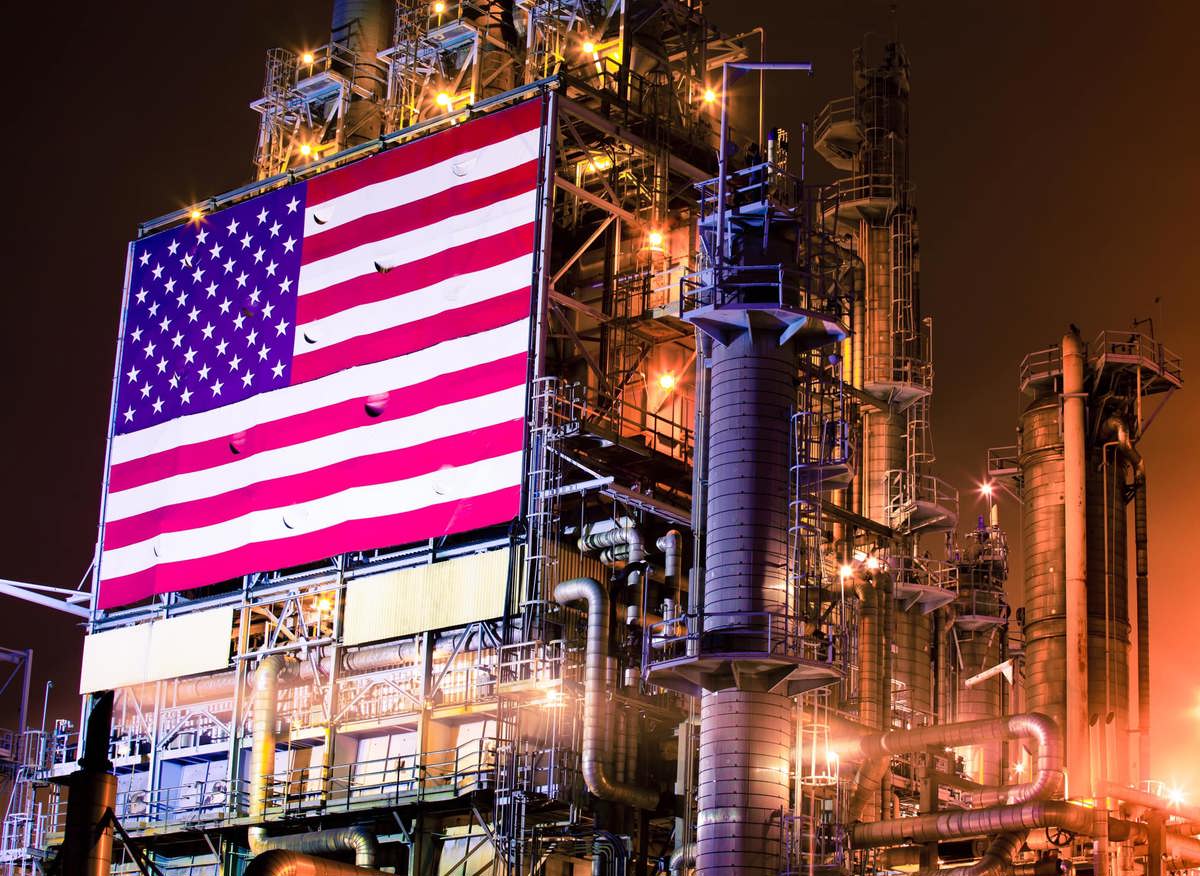 IMAGE: American flag on an oil refinery. Getty Images
The MEPC ES 2 session was adjourned in October 2025 for 12 months. Its possible resumption will be decided at MEPC’s 84th session (MEPC 84) next month.
MEPC ES 2 “displayed severe divergence” among member states and its delay reflects “significant unresolved concerns” over the direction and impact of the framework, the US said in its submission to MEPC 84.
“Owing to its significant shortcomings and the clear lack of consensus, the United States remains strongly opposed to the IMO Net-Zero Framework,” the submission said.
The US also backed a proposal submitted by Algeria, Bahrain, Iraq, Kuwait, Russia, Saudi Arabia, Somalia and the UAE.
The Algeria-led submission argued that the framework presented in October 2025 “does not reflect the core concerns of many Member States” and lacks the consensus needed for effective implementation.
The US further argued that proposed amendments to MARPOL Annex VI under the framework, approved at MEPC 83 in April 2025, could impose significant economic strain on shipping, energy producers and consumers.
It said the framework could incentivise costly, unproven fuels over existing technologies and extend the IMO’s role into a quasi-climate funding body, while offering limited financial relief relative to the broader economic impact.
“These significant shortcomings risk the reliability and stability of the international shipping industry, along with the global supply chains and economic activity which so heavily depend on shipping,” the US delegation said.
Meanwhile, environmental non-profit Opportunity Green holds a different view on the framework.
"The Net-Zero Framework remains the best and most equitable way for [IMO Member] States to reduce emissions from shipping," Em Fenton, senior director of climate diplomacy at Opportunity Green told ENGINE.
"Any proposals that diverge from this hard-fought multilateral agreement are – at best – a distraction, and at worst an attempt to undermine a framework that was agreed in April 2025," Fenton added.
Separately, Argentina, Liberia and Panama said opposition to the framework stems from “geopolitical, economic and procedural concerns”.
They added that the greenhouse gas fuel intensity (GFI) threshold is restrictive and could lead to an estimated $300 billion in GHG penalties by 2035, disproportionately affecting small and medium businesses and tramp operators.
“Concerns further include the risk that the system functions more as a penalty mechanism than an innovation incentive, reduced flexibility due to expiring surplus units, and the absence of defined elements such as the reward mechanism, default life cycle assessment values, and governance of the IMO Fund,” the submission said.
Reacting to the Argentina-led proposal, John Maggs, Clean Shipping Coalition representative at the IMO, said the proposal threatens to undermine the IMO’s 2023 GHG Strategy.
“It would lock in the shipping sector’s dependence on fossil fuels like LNG, putting the goal of reaching net-zero emissions by 2050 out of reach. It would also shred the business case for first movers to invest in the production and uptake of zero-emission fuels and energy, delaying the deployment of these long-term solutions and so slowing emission reductions,” Maggs added.
By Konica Bhatt
Please get in touch with comments or additional info to news@engine.online