Middle East conflict escalates as Houthis target Riyadh
Yemen’s Iran-aligned Houthi militants have further escalated the Middle East conflict after launching a direct attack on Saudi Arabia’s capital city Riyadh.
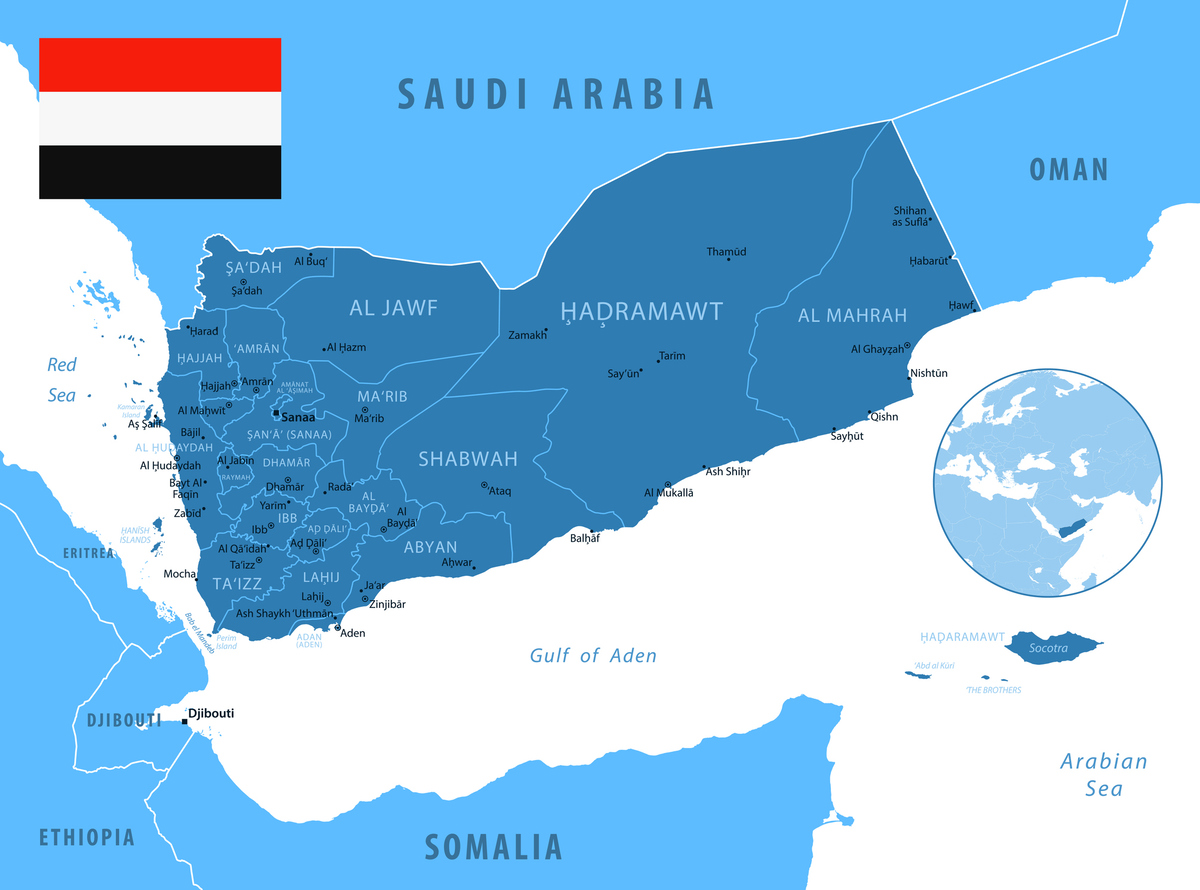 IMAGE: Map of Yemen. Getty Images
The Houthis launched a pair of coordinated strikes on Saturday “using a large number of ballistic and cruise missiles and drones,” the militant group’s spokesperson Yahya Sare’e said on social media platform Telegram.
The first attack targeted highly sensitive sites in the OPEC de-facto leader’s capital Riyadh, and the second targeted its state-owned oil company Aramco’s facilities in the port of Yanbu.
A massive plume of black smoke was seen billowing near Riyadh’s international airport, according to a Reuters video footage. Both attacks “resulted in massive fires at the targeted locations,” Sare’e said.
Earlier this month, the Houthis struck the 1,200 km East-West Pipeline, choking Riyadh’s critical export route that funnels about 70% of its crude exports through the Red Sea terminal at Yanbu, to circumvent the Strait of Hormuz.
“Bab al-Mandeb tanker traffic may decline further as Saudi Arabia reduces Red Sea crude exports following the strike on the East-West pipeline,” market intelligence provider Windward said.
Following the latest round of attacks, the US state department issued an alarming security threat for US civilians currently residing, or traveling, to the Middle East.
“Iranian-supported Houthis have engaged in hostilities against Saudi Arabia, including civilian airports. This military conflict has the potential to escalate rapidly,” the US Embassy & Consulate in the UAE said in a statement.
The latest round of attacks come after the Houthis made unexpected military gains in the country’s enduring civil war earlier this month, capturing several ports situated on the Red Sea opening of Bab al-Mandeb Strait – another key oil chokepoint like the Strait of Hormuz.
US allies across the Gulf are currently on the receiving end of the US-Israel joint military campaign in the region and Iran’s subsequent retaliation – as trade remains crippled by the chokehold on the Strait of Hormuz.
“U.S. diplomatic facilities, including outside the Middle East, have been targeted,” the US state department said.
Paralyzed by relentless maritime assaults on commercial shipping and Washington's naval embargo on Iranian ports, the Gulf's vital export arteries have ground to a near-halt, driving a fresh surge of volatility through the global crude oil market.
“Reduced Saudi supply has tightened the European market, with some North Sea crude grades trading at steep premiums to benchmark prices,” two analysts from ING Bank noted.
Despite these concerns, neither side has shown an appetite for resuming the ceasefire deal signed in June – which collapsed shortly after.
On Sunday, Tehran said it will not reopen the Strait of Hormuz until the terms of the interim June agreement were fully met, Reuters reported.
By Aparupa Mazumder
Please get in touch with comments or additional info to news@engine.online