Middle East ports hold steady despite ongoing volatility
Amid persistent turbulence in the Middle East, bunkering activity across most regional ports continues to hold steady.
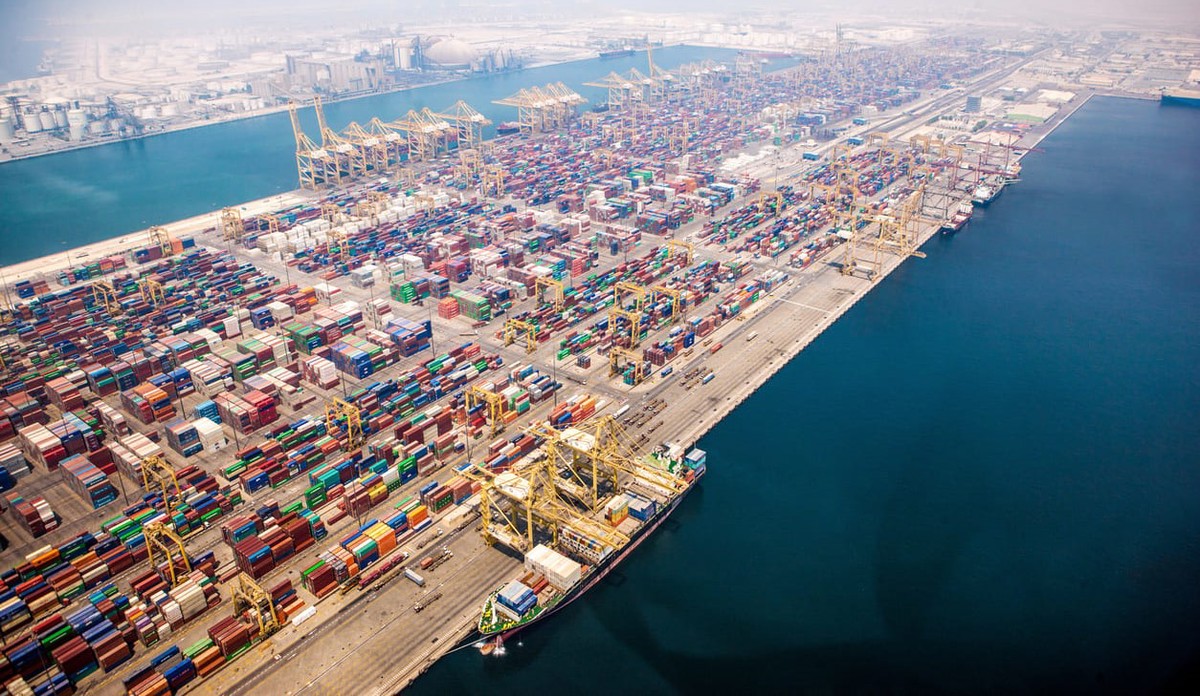 IMAGE: Aerial view of Jebel Ali Port, Dubai. Getty Images
In the UAE, Fujairah—one of the world’s key oil storage and bunkering hubs—remains active despite repeated attacks in recent weeks, a source said. While authorities in Fujairah and Khor Fakkan have not issued official alerts, navigational warnings have been circulated following reports of intermittent GPS spoofing and signal jamming offshore. These disruptions can lead to inaccurate positioning, erratic vessel movements and misleading navigational data, prompting guidance for mariners to treat the area as high risk, according to Inchcape Shipping.
Fuel availability remains tight across all grades, with offers subject to firm enquiry, a trader noted. In Fujairah, bunkering continues “depending on the port and booking conditions, though delays are possible due to vessel rerouting and port congestion,” another source said.
Elsewhere in the UAE, operations at Jebel Ali, Hamriya and Sharjah Port are proceeding as normal, while Abu Dhabi’s petroleum terminals, including Ruwais, remain fully operational. Ras Al Khaimah ports are also open and functioning, although RAK Ports Group will introduce a marine risk surcharge for all vessel calls, according to Inchcape Shipping.
Across the region, port activity remains largely stable. In Kuwait, Shuaiba and Shuwaikh ports continue to operate normally. Saudi Arabia has issued no formal alerts, although bunker availability in Jeddah remains tight, particularly for VLSFO and LSMGO.
In Qatar, operations and vessel movements remain steady at Hamad, Doha and Al Ruwais, with ongoing activity at Mesaieed and Ras Laffan. However, fuel supply is tight in Ras Laffan, while Al Ruwais Port is limited to smaller vessels such as dhows and barges.
“Omani ports like Salalah, Sohar, and Muscat now open,” an Oman-based trader said. Other ports in Oman—including Port Sultan Qaboos, Mina Al Fahal, Sohar and Duqm—are operating normally, with prompt LSMGO available at several locations.
In Bahrain, vessel movements are gradually resuming, though operations remain constrained by a shortage of pilots. The Suez Canal and all Egyptian ports continue to function normally, while conditions remain stable in Jordan. Ports in Pakistan, Iraq, Cyprus and Lebanon are also operating as usual.
Meanwhile, Israeli ports—including Eilat, Ashkelon, Ashdod, Hadera and Haifa—are running at full capacity, the shipping agency added.
By Tuhin Roy
Please get in touch with comments or additional info to news@engine.online