MMMCZCS studies methanol retrofit on a bulk carrier
A study conducted by Mærsk Mc-Kinney Møller Center for Zero Carbon Shipping (MMMCZCS) found that retrofitting existing bulk carriers to run on methanol is technically feasible and can offer a viable pathway to reduce shipping emissions.
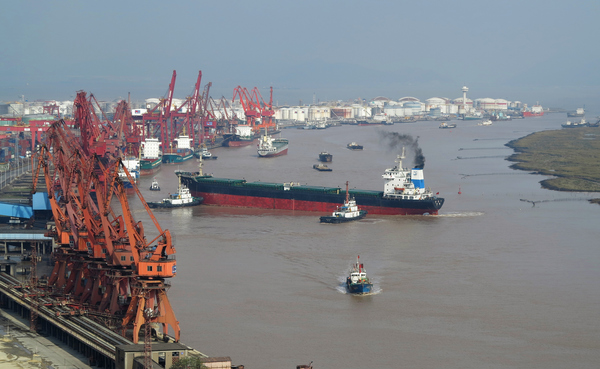
 IMAGE: Getty Images
MMMCZCS’ analysis focused on converting an 82,000 dwt Kamsarmax bulk carrier to dual-fuel methanol operation – a vessel widely used in global dry bulk trade.
Most vessels currently on order are designed to run on conventional marine fuels, meaning decarbonisation in this segment will likely depend on retrofitting rather than newbuilds. MMMCZCS’ study concluded that there are no major technical barriers to such conversions.
The researchers have validated the retrofit design through engineering assessments and safety reviews, including a full hazard identification (HAZID) process, which did not flag any critical safety risks. The concept also received an Approval in Principle (AiP) from Japanese classification society ClassNK.
“We did not identify any critical safety risks associated with the retrofit concept,” MMMCZCS noted.
However, the retrofit requires significant design adjustments, particularly for fuel storage. Moreover, the economics of retrofitting the vessel remains highly sensitive to fuel costs, according to MMMCZCS.
Given methanol’s lower energy density compared with conventional marine fuels, the most practical solution identified during the study requires installing fuel tanks within the cargo hold, rather than on deck.
This approach reduces structural complexity but comes at the cost of lower cargo-carrying capacity - a factor incorporated into the economic analysis, MMMCZCS said.
The retrofit process will take around 75 days in dry dock, which is considerably shorter than the time needed to construct a new methanol-capable vessel, according to the study. However, long lead times for key components – particularly engines – could delay implementation by up to 18 months.
The study has estimated retrofit costs at roughly 25-30% of the price of a newbuild methanol-fuelled bulk carrier, with the main expense driven by engine and system modifications.
Operating costs are also expected to rise, largely due to the higher price of bio-methanol compared with conventional shipping fuels like VLSFO or LSMGO. The financial viability of the retrofit over a 20-year period will depend heavily on methanol fuel pricing.
The findings suggest that while methanol retrofits are technically achievable and can play a role in shipping’s decarbonisation efforts, broader adoption will depend on fuel availability, pricing dynamics, and regulatory support.
Despite the cost challenges, the study highlighted the potential emissions benefits of switching to methanol as it can reduce lifecycle greenhouse gas (GHG) emissions by around 220,000 mt of CO2e over two decades for a single vessel, the study found.
By Aparupa Mazumder
Please get in touch with comments or additional info to news@engine.online