Q&A: Nippon Biofuel's Makoto Goda on taking jatropha from Africa to the world's ships
Japan's Nippon Biofuel is betting on jatropha-based biofuel grown on its own African farms as a low-carbon bunker fuel.
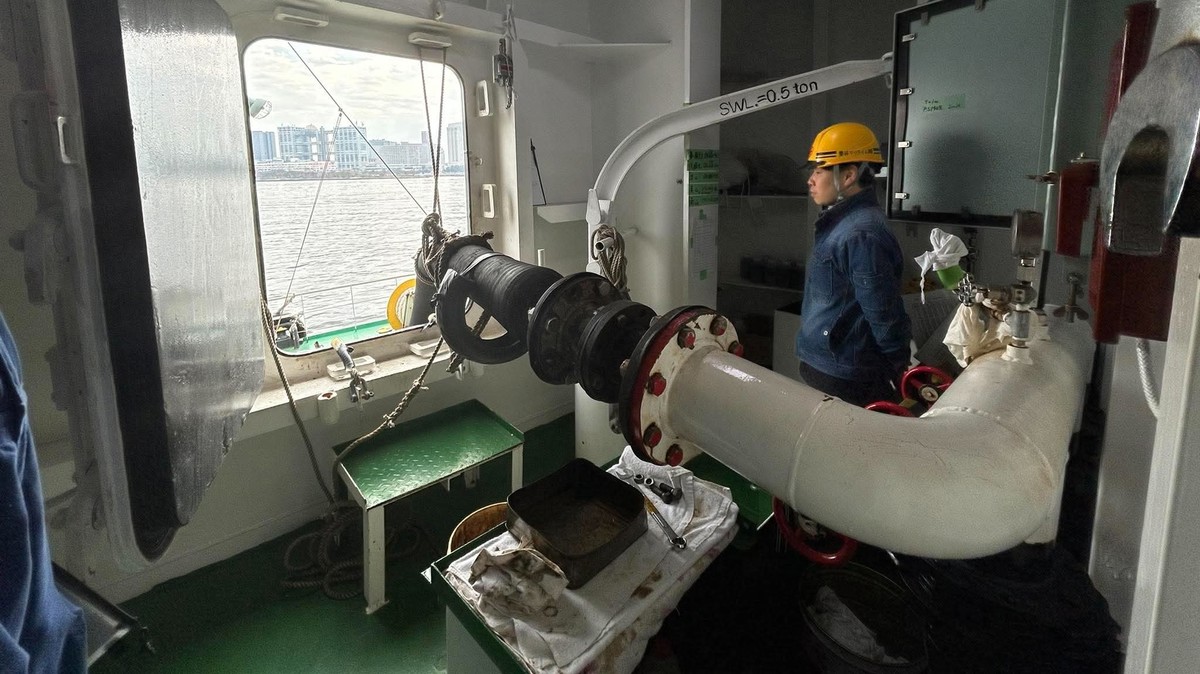 IMAGE: A bunker trial with jatropha-based B10-VLSFO in progress. Nippon Biofuel
The Tokyo-headquartered company produces straight vegetable oil (SVO) from jatropha grown on its own farms in Ghana and through contract farming operations in Mozambique. It uses proprietary high-yield varieties that it says can achieve up to 50 times the productivity of wild strains.
Blended with conventional VLSFO, jatropha SVO can be used as a drop-in fuel requiring no engine modifications. In March, the company conducted its first bunker trial, supplying a B10 blend to a RoRo vessel in Tokyo.
Last month, Nippon Biofuel was selected for a JPY 7 billion ($45 million) Japanese government-backed project to demonstrate a supply chain model for the jatropha-based biofuel. It targets 400,000 mt/year of production by 2032.
Chief executive Makoto Goda speaks to ENGINE about how the fuel is produced, the supply chain behind it, and why he sees jatropha not just as a decarbonisation tool but as a strategic answer to Japan's energy security concerns.
He also discusses demand stimulated by regulatory frameworks such as FuelEU Maritime and voluntary decarbonisation commitments from shipping companies, and whether jatropha-based biofuel blends could eventually be supplied in African ports in Mozambique and Ghana.
How is the jatropha-based biofuel produced?
Our jatropha based biofuel is produced through a vertically integrated value chain combining smallholder contract farming in Mozambique, our own farm in Ghana and centralized processing.
Jatropha seeds are cultivated in Mozambique and Ghana using agroforestry systems. The seeds are collected and mechanically pressed to produce crude jatropha oil (CJO). Depending on application requirements, the oil can be used as straight vegetable oil (SVO) or undergo light refining processes such as degumming and de acidification.
For marine fuel applications, we focus on blending with conventional marine fuels (e.g. VLSFO) to meet ISO8217 specifications, supported by ongoing testing and certification processes.
What is the lower calorific value of this fuel?
The lower calorific value of crude jatropha oil is typically in the range of 36-38 MJ/kg, which is slightly lower than conventional marine fuels such as VLSFO (~40 42 MJ/kg). When used in blends such as B10, the impact on overall energy content is minimal and operationally manageable.
You have said you aim to develop bunkering systems in Japan, Singapore, Mozambique and Ghana. Can you elaborate on which ports and how Nippon Biofuels will be involved in the supply chain?
We are developing a multi-origin supply model linked to specific logistics corridors. In Mozambique, Nacala Port serves as a primary export hub via the Nacala Corridor. In Ghana, we use Volta Lake logistics with export via Tema Port.
Singapore will function as a blending and distribution hub leveraging existing bunker infrastructure, while in Japan we are developing domestic coastal bunkering through partnerships with local suppliers.
Our role is primarily upstream and midstream, feedstock production, oil processing, and supply aggregation, while collaborating with established bunker operators for last mile delivery.
Nippon aims to scale biofuel production capacity to 400,000 mt/year. Do you intend to supply this biofuel directly to ships, or partner with established bunker suppliers?
Our strategy is to partner with established bunker suppliers and shipping companies rather than build a fully integrated downstream operation ourselves. We see our core strength in feedstock production, oil supply, and value chain integration. For bunkering operations, we collaborate with experienced players to ensure compliance, efficiency, and scalability.
Following a recent B10-VLSFO blend trial on a RoRo vessel, which vessel segments do you see as the primary early adopters, and what factors will shape that demand?
Our near term focus is not limited to specific vessel segments, but rather on geographically anchored supply demonstrations over the next three years. We are planning three primary supply scenarios:
- Mozambique (Nacala Port) and Ghana (Tema Port): Supplying vessels calling at these ports, particularly car carriers and other vessels operated by Japanese shipping companies, where local bunkering can be arranged.
- Singapore and other major bunkering hubs: Supplying biofuel blends for dry bulk carriers and other ocean-going vessels through established bunker infrastructure.
- Japan (domestic coastal shipping): Supplying blended fuels to coastal vessels in partnership with local bunker suppliers.
Through these demonstrations, we aim to validate operational feasibility, supply chain reliability, and scalability across different vessel types and trading patterns. These supply models leverage drop-in compatibility with existing marine fuels, minimizing operational barriers for ship operators.
Are you looking at signing any term agreements?
We are actively discussing term and offtake agreements with multiple shipping companies and fuel suppliers. In some cases, we have established early-stage commercial frameworks to secure future supply alignment, particularly in connection with our demonstration and scale-up phases. At this stage, our focus is on matching supply visibility with customer demand and regulatory timelines, while building long term partnerships.
To what extent do you see the demand for your jatropha based marine biofuel being driven by regulations like FuelEU Maritime, versus voluntary decarbonisation demand from shipping companies?
We see demand being driven by both regulatory and voluntary factors. In Europe, regulations such as FuelEU Maritime are a clear driver. However, we are also seeing increasing voluntary demand from shipping companies, particularly in Japan, driven by corporate decarbonisation targets and energy security considerations.
Do you view potential international emission regulations such as the IMO Net-Zero Framework as critical to drive demand?
Yes, we believe global frameworks such as the IMO Net Zero targets will be critical in accelerating demand. Clear and predictable policy signals are essential for scaling supply, securing investment, and enabling long term contracts in the marine fuel sector.
Following the recent conflict in Iran and subsequent disruptions to global oil and gas flows, do you see more interest in biofuels from shipping companies in Japan and other places?
Recent disruptions in global oil and gas markets have reinforced the importance of energy security. We are observing growing interest in alternative fuels, including biofuels, particularly in countries like Japan that rely heavily on imported energy. Biofuels offer a domestically controllable and diversified supply option.
By Nachiket Tekawade
Please get in touch with comments or additional info to news@engine.online