Qatar accedes to MARPOL Annex VI
Qatar has acceded to MARPOL Annex VI, a move that will bind the Gulf state to global shipping emissions rules and give it voting rights on the formal adoption of the IMO's Net-Zero Framework (NZF).
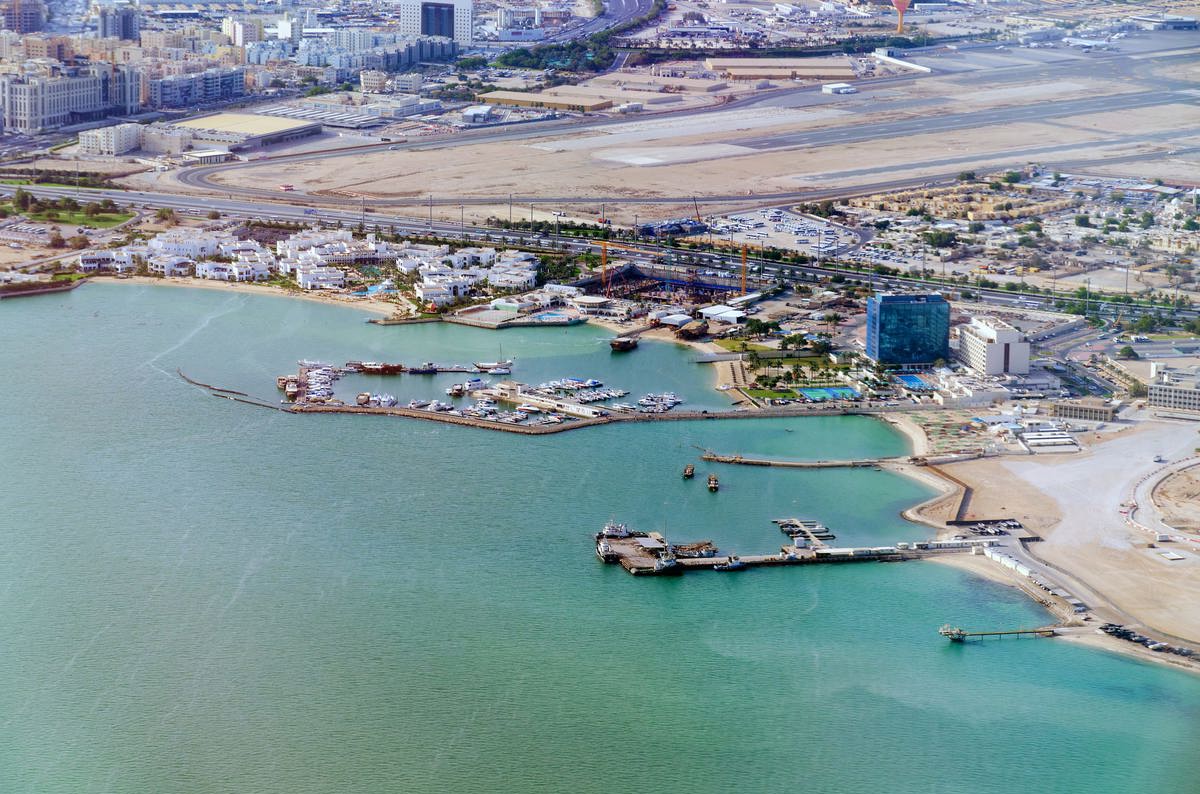 IMAGE: Aerial view of Doha, Qatar from the Persian Gulf. Getty Images
Qatar deposited its instrument of accession to Annex VI of the International Convention for the Prevention of Pollution from Ships (MARPOL) at the IMO's headquarters in London on 4 September.
Accession allows a country to formally join an existing treaty without having previously signed it. Once it takes effect, it has the same legal effect as ratification and makes the country a Contracting Party to the treaty.
The instrument was deposited during a meeting between Sheikh Abdullah bin Mohammed bin Saud Al-Thani, Qatar's permanent representative to the IMO, and IMO Secretary-General Arsenio Dominguez.
What Qatar is bound by
The IMO's MARPOL Annex VI regulates air pollution from ships, including sulphur oxides (SOx) and nitrogen oxides (NOx), and contains measures aimed at reducing shipping's GHG emissions.
It also sets the global 0.50% sulphur limit for marine fuels and includes mandatory measures covering ships' energy efficiency and carbon intensity, including the Energy Efficiency Existing Ship Index (EEXI) and Carbon Intensity Indicator (CII).
Ships flagged to the 108 existing Annex VI Parties (over 97% of world tonnage) are already bound on every voyage, including in Qatari waters, so nothing changes for most ships calling at Qatari ports. With the accession, Qatar-flagged ships become bound by Annex VI and Qatar's ports gain inspection and enforcement powers.
Qatar said the move will support “international efforts aimed at reducing air pollution from ships and enhancing the protection of the marine environment.”
Why accession matters for NZF
The accession also comes ahead of further negotiations over the IMO's NZF, which is being developed as a new Chapter 5 of MARPOL Annex VI.
A draft version of the NZF was approved for circulation at the IMO's 83rd Marine Environment Protection Committee (MEPC 83) meeting in April 2025, with 63 of the 79 member states present and voting in favour and 16 against. 24 member states abstained from voting.
Qatar was able to vote against the draft even without being an Annex VI Party, since the procedural vote was open to all IMO member states present and voting.
But the rules are different for formal adoption.
“Within IMO Committees, such as the Marine Environment Protection Committee (MEPC), decisions are taken by a simple majority of Member States that are present and voting. However, when the decision concerns the adoption of an amendment to a treaty, the voting rules are determined by the treaty itself,” the IMO explains. “...For issues relating to the IMO Net Zero Framework, this means only Parties to MARPOL Annex VI (the 1997 Protocol) may vote [if there is no consensus].”
Qatar's accession will allow it to vote for or against formal adoption of the NZF amendments once it takes effect, three months after the 4 September deposit. Adoption requires a two-thirds majority of Annex VI Parties present and voting.
MEPC 85 is tentatively scheduled to meet from 30 November to 3 December and is expected to consider revised versions of the framework. MEPC/ES.2, which was adjourned for a year in October 2025, is due to follow on 4 December, subject to confirmation by MEPC 85.
By Konica Bhatt
Please get in touch with comments or additional info to news@engine.online