Scan Global expands book-and-claim agreement with Hapag-Lloyd
Danish logistics provider Scan Global Logistics (SGL) will continue using Hapag-Lloyd’s book-and-claim system to reduce CO2 emissions linked to its shipping operations.
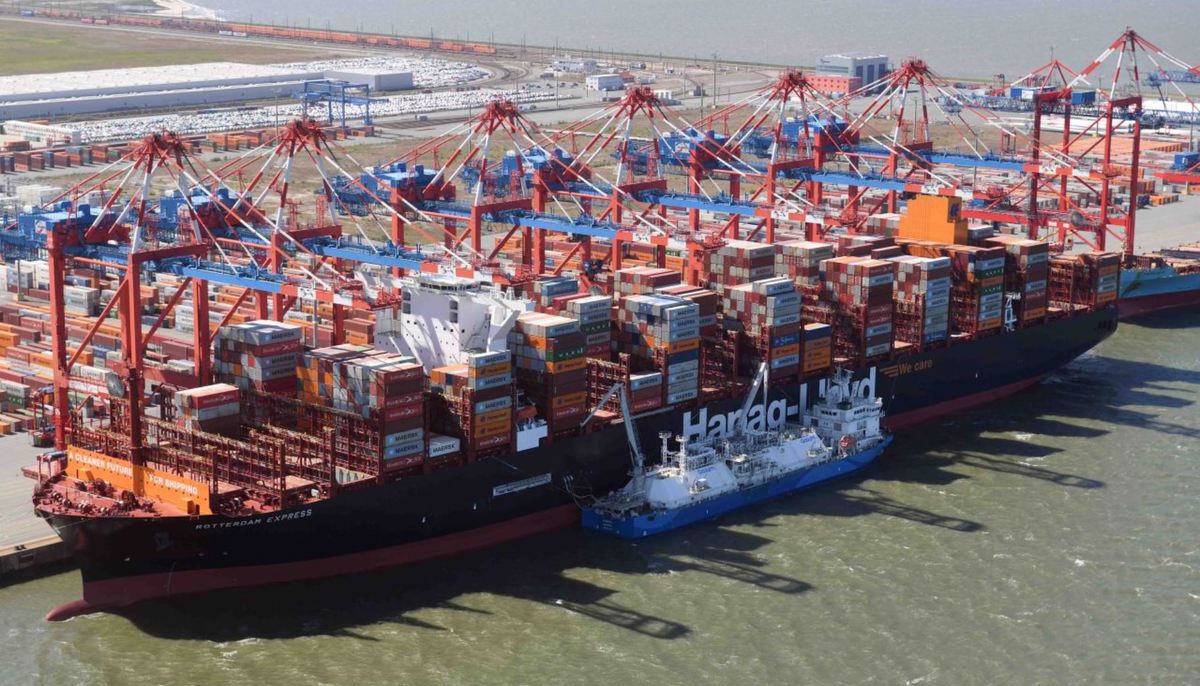 IMAGE: Hapag-Lloyd containership bunkered with liquefied biomethane in Wilhelmshaven. Linkedin of Hapag-Lloyd
SGL first joined Hapag-Lloyd’s low-emission shipping programme in 2024. The latest agreement expands that partnership, an SGL spokesperson told ENGINE.
Under the arrangement, SGL books cargo shipments with Hapag-Lloyd and claims emissions reductions linked to the use of used cooking oil methyl ester (UCOME) biofuel across Hapag-Lloyd’s fleet.
Hapag-Lloyd bunkers some of its vessels with biofuel blends and allocates the resulting greenhouse gas (GHG) emissions reductions to customers through a book-and-claim mechanism. The model allows customers to claim verified carbon savings even if their cargo is transported on conventionally fuelled vessels, as long as they pay a premium for the low-emission shipping service.
SGL claimed 10,276 mtCO2e of Scope 3 emissions reductions across its supply chain in 2025 under the agreement, the spokesperson added.
Book-and-claim systems based on the mass-balance principle allow cargo owners and freight customers to purchase emissions reductions linked to low- and zero-emission fuels used elsewhere in a shipowner’s fleet. The associated carbon savings are tracked in emissions dashboards and independently audited each year.
The system offers buyers a way to lower transport-related emissions without directly investing in alternative fuel infrastructure, vessel technology or fuel supply chains.
Hapag-Lloyd has not disclosed how many vessels are operating under the biofuel programme. However, its 2025 annual report shows the company operated a total fleet of 301 vessels, including 13 dual-fuel ships capable of running on methane-based fuels alongside conventional marine fuels.
The company said it bunkered 204,000 mt of biofuel blends of up to 30% across its 288 conventionally fuelled vessels in 2025. It also supplied 15,800 mt of liquefied biomethane (LBM) across its methane-capable fleet.
SGL spokesperson added that the company would “welcome any new valid emission reduction solution”, if Hapag-Lloyd expands the programme to include fuels such as biomethane and green methanol in the future.
By Konica Bhatt
Please get in touch with comments or additional info to news@engine.online