Singapore’s fuel oil stocks inch up 3% coming into August
Singapore’s residual fuel oil stocks have averaged 3% higher so far this month than across July, Enterprise Singapore’s latest data shows.
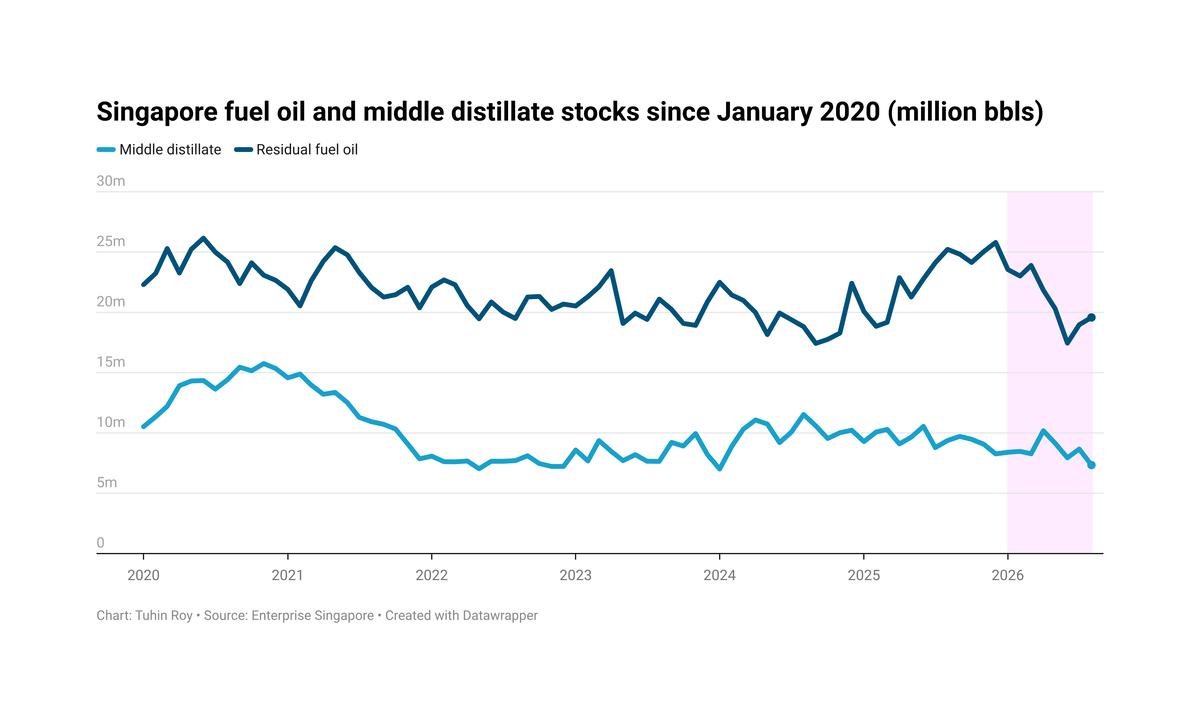
Changes in monthly average Singapore stocks from July to August (so far):
- Residual fuel oil stocks up 610,000 bbls to 19.58 million bbls
- Middle distillate stocks down 1.33 million bbls to 7.34 million bbls
Singapore's fuel oil inventories have risen above 19 million bbls, supported by a 2% increase in net fuel oil imports so far in August. Fuel oil imports have increased by 789,000 bbls, while exports have risen by 715,000 bbls.
Russia (21%) has been the largest source of Singapore's fuel oil imports this month, followed by the UAE and Brazil (19% each), according to cargo tracker Vortexa. On the export side, Malaysia (32%) has been the top destination for Singapore's fuel oil cargoes, followed by China (28%) and Mauritius (7%).
Meanwhile, Singapore's middle distillate inventories have fallen by 15% so far this month to 7.34 million bbls.
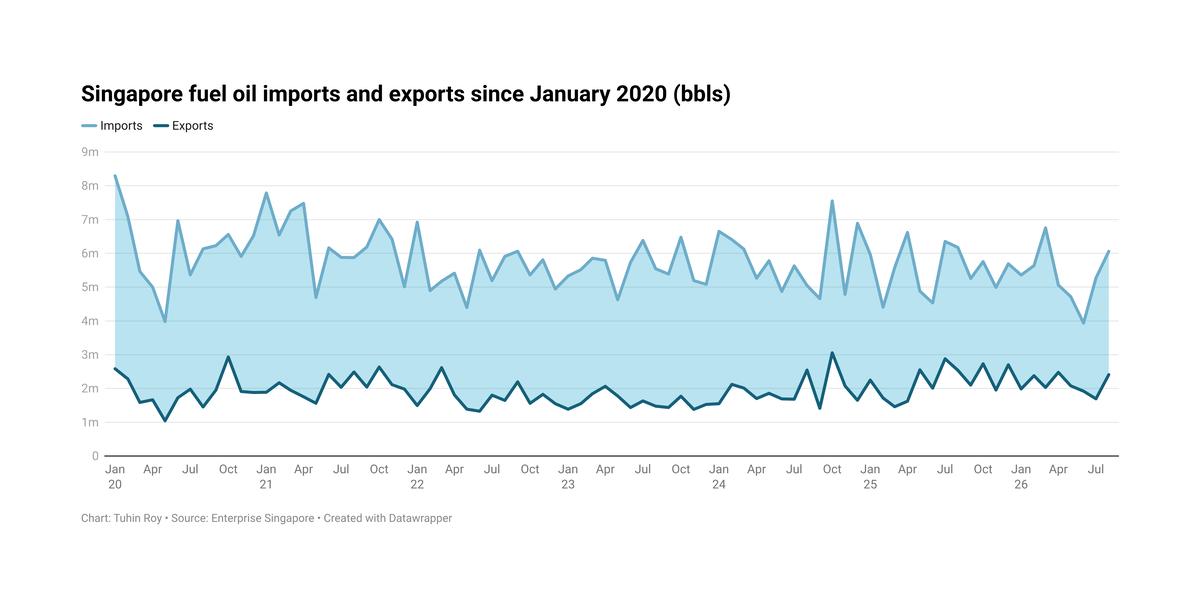
Changes in Singapore fuel oil trade from July to August (so far):
- Fuel oil imports up 789,000 bbls to 6.06 million bbls
- Fuel oil exports up 715,000 bbls to 2.41 million bbls
- Fuel oil net imports up 74,000 bbls to 3.65 million bbls
VLSFO availability in Singapore remains tight, with suppliers now recommending lead times of 12–24 days, compared with 16–20 days last week. Supply continues to face pressure as the port's fuel oil inventories have yet to recover to pre-conflict levels, while cargo inflows remain disrupted by the fragile US-Iran peace affecting traffic through the Strait of Hormuz.
Enterprise Singapore data shows that the port's fuel oil inventories fell from more than 23 million bbls in March to below 18 million bbls in June. Although stocks recovered slightly to about 19 million bbls in July, they are currently below 20 million bbls.
HSFO availability remains tight in Singapore, with recommended lead times widening to 10–24 days, from 12–15 days a week earlier. Meanwhile, LSMGO requires lead times of 2–11 days, compared with 5–8 days last week.
By Tuhin Roy
Please get in touch with comments or additional info to news@engine.online