The Week in Alt Fuels: Bankrolling the switch
Public support for green shipping is spreading across major regions. But governments are taking noticeably different routes to get low- and zero-emission fuels and vessels into commercial use.
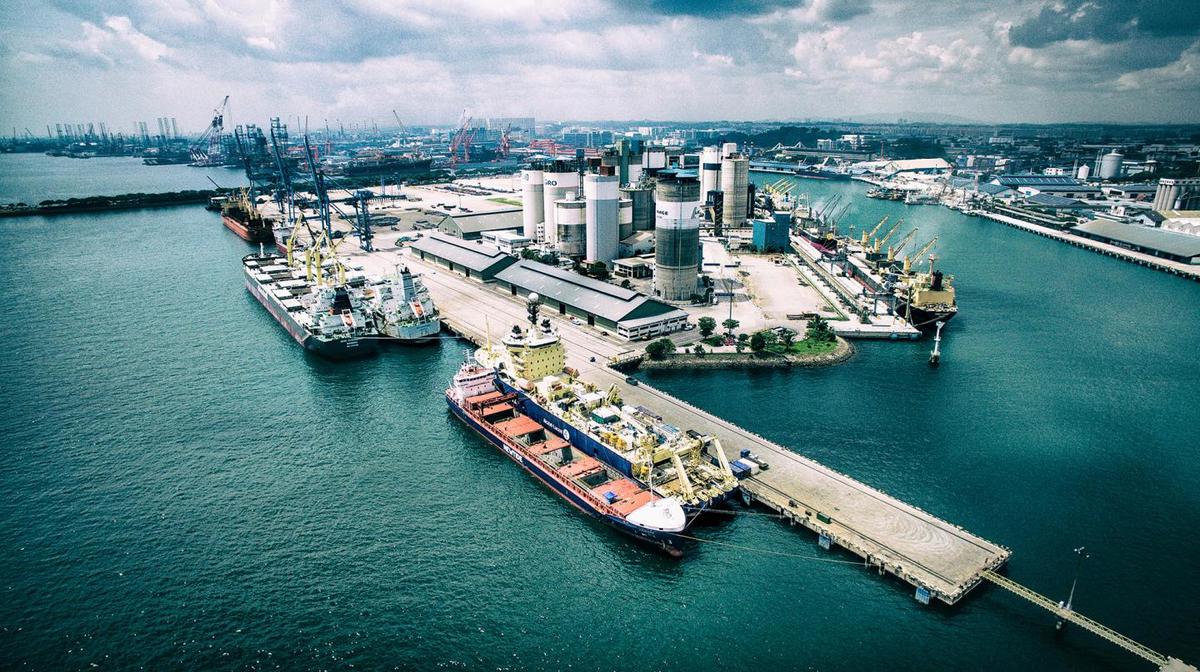
 IMAGE: Cruise ship docked at the Port of Québec in Canada. Port of Québec
Several European nations are building out different links of the supply chain at once, from fuel production to vessels and bunker infrastructure.
For instance, Germany opened applications this month for the first call under a new inland shipping programme, with up to €70 million ($82 million) available for green inland shipping corridors, covering vessel conversions, renewable hydrogen and electricity production and storage, as well as charging and alternative-fuel bunkering infrastructure.
Norway's Enova has similarly backed both sides of the supply-demand equation. It awarded NOK 344 million ($36 million) to LH2 Shipping for hydrogen-powered vessels in June, and NOK 442 million ($46 million) to Azane Infrastructure for three ammonia bunker terminals last December.
The Netherlands is concentrating €103 million ($120 million) of state aid on renewable methanol- and renewable hydrogen-powered newbuilds and retrofits between 2027 and 2031.
Finland has gone further upstream, awarding investment tax credits of up to €118.6 million ($138 million) to ETFuels Finland for its planned 110,000 mt/year e-methanol plant, with output intended for shipping and industrial customers.
Two Asian programmes focus more squarely on getting cleaner vessels onto the water.
Japan has opened applications under a five-year, JPY 15.1 billion ($95 million) programme to subsidise equipment for hydrogen-, ammonia-, methanol- and battery-powered ships, with JPY 1.2 billion (around $8 million) budgeted for this year. Hydrogen-, ammonia- and battery-powered vessels can receive support covering up to half of eligible costs, compared with one-third for methanol and hybrid vessels. Oceangoing ships qualify only if they run on hydrogen or ammonia.
Hong Kong has earmarked around HK$34 million (around $4 million) for three-year schemes offering port-dues concessions to vessels powered by, bunkering or transporting approved alternative fuels, alongside incentives for alternative-fuelled ships registered under its flag.
Meanwhile, North American support is more piecemeal for now, split between individual ports, infrastructure projects and proposed federal funding.
Québec has committed around CAD 5 million ($3.5 million) to install shore power at the Port of Québec.
The Port of Long Beach is offering $1 million to the first oceangoing vessel to bunker methanol on a "commercial scale" at the US port.
The port authority estimates that a methanol bunker call currently costs around $1.5 million, compared with roughly $1 million for conventional marine fuels. Half of the award is therefore intended to cover that estimated $500,000 difference. The remainder would help cover ancillary expenses such as permitting and new operational and safety procedures.
A much larger US intervention has been proposed but has yet to materialise.
US representatives Nanette Barragán and Troy Carter, along with senator Chris Van Hollen, reintroduced the Next Generation Shipping Act in June. The bill proposes $1 billion/year for zero-emission-potential vessels, retrofits, research and clean-fuel and charging infrastructure. “The bill would also help the United States keep up with other countries in Europe and Asia that are already investing heavily in clean shipping technology,” the lawmakers wrote in a joint statement.
Other governments have started the legwork without reaching for their pockets yet.
Egyptian authorities have assessed low- and zero-emission fuel production, storage and bunkering potential at five ports under the IMO's GreenVoyage2050 programme. The assessment came with no funding announcement, but the work is intended to identify infrastructure, regulatory and safety requirements and help attract future investment.
These regional approaches may differ, but they are increasingly addressing the same chicken-and-egg problem from different directions. Shipowners are reluctant to invest without affordable fuels and reliable infrastructure, and clean-fuel producers and infrastructure developers need enough demand to justify their own investments.
Public funding can help break that deadlock by lowering the upfront cost and investment risk on both sides until the market can support itself.
In other alt fuels news this week, nuclear technology company Core Power has signed an agreement with the US Department of Transportation's Maritime Administration (MARAD) to establish a pathway for US-flagged nuclear-powered merchant vessels, with construction of the first ships targeted to begin in 2028.
Indian state-owned gas utility GAIL, Deendayal Port Authority and classification society DNV have signed an agreement to explore the development of an LNG bunkering facility at Kandla Port.
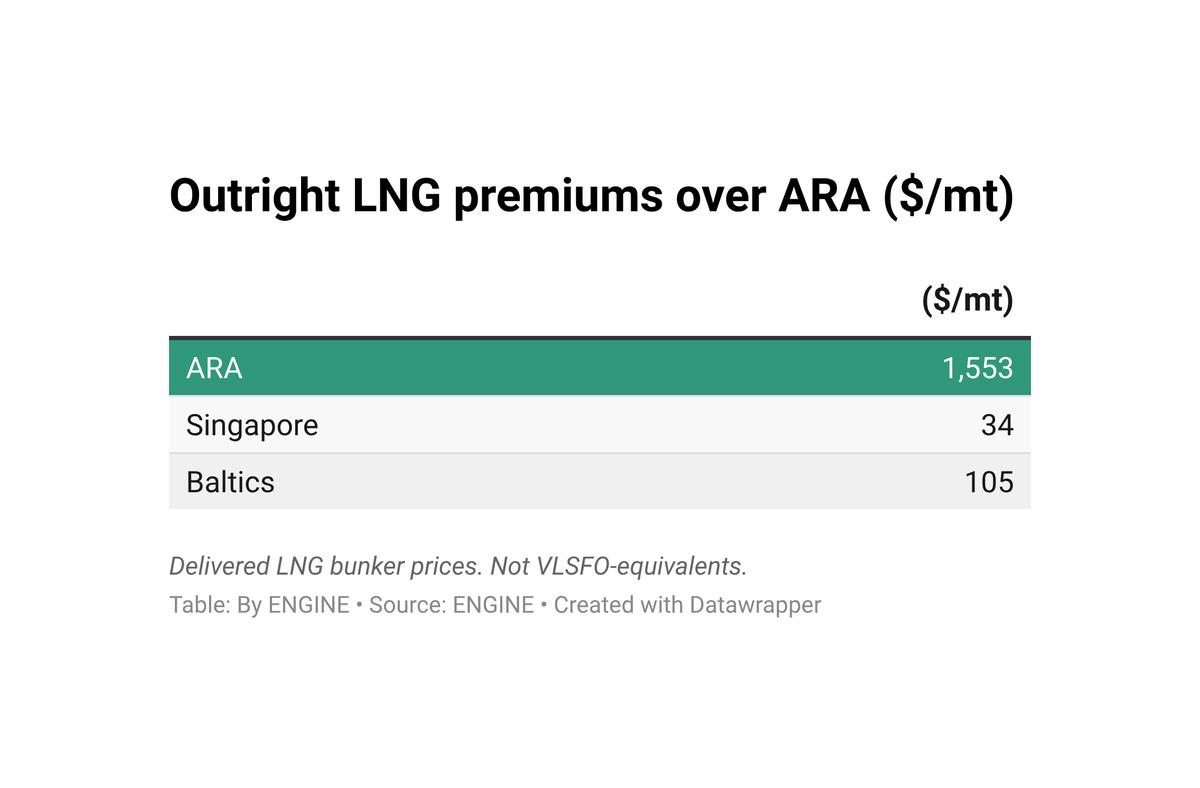
The European Commission has approved a joint venture between TotalEnergies and CMA CGM to expand LNG bunkering in the ARA. TotalEnergies said a new 20,000-cbm LNG bunker vessel will be positioned in Rotterdam by the end of 2028.
By Konica Bhatt
Please get in touch with comments or additional info to news@engine.online