The Week in Alt Fuels: The net-zero bargain
The IMO faces a difficult choice next month. A softer version of the Net-Zero Framework could help break the negotiating deadlock. But weaker rules could undermine the very transition it is meant to support.
 IMAGE: Getty Images
The IMO’s Marine Environment Protection Committee (MEPC) will reconvene from 30 November to 3 December to consider proposals ranging from stronger economic measures to removing greenhouse gas (GHG) pricing altogether.
Liberia, Tuvalu, Brazil and a four-country group comprising Australia, Canada, South Africa and the UK have submitted proposals for discussion at the IMO’s intersessional GHG working group meeting from 23 to 27 November.
Japan has submitted a proposal calling for softer fuel intensity targets and direct contributions, but it was not circulated within the six-month period required under MARPOL for adoption at MEPC 85.
The EU and Pacific Island states support adopting the text approved in April 2025. The US and several other countries, including major oil producers, want substantial changes to its technical and economic provisions.
US President Donald Trump has openly opposed global emissions pricing.
"There is no global government - and while I am President, there will be no global taxes," he said.
The question is no longer simply whether governments can agree on a global framework, but whether the compromises needed to secure that agreement could leave shipping with rules too weak to drive meaningful change.
The case for compromise
The Union of Greek Shipowners (UGS) has urged Brussels to show greater flexibility in negotiations.
“The EU’s uncompromising position is steering the IMO process to a new dead end, effectively torpedoing the negotiations by depriving them of the flexibility necessary for any chance of success,” UGS president Melina Travlos said.
Travlos said Greece and three other EU member states, collectively representing 70% of the EU-controlled fleet, had pressed for the EU to approach the IMO talks with a genuine willingness to negotiate.
While she did not name the three countries supporting a compromise, Cyprus, Greece, Malta and Italy called for “realistic, globally applicable and cost effective” regulations during a ministerial meeting in Limassol in September. The four EU countries agreed to work towards the “widest possible consensus” on global measures that support shipping’s green fuel transition while keeping the sector competitive.
All four countries supported the framework's approval in April 2025.
Nine shipping industry associations, including BIMCO, ICS, IBIA and WSC, have called for an “achievable, enforceable, and stable regulatory framework” that reflects fuel costs and availability.
“The regulatory framework must support credible transition pathways for existing ships and technologies. Continued industry investment and effective implementation will depend on global regulatory certainty and the reliable production and cost-competitiveness of alternative fuels at scale,” the statement said.
The associations also stressed the need to avoid overlapping regional and international requirements, including multiple charges on the same emissions. Travlos has made a similar argument, questioning whether the EU values its own regional measures, and the revenues they generate, more than a global agreement.
Charles Whitfield, chairman of Australian ammonia developer NH3 Clean Energy, expects IMO member states to reach an agreement in December, although he expects it to be less stringent than the April 2025 version.
“But I think that there will be a piece of paper or an agreement that does actually get ratified,” he told ENGINE.
Whitfield believes a common international framework would be preferable to the different regulatory approaches emerging across the EU, China and Singapore.
But at what cost?
Critics of a softer framework argue that political compromise could come at the expense of meaningful emissions reductions.
Weakening emissions targets or making compliance payments too cheap could undermine the IMO's climate goals and slow the shift to cleaner marine fuels, according to a report by University College London's Shipping and Oceans Research Group and the Rocky Mountain Institute.
The Clean Shipping Coalition has urged governments to adopt the framework without further changes. It argues that the existing text already represents years of negotiations and that alternative proposals have yet to demonstrate comparable emissions reductions or attract sufficient support.
The proposed IMO Net-Zero Fund is intended to support cleaner technologies, infrastructure and capacity-building, particularly in vulnerable countries. The availability of financial and technical support could help least developed and developing economies manage the transition.
Em Fenton, senior director of climate diplomacy at Opportunity Green, has cautioned against reopening the existing compromise.
“The Net-Zero Framework represents a hard-fought multilateral compromise. Any significant shift away from this text risks harming not only the level of emissions reductions that can be achieved from such a regulatory measure, but also the justice and equity of its implementation,” they told ENGINE.
“Further delay or weakening of the text only serves fossil fuel interests and does nothing to support climate vulnerable countries during shipping's transition,” Fenton added.
A deal worth having?
Important questions remain unresolved, from lifecycle emissions accounting and chain of custody to GHG pricing and the proposed net-zero fund.
A weaker agreement could bring more governments on board and give shipping a common regulatory starting point. But if compliance becomes cheaper than switching fuels, that certainty may do little to encourage investment in cleaner alternatives.
In other alt fuels news this week, South Korea’s Lotte Fine Chemical and Norwegian shipping company Höegh Autoliners plan to expand green ammonia bunkering operations across South Korean ports.
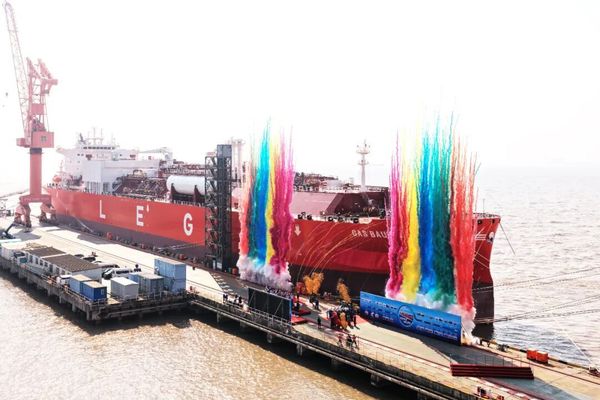
Japanese shipping company NYK Line has unveiled a newbuild gas carrier equipped with an ammonia dual-fuel two-stroke main engine at Japan Marine United’s Ariake Shipyard in Kumamoto Prefecture.
French energy firm TotalEnergies has shelved its planned $16 billion green hydrogen and ammonia production project in southern Chile, citing weak demand for green fuels and higher-than-expected production costs.
By Konica Bhatt
Please get in touch with comments or additional info to news@engine.online