The Week in Alt Fuels: Toxic, not untouchable
In recent years, ammonia's toxicity has dominated discussions about its future in shipping. Today, attention is shifting to how quickly the bunker fuel can be deployed at scale.
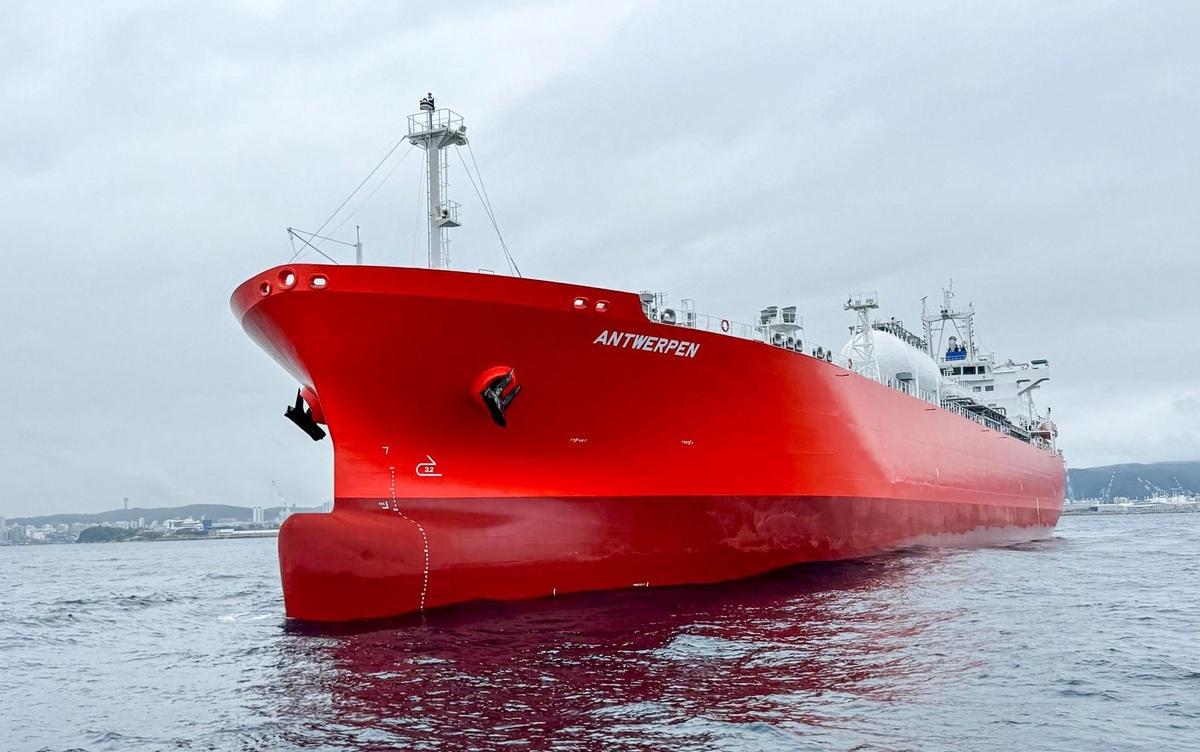 IMAGE: The world's first ocean-going ammonia-capable vessel, Antwerpen. Exmar
Ammonia's toxicity has previously clouded its prospects as a bunker fuel in shipping. Concerns over crew safety, emergency response and accident management used to dominate discussions about the fuel's potential use at sea.
While those concerns have not disappeared entirely, they are now being addressed largely through technology, regulations and operational planning rather than being seen as insurmountable obstacles.
Global regulations and training requirements are here.
In May, the IMO’s Maritime Safety Committee approved interim guidelines on the safety of ships using ammonia as fuel, as well as interim guidelines covering the training of seafarers serving on ammonia-fuelled vessels.
The guidelines represent one of the most significant regulatory milestones for ammonia to date, as they provide a framework for the design, operation and crewing of ammonia-fuelled ships while the industry gains practical experience with the fuel.
“The approval of these guidelines provides a clear signal that ammonia is moving from concept to a fuel with an emerging international safety framework,” said Liam Blackmore, global head of technology adoption and integration at Lloyd's Register.
“It demonstrates how close collaboration between industry, flag administrations and technical organisations can accelerate the safe adoption of new fuels at scale,” Blackmore added.
Propulsion technologies are advancing. Wärtsilä has already launched an ammonia-capable engine, while WinGD and Everllence are advancing through the final stages of testing ahead of commercial deployment.
These engine makers have demonstrated pilot fuel consumption of around 5-10% across multiple load conditions and designed extensive safety systems to address concerns around ammonia's toxicity.
Ships are beginning to arrive. Belgian gas shipping company Exmar recently took delivery of the world's first ocean-going ammonia-capable dual-fuel vessel, bringing ammonia propulsion from concept to entry into the ocean-going commercial fleet.
Four ammonia-capable vessels are currently in operation and another 16 are expected to be delivered by the end of this year, according to DNV’s database. A total of 46 ammonia-capable ships are on order for delivery by 2030, suggesting that at least some shipowners have invested in ammonia as part of their future fuel strategies.
Bunker infrastructure developments are accelerating.
Chemical company Lotte Fine Chemical has completed an ammonia bunker operation in South Korea's Port of Ulsan. A COSCO-operated vessel was bunkered with green ammonia in China's Dalian port last year.
The world's largest bunker hub, Singapore, is laying the groundwork for commercial ammonia bunkering. Itochu has received regulatory approval from Singapore's port authority, while Sumitomo, Kawasaki Kisen Kaisha (K Line) and NYK Bulkship are developing an ammonia bunker vessel. Yara and Golden Island are expected to supply the fuel.
Norwegian company Azane Infrastructure has committed to pay a penalty if it fails to complete three ammonia bunker terminals by 2029. Facilities in Florø, Risavika and Mongstad will each have a storage capacity of 2,000 cbm of refrigerated ammonia and a bunkering rate of more than 100 mt/hour.
Other ports, including India's VO Chidambaranar, Oman's Sohar and in Australia's Pilbara region, are also preparing for ammonia bunker operations later this decade.
There are still some challenges that need to be addressed. Ammonia has not yet been consumed by vessels at scale, which means there is still limited operational experience with bunkering, fuel handling and vessel operations under real-world conditions.
Bunker buyers will also need access to sufficient volumes of low- and zero-emission ammonia if the fuel is to deliver meaningful emission reductions. Whether enough green ammonia will be ready by 2030 to meet demand from the future fleet remains an open question.
For now, however, ammonia is no longer considered a theoretical future fuel, but as a more practical option that a number of shipowners, ports and fuel suppliers are actively investing in.
In other alternative fuels news this week, Service Terminal Rotterdam (STR) plans to build new storage tanks with a combined capacity of 100,000 cbm. It will be capable of storing biofuels as well as methanol and ethanol in the Port of Rotterdam.
Bunker supplier China Marine Bunker (PetroChina) has taken delivery of a methanol bunker vessel in Zhoushan. The vessel, Zhong Ran Lv Neng 85, is the first methanol bunker vessel in China designed to operate across all domestic waters, according to the company.
Future rules for nuclear-powered shipping could build on the safety and regulatory frameworks being developed for ammonia and hydrogen bunker fuels at EU ports, a new study has found. The study was conducted by UK-based CORE POWER, shipping company A.P. Moller-Maersk, the Port of Rotterdam and classification society Lloyd's Register.
By Konica Bhatt
Please get in touch with comments or additional info to news@engine.online