US maritime watchdog endorses LNG and bio-LNG in NZF
The US Federal Maritime Commission (FMC) has upheld the adoption of LNG and bio-LNG in the IMO’s Net-Zero Framework (NZF).
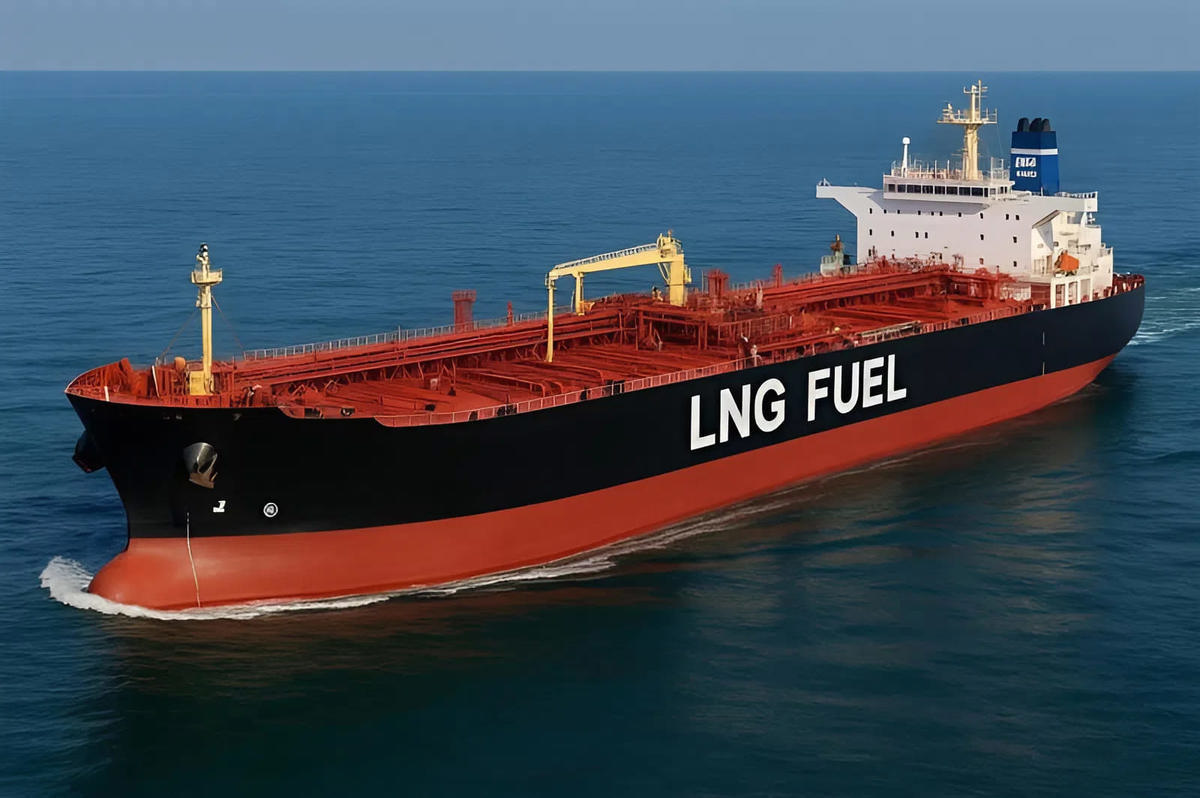 IMAGE: Illustration of an LNG dual-fuel crude oil tanker. ENGINE via ChatGPT
For the International Maritime Organization’s (IMO) 2050 shipping decarbonisation framework to work, it must accommodate the fullest spectrum of alternative marine fuels, including LNG and bio-LNG, FMC's commissioner Laura DiBella said.
Emissions reduction targets should hinge on the actual viability, affordability, availability, and scalability of alternative fuels rather than arbitrary deadlines or restricted fuel choices, DiBella argued.
“Attempts to artificially limit alternate fuel options available to industry will prevent the NZF from becoming an effective substitute for the current system,” she said, highlighting the role of LNG and bio-LNG in the global maritime sector's future fuel mix.
LNG and bio-LNG have the potential to “realistically supply” over 60% of global maritime fuel by 2050, the commissioner claimed.
Bio-LNG gains a major edge from its organic agricultural origins, allowing it to seamlessly utilize existing LNG supply chains and cater to the rising population of LNG-fuelled vessels, DiBella said.
Instead of restricting alternative fuels out of fear over future costs, the true policy challenge is ensuring that supply and infrastructure investments scale right alongside growing demand, DiBella noted.
“Efforts toward emissions reductions must be linked explicitly to demonstrated viability and realistic availability of alternative fuels, not a pre-determined, rigid implementation date or limited fuel options,” DiBella said.
The comments come just ahead of next month's IMO technical session, where the organisation will address unresolved issues surrounding the NZF after it stalled out of adoption last year.
The US has historically opposed the NZF proposal for global adoption. Earlier this year, Washington called for the NZF to be scrapped completely.
Notably, methane is a highly potent greenhouse gas, trapping 86 times more heat than CO2 over the first 20 years after its release, making it significantly more damaging in the near term, according to the United Nations Environment Programme.
By Aparupa Mazumder
Please get in touch with comments or additional info to news@engine.online