Bunker One completes first bioethanol bunkering in Latin America
Global bunker supplier Bunker One has delivered 500,000 litres of bioethanol to a CMA CGM-owned methanol-capable container ship at the Port of Santos in Brazil.
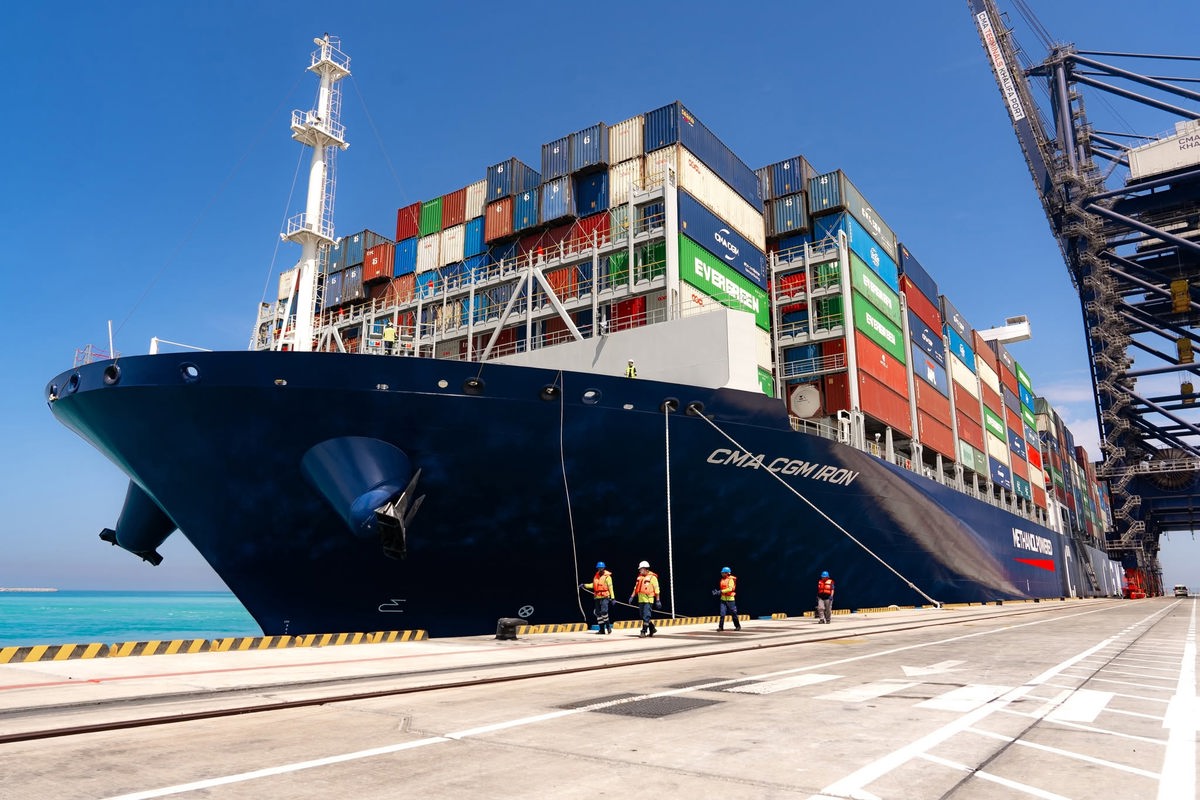 IMAGE: Methanol-capable container ship, CMA CGM Iron. Facebook of CMA CGM
The 500,000-litre (approximately 395 mt) bioethanol stem was supplied to the CMA CGM Iron by Bunker One's bunker barge Dona Isa.
The bioethanol was sourced from Brazilian sugar company Copersucar.
This was the first bioethanol bunkering of an ocean-going container ship in Latin America, according to Bunker One.
The delivery underlines that shipping's energy transition depends not only on developing alternative fuels, but also on building the infrastructure and supply chains needed to deliver them safely and reliably, it explained.
“Beyond this first demonstration, the Port of Santos and Santos Brasil container terminal are positioning themselves and Brazil as a future low-carbon marine fuels hub for South America,” Copersucar said.
"Brazil already possesses one of the world's most mature and scalable bioethanol supply chains. This operation demonstrates how that capability can be connected to international shipping through safe and reliable bunkering infrastructure," said Flavio Ribeiro, managing director of Bunker One's Latin America division.
Future fuel optionality
CMA CGM Iron is equipped with Everllence's methanol-capable engine, which can theoretically operate on ethanol because the two fuels share similar chemical properties.
However, the compatibility of its fuel-handling system and engine settings must be verified before the switch can be made.
Although ethanol and methanol are chemically similar, they behave differently as marine fuels.
Ethanol has a higher energy density, ignites more readily, burns more slowly and produces a hotter flame. As a result, parameters such as fuel injection, ignition timing and engine operating temperatures must be assessed before a methanol-capable vessel can safely operate on ethanol.
Several shipping companies have already started exploring ethanol to increase fuel flexibility.
Danish shipping company A.P. Moller-Maersk recently operated its methanol dual-fuel feeder Laura Maersk on 100% ethanol. Singapore-based container line X-Press Feeders has tested a blend of 90% biomethanol and 10% ethanol (E10) on one of its methanol-capable container ships in Rotterdam.
By Konica Bhatt
Please get in touch with comments or additional info to news@engine.online