East of Suez Market Update 28 July
Regional bunker benchmarks have moved in mixed directions, and availability is tight across all grades in Malaysia’s Port Klang.
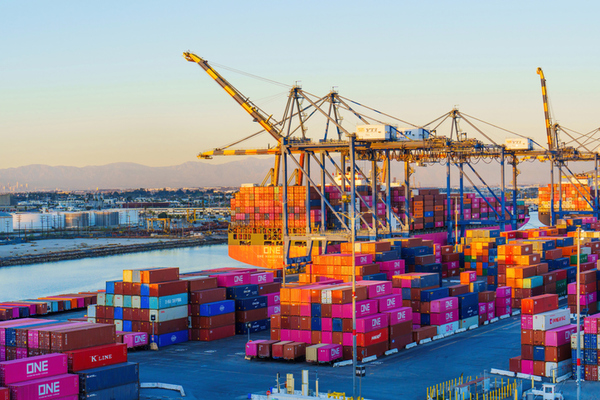
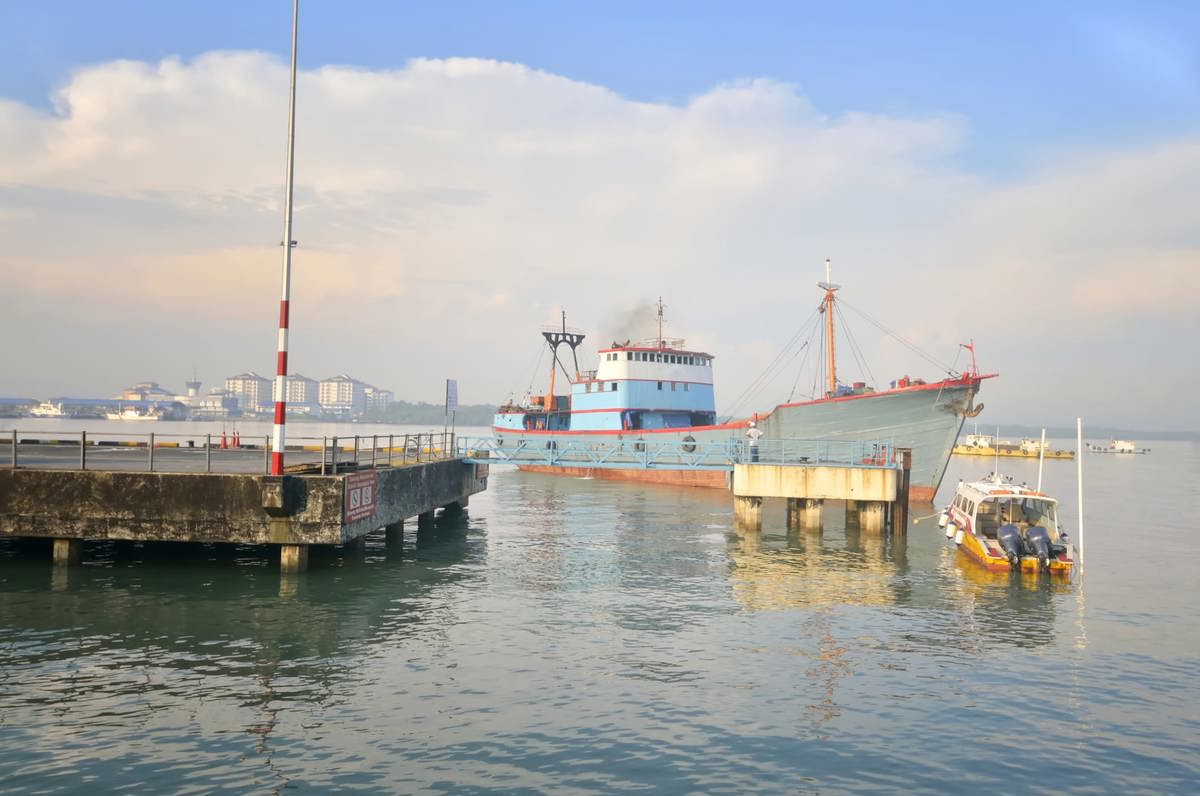 IMAGE: An old wooden cargo ship setting out from Port Klang. Getty Images
Changes on the day to 17.00 SGT (09.00 GMT) today:
- VLSFO prices up in Zhoushan ($80/mt), and down in Singapore ($30/mt) and Fujairah ($26/mt)
- LSMGO prices up in Zhoushan ($65/mt), and down in Singapore ($55/mt) and Fujairah ($36/mt)
- HSFO prices up in Fujairah ($24/mt), Zhoushan ($15/mt), and down in Singapore ($37/mt)
- B30-VLSFO price down in Singapore ($29/mt)
Zhoushan’s VLSFO price has jumped by $80/mt over the past day, while prices in Singapore and Fujairah have declined. The sharp increase has turned Zhoushan’s VLSFO discounts into premiums, with the port's benchmark now trading $50/mt above Singapore and $41/mt above Fujairah.
VLSFO availability in Zhoushan remains tight despite muted demand, with suppliers recommending lead times of around nine days. According to a source, the extended lead times reflect constrained refinery output, which has also supported the benchmark VLSFO price.
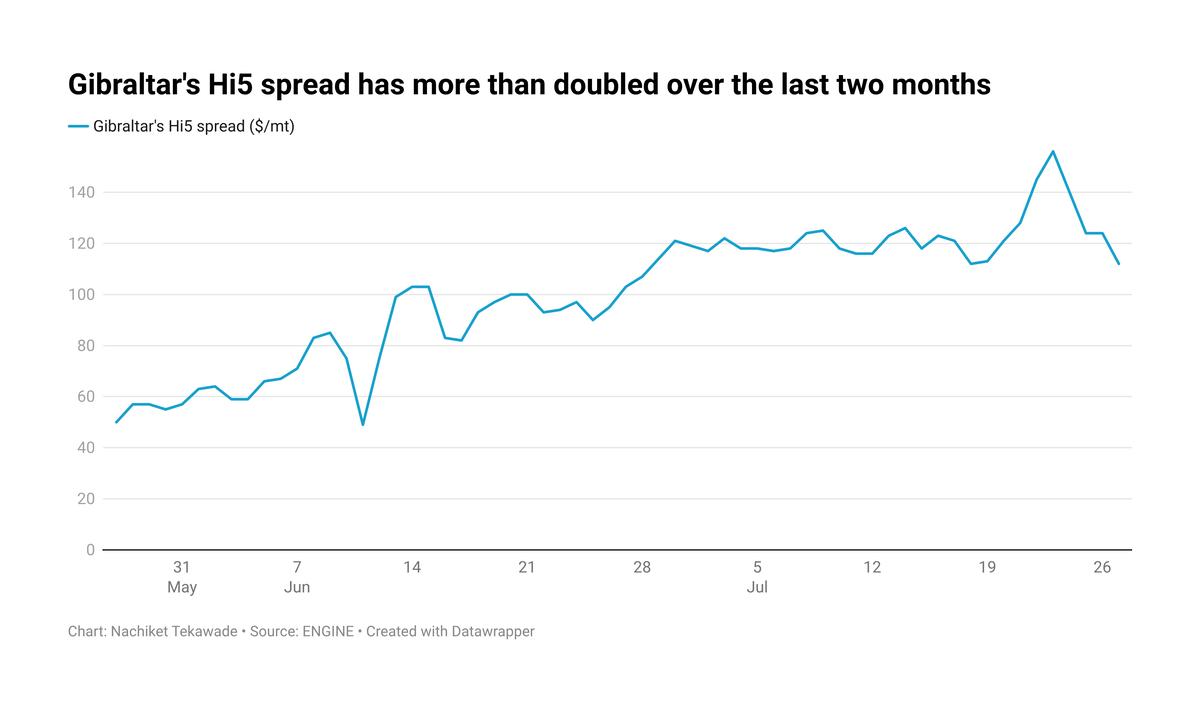
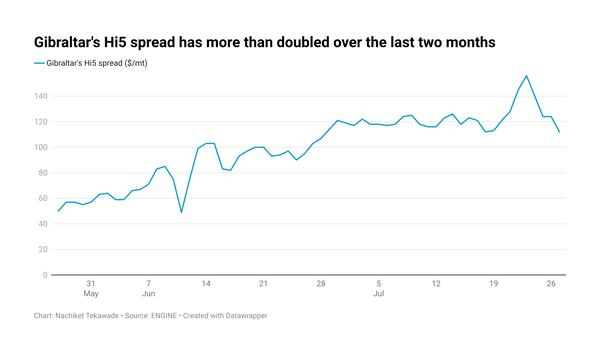
Zhoushan’s HSFO price has increased by a comparatively modest $15/mt, pushing the port’s Hi5 spread from $124/mt to $189/mt. The spread is still above Fujairah’s $161/mt, but remains below Singapore’s $203/mt.
In Malaysia’s Port Klang, bunker fuel supply remains under pressure. Prompt VLSFO availability remains tight, LSMGO supply is limited, and HSFO availability continues to face supply constraints.
Brent
The front-month ICE Brent contract has declined by $3.68/bbl on the day, to trade at $85.53/bbl at 17.00 SGT (09.00 GMT) today.
Upward pressure:
Brent crude’s price has felt some upward pressure as security threats in the Red Sea continue to impact Middle East energy flows.
Yemen's Iran-aligned Houthi militant group said it will maintain its blockade and continue targeting Saudi Arabia-linked oil tankers attempting to transit the Bab al-Mandeb Strait.
“There are still concerns over vessel movements through the Bab el-Mandeb Strait, putting Saudi oil exports from the Red Sea at risk,” two analysts from ING Bank noted.
Riyadh is highly dependent on this alternative route, funnelling about 70% of its crude exports through the Red Sea port of Yanbu to circumvent the Strait of Hormuz.
“When it comes to the Houthis, the risk is not isolated to Saudi shipments, but also to Saudi oil infrastructure,” ING Bank’s analysts said.
Downward pressure:
Brent futures have sold off heavily as the US and Iran continue to refrain from launching further strikes against each other.
US President Donald Trump said Washington and Tehran have resumed talks and that there is a "good chance" of reaching a deal.
“US President Donald Trump said that he decided to pause the strikes to give negotiations another chance,” ANZ Bank’s senior commodity strategist Daniel Hynes noted.
This sell-off was further exacerbated by reports that oil loadings have resumed at the Caspian Pipeline Consortium (CPC) terminal on Russia’s Black Sea coast.
Oil loadings have resumed at both the CPC terminal and the Sheskharis terminal in Russia, according to ING Bank’s analysts.
By Tuhin Roy and Aparupa Mazumder
Please get in touch with comments or additional info to news@engine.online