Europe & Africa Market Update 12 Aug
Bunker prices in European and African ports have mostly dropped, while fuel availability is tight off Skaw and in Gothenburg.
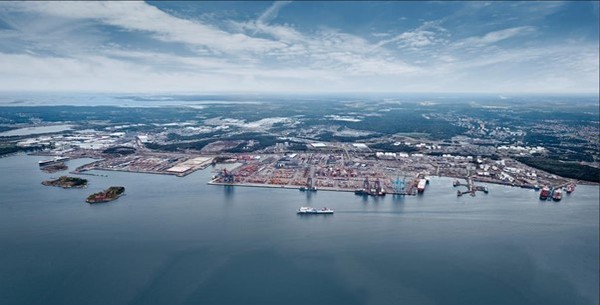 IMAGE: Aerial view of Port of Gothenburg. Gothenburg Port Authority
Changes on the day to 09.00 GMT today:
- VLSFO prices down in Durban ($21/mt), Rotterdam and Gibraltar ($12/mt)
- LSMGO prices down in Durban ($29/mt), Rotterdam ($13/mt) and Gibraltar ($5/mt)
- HSFO prices down in Durban ($10/mt), Gibraltar ($7/mt) and Rotterdam ($3/mt)
- B30-VLSFO prices down in Rotterdam ($80/mt)
Bunker fuel prices have mostly dropped over the past day, tracking the fall in Brent.
The price of LSMGO off Skaw has gained by $10/mt, over the past session. A higher priced, 150-500 mt stem, fixed at $1,299/mt, has provided support to the benchmark.
Consequently, LSMGO's price premium off Skaw over Rotterdam has widened by $23/mt in the past day.
Conversely, the VLSFO price at the Danish offshore anchorage has dropped $35/mt, more sharply than in Rotterdam. This has narrowed the Danish hub’s price premium over the Dutch port by $23/mt in a single day.
Over at Sweden's Gothenburg, the LSMGO price has gained $15/mt. This has widened Gothenburg’s price premium over Rotterdam by $28/mt in a single session.
Fuel availability is tight off Skaw and in Gothenburg, and buyers are advised a lead time of around at least 10 days to get supplies of any fuel grade, a trader told ENGINE.
Brent
The front-month ICE Brent contract has lost by $0.71/bbl on the day, to trade at $89.21/bbl at 09.00 GMT.
Upward pressure:
Brent crude’s price has felt upward pressure on the back of escalating tension between the US and Iran.
Tehran has reiterated that the Strait of Hormuz will remain closed unless Washington agrees to the six sweeping conditions it announced earlier this week.
The demands include a total cessation of all US military action in the region and the immediate withdrawal of all US naval and air forces from around Iran, among others.
“The likelihood of a deal to reopen the Strait of Hormuz remains low,” ANZ Bank’s senior commodity strategist Daniel Hynes said.
Downward pressure:
Brent’s price gains were capped after the American Petroleum Institute (API) reported a sizeable increase in US crude stocks.
US crude oil inventories increased by 9.07 million bbls in the week ending 7 August, against market expectations of a 500,000-bbl draw.
A build in US crude stocks typically indicates lower demand for oil and can put some downward pressure on Brent's price.
By Nachiket Tekawade and Aparupa Mazumder
Please get in touch with comments or additional info to news@engine.online