Europe & Africa Market Update 30 July
Bunker prices across Europe and Africa have mostly moved higher, while prompt fuel supply is tight in the ARA.
Changes on the day to 09.00 GMT today:
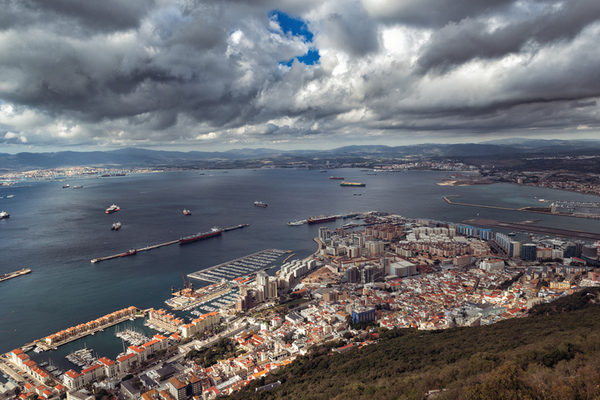
- VLSFO prices up in Durban ($49/mt), Rotterdam ($44/mt) and Gibraltar ($42/mt)
- LSMGO prices up in Durban ($87/mt), Rotterdam ($84/mt) and Gibraltar ($77/mt)
- HSFO prices up in Gibraltar ($40/mt), Durban ($33/mt) and Rotterdam ($32/mt)
- B30-VLSFO prices up in Gibraltar ($62/mt) and Rotterdam ($43/mt)
Although prices have recorded gains over the past day, conventional fuel prices at Rotterdam continue to trade at discounts in the range of $33-45/mt to Gibraltar’s prices.
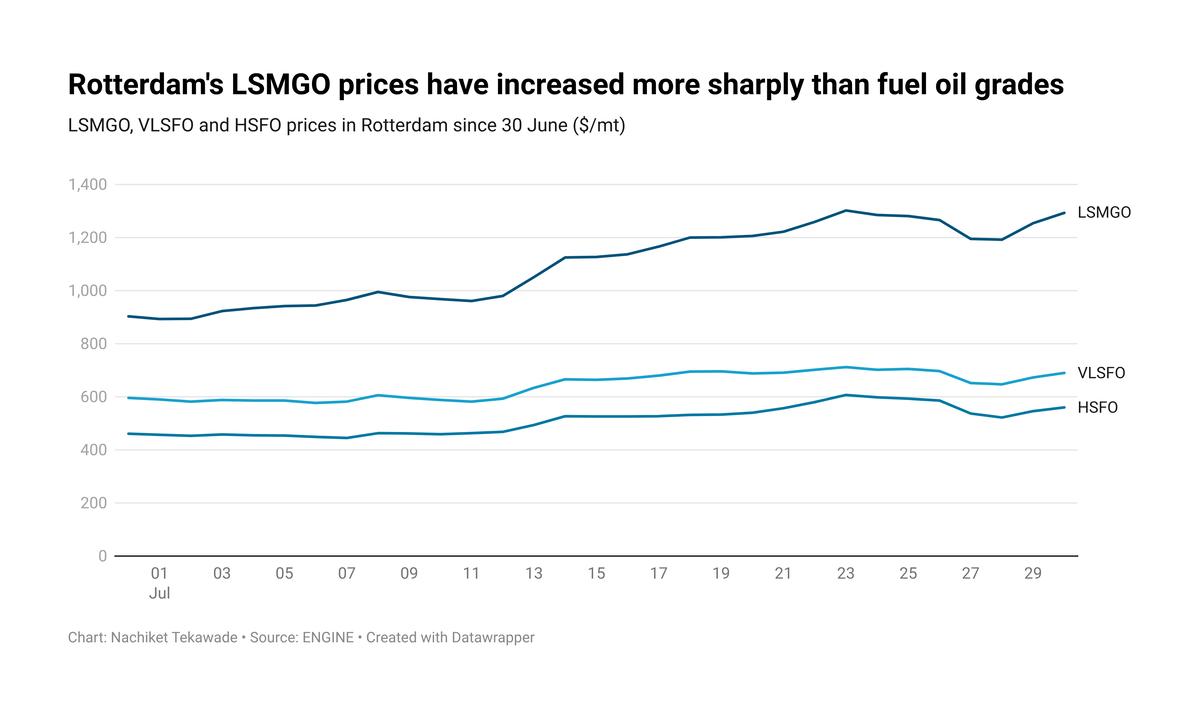
However, over the last month, Rotterdam's LSMGO price has increased more sharply than its VSLFO and HSFO prices, surging by around $390/mt. The Dutch port’s HSFO and VLSFO prices have also increased, though by a lesser margin of $94-99/mt, since 30 June, ENGINE’s price calculations show.
Gasoil stocks in the ARA have dropped 6% in July, to their lowest in nearly four years, Insights Global data showed last week. Comparatively, fuel oil stocks in the hub are up 15% from May, when they recorded their lowest level in more than a decade.
Separately, Rotterdam Port Authority’s second-quarter data showed conventional bunker fuel sales falling sharply year-over-year. Gasoil sales fell less steeply compared to VLSFO and HSFO.
Prompt fuel availability is tight in the port for all three grades, with buyers advised booking stems around 5-7 days ahead to secure supplies, a trader said.
Brent
The front-month ICE Brent contract has gained by $4.56/bbl on the day, to trade at $91.66/bbl at 09.00 GMT.
Upward pressure:
Renewed fighting between the US and Iran has sent Brent crude’s price higher once again.
The US Central Command (CENTCOM) has struck Iranian military sites, including missile facilities and maritime capabilities, erasing hopes of any de-escalation in the region.
Moreover, Tehran has rejected Oman’s proposal to evenly share control of the shipping lanes in the Strait of Hormuz, seeking complete control of the critical oil chokepoint, Reuters reported.
There is also news that Yemen’s Iran-backed Houthi militants plan to impose fees on commercial vessels navigating the Bab al-Mandeb Strait – another important oil transit routes in the region.
“The daily question has been whether crude can still leave the Gulf and whether the next headline will remove another few million barrels from the global supply map,” SPI Asset Management managing partner Stephen Innes noted.
Downward pressure:
While there are no immediate downward pressures acting on Brent crude’s price today, market analysts are watching closely for even the smallest hint of de-escalation in the Middle East.
Earlier this week, US President Donald Trump said that Washington and Tehran have engaged in talks and that there is a “good chance” of a peace deal.
“Even in the event of a deal, one would expect that the market will need to continue to price in a large risk premium, given that recent events have demonstrated how quickly a deal can unravel,” two analysts from ING Bank noted.
By Nachiket Tekawade and Aparupa Mazumder
Please get in touch with comments or additional info to news@engine.online