High power costs could unplug UK shore power - Portsmouth port authority
High electricity costs are “stifling” the use of shore power at UK ports and risk leaving newly built infrastructure underused, Portsmouth International Port's director Mike Sellers has warned.
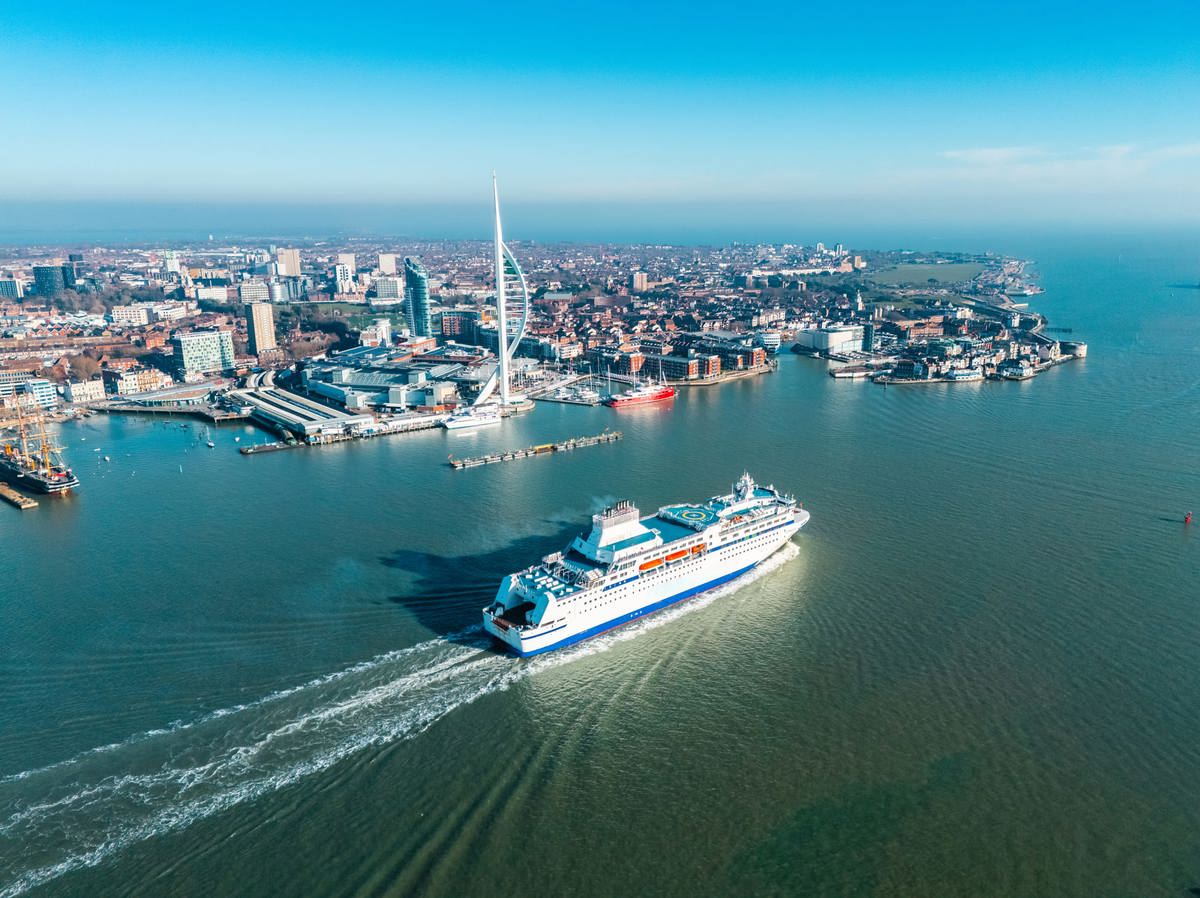 IMAGE: Passenger ferry leaving Portsmouth harbour. Getty Images
The UK government has temporarily removed the 5% value-added tax (VAT) previously applied to qualifying domestic electricity bills in England, Scotland and Wales from 1 October 2026 until 31 March 2027.
VAT is a tax added to the cost of goods and services, including electricity.
Shore power supply from UK ports should receive similar treatment, Sellers said.
“Recognising shoreside electricity as a marine fuel and removing VAT would be a quick measure to help address this issue,” he added.
Electricity supplied for business use generally attracts the UK's standard 20% VAT rate, although some supplies qualify for reduced or zero rates.
But high electricity prices can significantly raise the cost of plugging a ship into the grid when docked at ports, Sellers argued.
“We have an impressive, industry-leading, UK-first, environmentally-pioneering shore power system, but it’s expensive,” Sellers said, “so expensive that operators are taking a financial hit to use it, as electricity costs millions of pounds more than their usual diesel-based fuel.”
Portsmouth launched the "UK's first multi-berth, multi-frequency, high-voltage shore power system” to allow vessels to switch off their engines while alongside. Three vessels were using the system by late September, including two operated by Brittany Ferries.
But internationally uncompetitive, non-domestic electricity prices are one of the main barriers to shore power uptake across the UK port sector, according to a white paper published by the port authority, with input from British Ports Association (BPA), in September.
Electricity accounts for around 80-85% of what a vessel pays to plug in at Portsmouth, compared with around 15-20% for port charges, the white paper said.
Brittany Ferries chief executive Christophe Mathieu said plugging in remained “prohibitively” expensive. He warned that shore power installations could become redundant assets if operators chose not to use them.
UK electricity prices for medium-sized non-domestic consumers averaged around 25.1 pence per kilowatt-hour (25.1p/kWh), including taxes and levies, in the second half of 2025, BPA's senior sustainability advisor, Rhona Macdonald said.
That was considerably higher than the 16.8p/kWh recorded in Germany and 10.6p/kWh in France.
Grid-based electricity incurs additional network charges, policy costs and taxes that do not apply to marine fuels in the same way. This means that a £10/megawatt-hour premium on electricity costs would add £100,000/year for every 10 gigawatt-hours supplied, she said.
“High electricity prices suppress utilisation. Low utilisation increases the cost that must be recovered from every unit sold. And higher prices further discourage vessels from connecting,” she added.
The white paper called for government intervention to help narrow the cost gap.
Macdonald suggested reducing the tax burden on electricity supplied at ports, reviewing network charges that can weigh heavily on shore power infrastructure and considering targeted support to lower the price operators pay for electricity.
By Konica Bhatt
Please get in touch with comments or additional info to news@engine.online