Liquid Wind founder makes fresh push for Swedish e-methanol projects
Swedish e-fuel developer Liquid Energy Design, formerly Liquid Wind, has partnered with thyssenkrupp Decarbon Technologies to develop two e-methanol plants in Sweden.
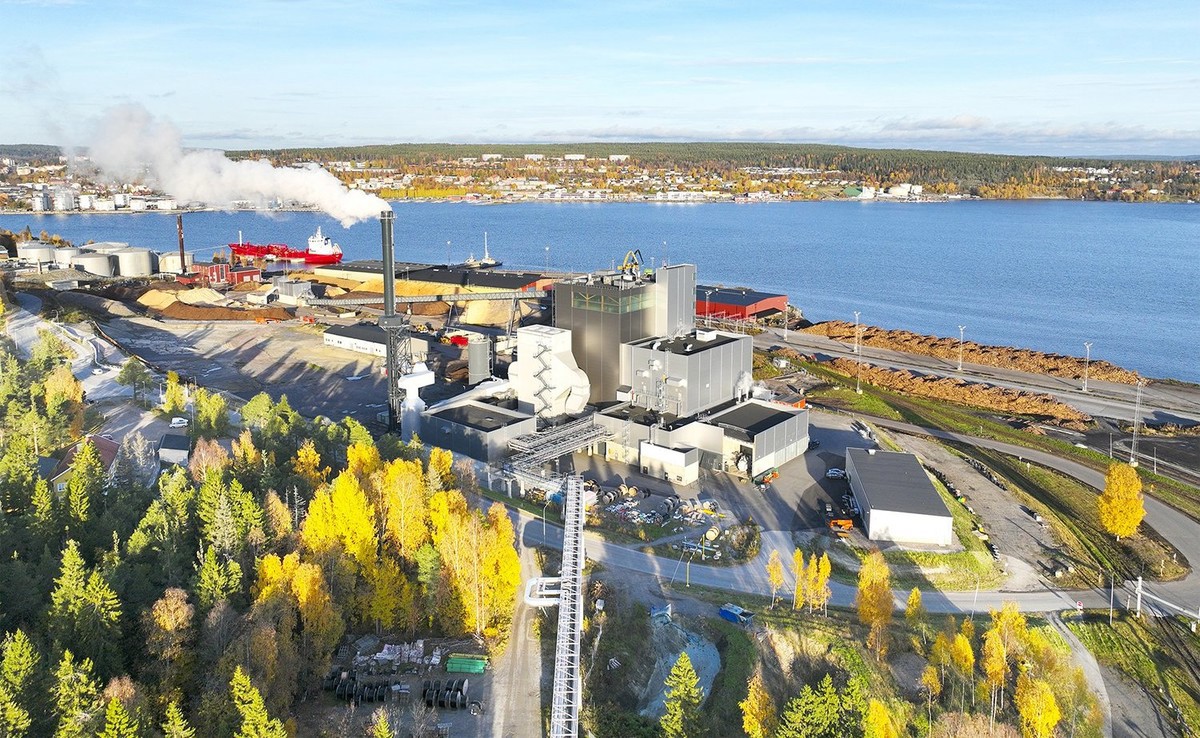 IMAGE: Övik Energi's biomass-fired cogeneration power plant in the High Coast Innovation Park business cluster, Sweden. Övik Energi
The partnership comes six months after Liquid Wind filed for bankruptcy in May 2026, with founder Claes Fredriksson now taking forward the company's earlier development plans under its new name.
The agreement covers planned facilities in Umeå and Örnsköldsvik, each designed to produce around 100,000 mt/year of e-methanol using renewable electricity and biogenic CO2.
Liquid Wind first announced the Umeå project in January 2023 in partnership with Swedish energy company Umeå Energi. At the time, production was expected to begin in 2026. The Örnsköldsvik project followed in February 2025 as the company’s fifth planned e-methanol facility in the Nordic region.
In October 2025, the company secured €3.6 million ($4.2 million) in Swedish government funding to support pre-engineering work at Örnsköldsvik. It also submitted an environmental permit application for the project shortly before filing for bankruptcy in May.
Under the new partnership, Liquid Energy Design will continue developing both facilities and thyssenkrupp Decarbon Technologies financing the development phase.
Both plants will be located next to existing combined heat and power facilities operated by local energy companies Umeå Energi and Övik Energi, respectively. The companies will supply biogenic CO2 captured from their facilities for e-methanol production.
"Access to renewable power and biogenic CO₂ is the foundation of every e-fuel plant, and Umeå and Örnsköldsvik offer both," said Benny Mai, chief technical officer at Liquid Energy Design.
Liquid Energy Design is targeting a final investment decision for its Umeå project by the end of 2027, while construction at Örnsköldsvik is expected to begin between 2028 and 2029.
Broader markets beyond shipping
Liquid Wind initially focused its e-methanol production plans on marine bunkering before expanding its target markets to include aviation and chemicals.
The latest partnership identifies road transport alongside shipping and aviation as potential markets, although the companies have not disclosed how production would be divided between the three sectors.
In a 2025 interview with ENGINE, Fredriksson said the company aimed to develop 80 modular plants across the Nordics by 2030, with a combined production capacity of 8 million mt/year. It was also targeting 500 plants worldwide by 2050.
Liquid Wind previously sold its first planned e-methanol facility, FlagshipONE, to Danish energy company Ørsted in 2022. Ørsted subsequently cancelled the project in 2024, citing high development costs and difficulties securing financially viable long-term offtake agreements.
Acknowledging the setbacks of the earlier venture, Fredriksson said the company intends to build on its previous development work.
"Together, we are taking forward nine years of eFuel project development, technical progress, and market engagement," he said in a social media post last month. "While we are disappointed that we did not make it all the way on our first attempt, we are grateful for the opportunity to continue — and excited about what we can build from here."
By Konica Bhatt
Please get in touch with comments or additional info to news@engine.online