LNG Bunker Snapshot: Prices spike as Middle East crisis rattles global supply
LNG bunker prices in Rotterdam and Singapore have surged sharply as Middle East tensions, disruptions to Qatar’s LNG exports and risks to shipments through the Strait of Hormuz fuel a sharp market rally.

Weekly changes in LNG bunker prices:
- Rotterdam up by $371/mt to $1,208/mt
- Singapore up by $449/mt to $1,169/mt
Rotterdam
Rotterdam’s LNG bunker price has jumped by $371/mt, tracking the sharp rise in the front-month Dutch TTF natural gas contract. Over the past week, the benchmark has climbed by $7.14/MMBtu to reach $20.63/MMBtu ($1,073/mt).
The surge in TTF price has been driven largely by geopolitical tensions and supply-side pressures.
“Escalating tensions in the Middle East and the suspension of LNG production in Qatar,” have been key catalysts behind the rally, which has also been supported by “declining underground gas storage volumes and concerns about the prolonged Middle East situation,” according to the Japan Organization for Metals and Energy Security (JOGMEC).
The prospect of prolonged disruptions to LNG trade through the Strait of Hormuz has further intensified market concerns. “The disruption in the Strait of Hormuz leaves 20% of global LNG trade at risk, with exports from the second-largest supplier, Qatar, grinding to a halt,” said ING Bank’s head of commodities strategy Warren Patterson.
The situation has been compounded by the shutdown of Qatar’s largest export facility. “Qatar was forced to shut its Ras Laffan LNG plant, the world’s biggest export facility, after attacks by Iranian drones. This has removed almost 20% of global LNG supply and has coincided with the effective closure of the Strait, putting further LNG supply at risk of disruption,” said ANZ Bank’s senior commodity strategist Daniel Hynes.
European storage levels remain another point of concern. EU underground gas storage stood at 29.4% as of 6 March, slipping from 30.1% a week earlier and sitting 20.5% lower than the same time last year, according to Gas Infrastructure Europe.
Tighter supply from the Middle East could therefore have direct price implications for Europe’s gas market. “European storages are already significantly lower than the same time last year, and a shortfall in Middle Eastern supply would also have a direct impact on prices in Europe,” said Mind Energy, formerly Energi Danmark.
Singapore
Singapore’s LNG bunker price has surged over the past week, climbing by $449/mt to $1,169/mt. The spread with Rotterdam has also tightened considerably: the Singapore price, which stood at a $118/mt discount a week earlier, is now at a narrower $39/mt discount.
LNG bunker pricing in Singapore generally tracks the NYMEX Japan/Korea Marker (JKM). The benchmark front-month contract rose by $8.65/MMBtu over the week to $19.38/MMBtu ($1,008/mt), reinforcing the upward momentum in bunker prices.
Rising geopolitical tensions have played a major role in pushing prices higher. The increase has largely been driven by “supply concerns” against “the backdrop of increased tensions in the Middle East,” according to the Japan Organization for Metals and Energy Security (JOGMEC).
Market disruptions linked to the conflict have had widespread effects on global gas markets. “The conflict in the Middle East has had an outsized impact on natural gas markets over the past week, with net importers in Europe and Asia having seen prices skyrocket,” said oil and gas analysts at research firm BMI. The rally was also supported by “the military attack on Qatar's Ras Laffan industrial zone, which shut down LNG export facilities,” the agency said.
The impact has already begun rippling through regional energy chains. “Asia is already grappling with energy shortages because of the Middle East conflict… Stock for power distributors and refineries began to falter in the middle of the week, leaving some to cut back. Prices for some industrial end-users have already spiked. Singapore’s providers of fuel for ships are among those rationing supply, while the Philippines has said it will shorten the work week for government offices to save energy. Bangladesh has limited the illuminated decorations festooning streets during the holy month of Ramadan,” said Stephen Stapczynski, Energy Asia team leader at Bloomberg News.
Supply disruptions in the Persian Gulf have also shifted buying behaviour in global LNG markets. “While the majority of Persian Gulf LNG goes into Asia, the disruption has seen Asian buyers turning to the spot market, increasing competition for supplies between Asia and Europe,” Patterson said.
This tightening of available cargoes has added further upward pressure on LNG prices. “Asian buyers — China, Taiwan (ROC), Korea, India etc— have just lost their key source too. The premium buyers with shortfall will chase the same cargoes. Europe and Asia could compete for a shrinking pool of uncommitted supply, at the same time,” explained Hendrian Sukardi, LNG market analyst at ENN Energy.
Other LNG bunker news
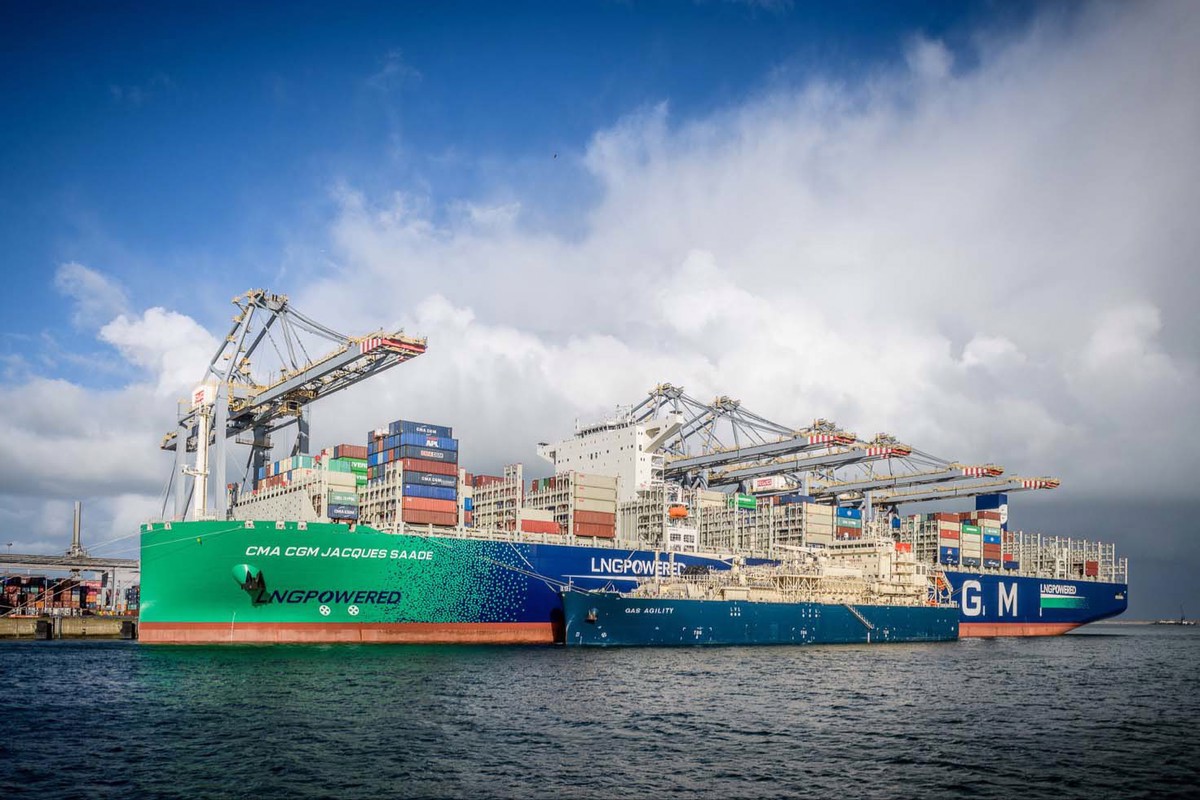
Danish shipping company A.P. Moller-Maersk has reached an agreement to procure liquefied biomethane (LBM) from Avenir Marine, a subsidiary of bunker supplier Avenir LNG.
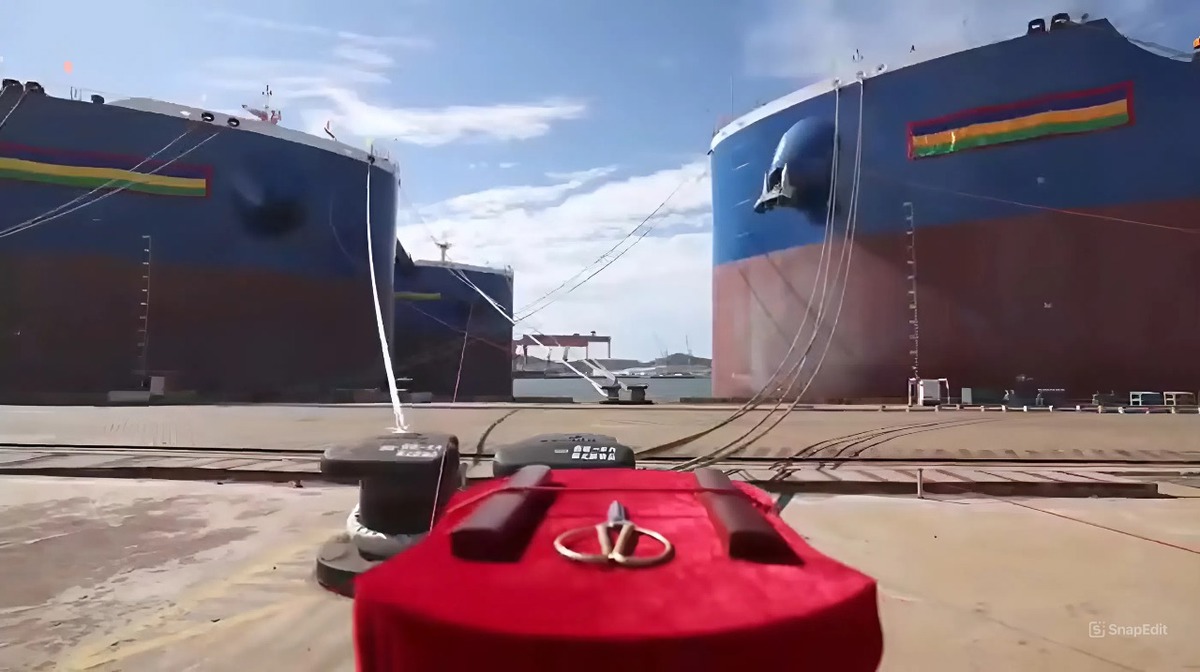
Last week, Hong Kong-based energy firm CLPE and CNOOC carried out Hong Kong’s first LNG ship-to-ship (STS) bunkering operation for a very large crude carrier (VLCC).
Meanwhile, LNG dominated alternative fuel vessel orders in February, according to DNV’s Alternative Fuels Insight database, accounting for 14 of the 17 new orders recorded during the month. The database shows that 678 LNG-capable vessels are currently on order for delivery through 2033, while another 915 vessels are already in operation.
By Tuhin Roy
Please get in touch with comments or additional info to news@engine.online