MSC Cruises trials HVO100 on cruise ship
MSC Cruises, the cruise division of Mediterranean Shipping Company (MSC), has tested pure hydrogenated vegetable oil (HVO100) on one of its cruise ships.
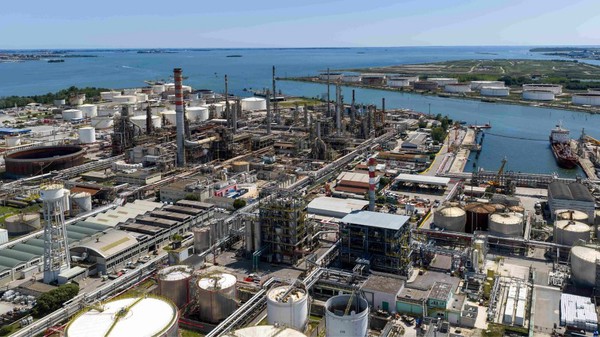 IMAGE: Enilive's biorefinery in Porto Marghera, Venice. Eni
The fuel was produced from waste-based feedstocks, including used cooking oil, animal fats and agricultural residues, at biorefineries in Venice and Gela owned by Enilive, a subsidiary of Italian energy company Eni.
The companies did not confirm where the fuel was delivered or where the trial took place.
However, Enilive has been offering marine HVO at the ports of Genoa, Ravenna and Venice “for direct delivery from terminal to vessel via barge” for the past few months, Stefano Ballista, the company’s chief executive, confirmed.
Ballista added that using HVO100 on cruise ships can support compliance with FuelEU Maritime requirements and help reduce “emissions-related costs.”
During the tests, one of the engines of the cruise ship MSC Opera operated on HVO100 for around 2,000 hours, with performance and emissions data monitored throughout the trial.
According to Eni, the trial showed an approximately 80% reduction in well-to-wake GHG emissions compared with conventional marine fuels.
HVO, along with LNG and liquefied biomethane (LBM), can help accelerate shipping’s transition to renewable fuels and support its net-zero emissions target by 2050, Michele Francioni, chief energy transition officer at MSC Cruises said.
By Konica Bhatt
Please get in touch with comments or additional info to news@engine.online