Slow-steaming needs port optimisation to deliver full emissions savings - GMF
Speed reduction can deliver significant emissions cuts, but its full value may depend on ports and vessels co-ordinating arrivals, the Global Maritime Forum (GMF) said in a brief drawing on World Bank analysis.
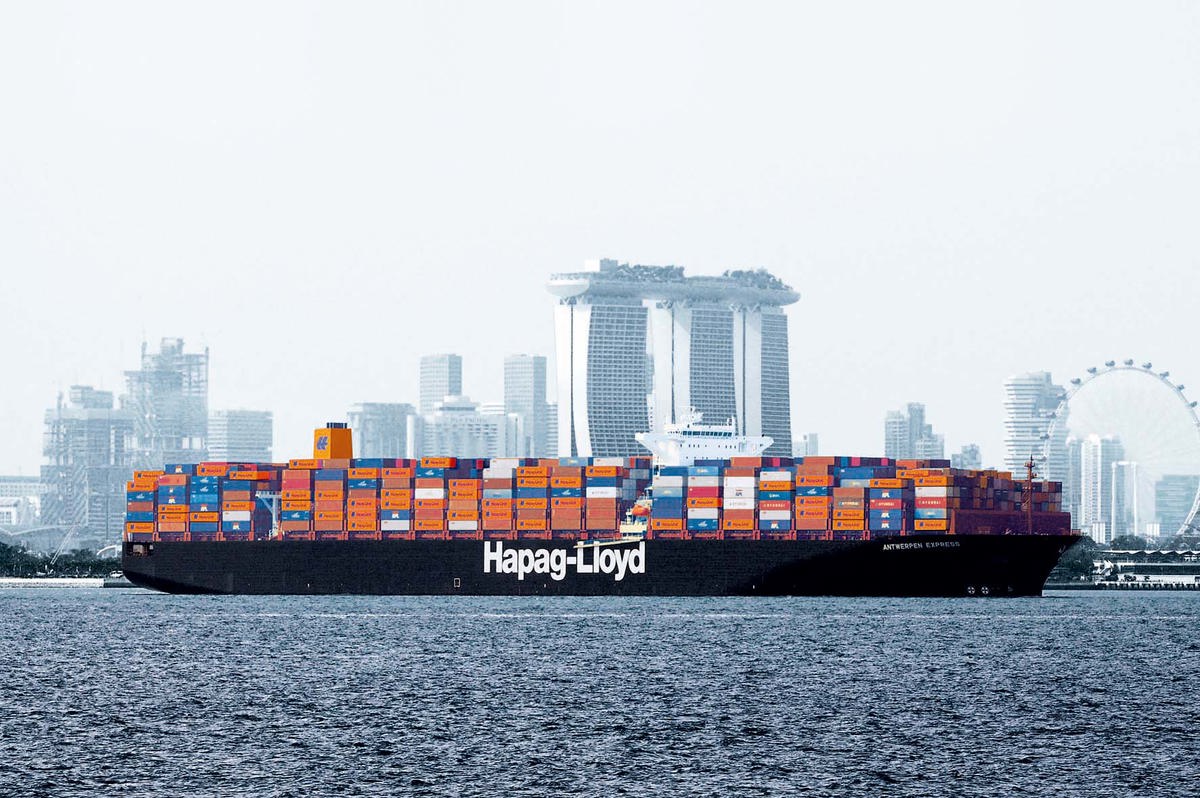 IMAGE: Hapag-Lloyd container ship in Singapore. Hapag-Lloyd
The World Bank study found that speed reduction is the largest short-term contributor to emissions abatement from energy-efficiency measures, as lower vessel speeds directly reduce fuel consumption.
But emissions savings are not uniform across the fleet. The World Bank analysis found that slow-steaming is generally more cost-effective for bulk carriers and container ships, especially container ships because they typically operate at higher speeds.
The case is weaker for tankers, where auxiliary engines account for a larger share of total energy use and reduce the relative fuel-saving benefit from cutting speed.
The World Bank modelling assumes port time is fixed. Under that assumption, longer voyage times from slow-steaming can require additional vessels to maintain transport capacity, weakening the business case for operators.
In one World Bank example cited by GMF, a 10% speed reduction for a vessel spending 25% of its time in port could add about 30 days at sea and require a fleet that is around 8% larger to maintain transport output. That would mean roughly one additional vessel for every 12 ships, GMF noted.
This would increase newbuilding costs and reduce some of the fuel-consumption benefits from slower sailing, according to the World Bank report.
GMF said port call optimisation could help change that outcome. Better scheduling and data sharing would allow ships to adjust speeds during voyages and arrive when berths, fairways, pilots and other port services are ready.
This would reduce the need for ships to sail faster only to wait at anchorage.
It could also help operators maintain the same number of scheduled voyages a year while slow-steaming, reducing the need for extra fleet capacity.
GMF said port call optimisation could also cut unnecessary fuel consumption, lower in-port emissions, reduce hull fouling and strengthen the overall business case for speed reduction.
In April, container shipping research firm Alphaliner said that average speeds across the global container vessel fleet had fallen 2.3% between the fourth quarter of 2025 and mid-April, as higher bunker prices linked to the Iran conflict encouraged slow-steaming.
By Nachiket Tekawade
Please get in touch with comments or additional info to news@engine.online