The Week in Alt Fuels: Demand before supply
Some shipowners are contracting green methanol supply that does not yet exist, potentially to avoid a future scramble for the fuel.
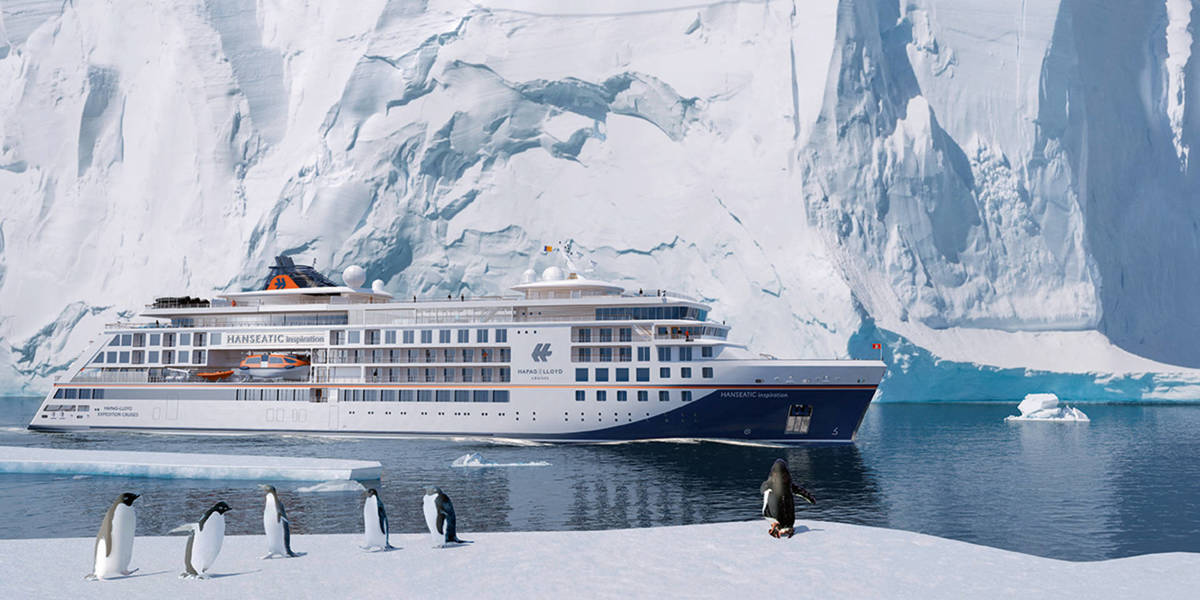 IMAGE: Hapag-Lloyd Cruises' expedition cruise ship, Hanseatic Nature. Hapag-Lloyd Cruises
Wallenius Wilhelmsen will begin receiving bio-methanol bunkers from Equinor at the ports of Zeebrugge and Antwerp later this year, with a two-year supply agreement already in place. The Norwegian vehicle carrier has at least 14 methanol dual-fuel vessels on order for delivery between 2026-2028.
German carrier Hapag-Lloyd has signed an offtake with China's Goldwind for 250,000 mt/year of green methanol, with deliveries expected to begin this year.
Fuels exist. The ships are coming. The deals are live. But not all agreements signed this year look like this.
In some cases, fuel supply is being secured years before either the vessels or production plants are operational.
London-based RFOcean has signed a binding long-term offtake agreement with ETFuels to purchase e-methanol at a fixed price from 2030. The fuel will come from ETFuels' Rattlesnake Gap project in West Texas, a planned 120,000 mt/year facility currently at the front-end engineering and design stage. RFOcean's eight methanol-ready vessels on order will not run on methanol upon delivery, but they are designed to be retrofitted later.
ETFuels has secured access to renewable power and biogenic CO2 for the plant, and confirmed incentives of around $1.5 billion under the US Inflation Reduction Act. With the offtake agreement in place, ETFuels said the project has moved into "financeable territory."
"This agreement converts that fleet optionality into secured, fixed-price compliant fuel supply before the market tightens," ETFuels said.
The producer added that the agreement was partly driven by FuelEU Maritime’s tightening greenhouse gas (GHG) intensity requirements from 2030, which are expected to increase demand for compliant fuels.
“This isn't just about compliance, it's about competitive positioning,” RFOcean’s chief executive Fredrik Rye-Florentz said.
"We believe compliant fuel will be scarce. By locking in supply now at fixed prices, we can offer our customers certainty and be in the forefront of a development which makes commercial sense today."
In other cases, shipowners appear to be positioning more cautiously.
Hapag-Lloyd has also agreed a framework with Southern Energy Renewables for a potential long-term bio-methanol offtake from the producer’s planned plant in St. Charles Parish, Louisiana. A final investment decision is planned for 2027, with pilot production targeted for 2029 and initial production capacity of 220,000 mt/year by 2031.
Hapag-Lloyd has eight methanol dual-fuel containerships on order for delivery between 2028-2029 and is retrofitting five existing vessels for methanol propulsion.
Singapore-based X-Press Feeders has agreed a letter of intent to purchase up to 15,000 mt/year of bio-methanol from UK start-up PuriFire Energy.
The fuel is expected to come from planned facilities and co-developed port-based production sites across the UK and mainland Europe. PuriFire currently operates a research and development facility in Royston and a demonstration plant at Shoreham Port, but has not disclosed a production timeline or formal supply terms.
X-Press Feeders currently operates four methanol dual-fuel vessels and has at least another 10 on order.
Both agreements remain conditional on project milestones being met, but the willingness to engage before production starts suggests some shipowners see risk in waiting.
Developing an e-methanol project takes around two years, followed by another 2-3 years for construction, Yann Dumont, chief executive of Spanish project developer Reolum, told ENGINE.
With relatively few projects currently under development, available supply could tighten sharply as FuelEU Maritime's GHG intensity limits begin to bite from 2030.
Competition for that supply will not come from shipping alone.
“SAF [sustainable aviation fuel] demand is coming along with maritime and others,” Dumont said.
Some shipowners are signing now to get ahead of that pressure. "These are strategical deals and some shipowners have understood it," Dumont said.
Reolum's first e-methanol plant, in Spain's La Robla, is on track to begin biomass power operations in the fourth quarter of 2027, with methanol production to ramp up in the first half of 2028. Two further plants, in Villadangos and Monfarracinos, are scheduled to follow.
But not all developers have made it that far.
Swedish e-methanol developer Liquid Wind declared bankruptcy on 11 May, four days after submitting an environmental permit application for a large-scale plant in Örnsköldsvik. In a 2025 interview with ENGINE, chief executive Claes Fredriksson had said securing offtake agreements was critical before a project could move forward.
“It's only when we have those offtakers that we can confidently develop a plant, or find an investor willing to finance it, and secure the necessary power…” he said.
“We can prepare a lot beforehand, but once we start building a plant, everything needs to be lined up.”
In other alternative fuels news this week, Busan Port Authority is planning to develop LNG and methanol bunker infrastructure at the port by 2032. The project includes the construction of a 370,000 cbm LNG storage tank and a 150,000 cbm methanol storage tank, the port authority said. It will also include a berth capable of accommodating vessels with capacities of up to 123,000 cbm, it added.
Molgas-owned bunker supplier Titan Clean Fuels has chartered a new LNG bunker vessel for physical deliveries in Zeebrugge and the wider ARA hub. The 8,000 cbm-capacity vessel, United LNG I, is owned by Luxembourg-based inland shipping firm Somtralux and operated by Belgian supplier United Bunkers.
MSC Cruises, the cruise division of Mediterranean Shipping Company (MSC), has tested pure hydrogenated vegetable oil (HVO100) on one of its cruise ships. The fuel was produced from waste-based feedstocks, including used cooking oil, animal fats and agricultural residues, at biorefineries in Venice and Gela owned by Enilive, a subsidiary of Italian energy company Eni.
By Konica Bhatt
Please get in touch with comments or additional info to news@engine.online