Americas Market Update 17 June
Fuel prices have moved in mixed directions, and rough weather conditions are likely to disrupt operations in St. Eustatius.
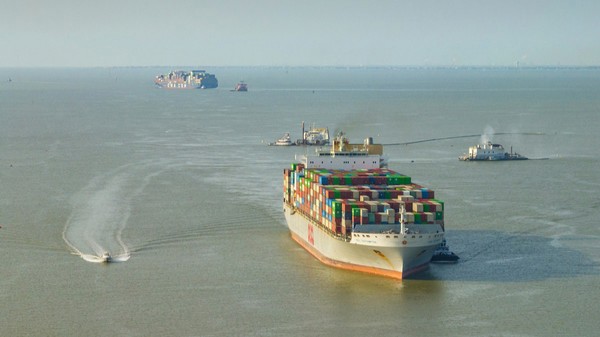
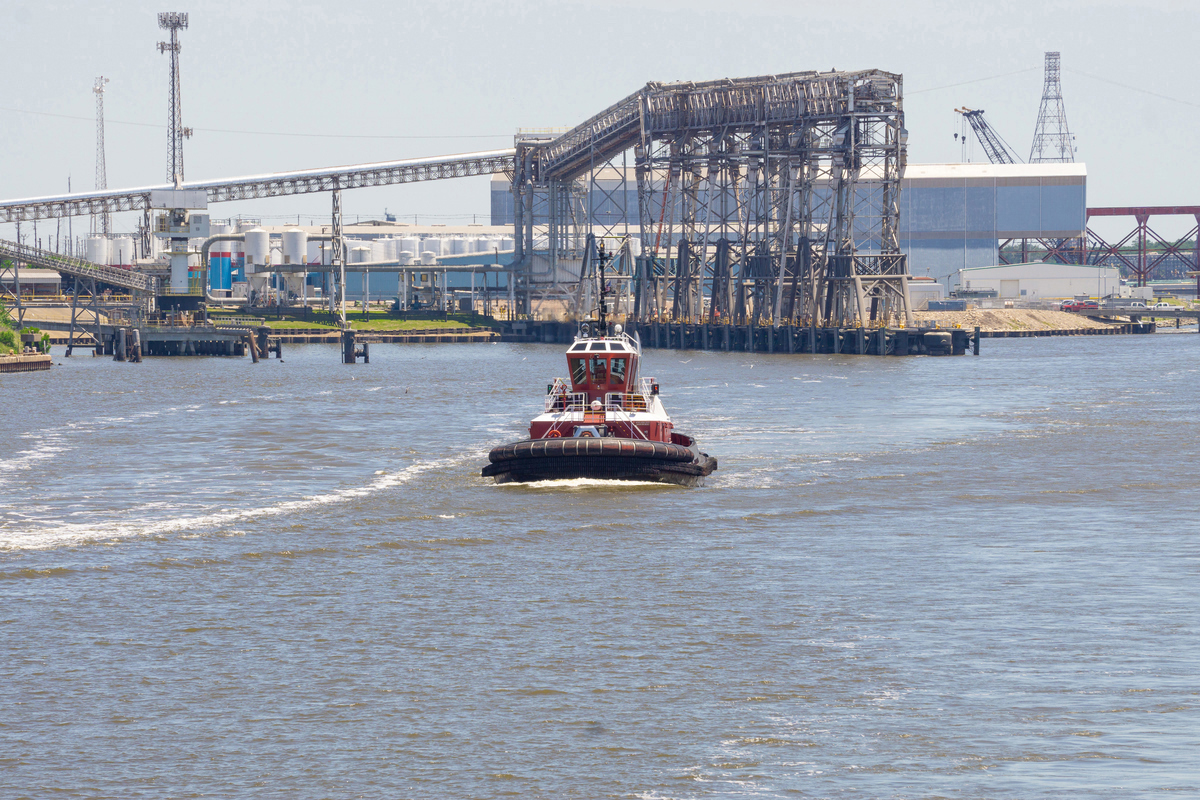 IMAGE: A tugboat in the Houston area. Getty Images.
Changes on the day to 08.00 CDT (13.00 GMT) today:
- VLSFO prices up in Zona Comun ($6/mt) and Balboa ($3/mt), and down in Los Angeles ($25/mt), New York ($8/mt) and Houston ($7/mt)
- LSMGO prices up in Zona Comun ($28/mt), Balboa ($13/mt) and New York ($1/mt), and down in Los Angeles ($19/mt) and Houston ($15/mt)
- HSFO prices down in Los Angeles ($75/mt), Houston ($40/mt), New York ($20/mt) and Balboa ($1/mt)
Houston's LSMGO price has recorded losses after a lower-priced 150–500 mt LSMGO stem, fixed at $948/mt, put downward pressure on the benchmark.
In Houston, bunker demand has been normal over the past week, while prompt availability has been tight across all three conventional fuel grades.
HSFO and VLSFO require lead times of 5–7 days, while LSMGO can be delivered by most suppliers within 4–5 days, a trader says.
At the nearby anchorage of Galveston Offshore Lightering Area (GOLA), bunkering operations are expected to be suspended from today through 20 June due to rough sea conditions, a trader tells ENGINE.
In the Caribbean, delays are expected in St. Eustatius due to strong wind gusts, and a period of disruptions is forecast for 17-20 June, a source said.
Brent
The front-month ICE Brent contract has lost by $0.74/bbl on the day, trading at $79.58/bbl at 08.00 CDT (13.00 GMT) today.
Upward pressure:
Market participants continue to assess the implications of the recent US-Iran peace deal, with uncertainty surrounding its implementation shaping sentiment in the global oil market.
Concerns over the full restoration of shipping through the Strait of Hormuz have lent some support to Brent crude futures.
“Nevertheless, many questions remain as to how the interim US-Iran deal will be implemented. Concerns over the safety of vessels remains high, while there is some doubt as to whether the chokepoint for a fifth of the world’s supply will remain toll-free,” ANZ Bank’s senior market strategist Daniel Hynes commented.
Meanwhile, US crude oil inventories recorded a significant draw of 8.33 million barrels in the week ending 12 June, according to American Petroleum Institute (API) estimates cited by Trading Economics.
The decline was substantially larger than market expectations of a 4.5 million-barrel draw.
A sharp reduction in US crude stockpiles is generally interpreted as a sign of stronger oil demand and can provide upward support to Brent's price.
“Inventories in the SPR [Strategic Petroleum Reserve] also continued to decline, dropping by 8.9 million barrels to 340.3 million, leaving stocks 385 million barrels below maximum capacity,” Trading Economics noted.
Downward pressure:
The US-Iran peace agreement continues to exert downward pressure on Brent crude futures, as the extension of the ceasefire by additional 60 days reinforced expectations that shipping through the Strait of Hormuz will gradually return to normal, improving prospects for global oil supply.
“Crude oil prices extended their decline, on expectations of a rebound in supply from the Middle East,” Hynes noted.
Under the agreement, the US is expected to lift its blockade of Iranian ports, while Iran will allow oil tanker traffic to resume through the Strait of Hormuz, which has been effectively closed since US and Israeli strikes on 28 February.
“Iran, US commit to returning Hormuz traffic to normal within 30 days,” VANDA Insights founder Vandana Hari said.
By Gautamee Hazarika and Tuhin Roy
Please get in touch with comments or additional info to news@engine.online